
You can source road legal H11 LED bulbs China manufacturers offer, but only when the approval and product evidence form one traceable chain. An H11 base, an E-mark, or an EMC report does not make every LED bulb road legal. The buyer must connect the exact H11 LEDr type to a valid UN R37 approval, often called ECE R37 in sourcing discussions, then to the marked production sample, the approved application, and the rules of the destination market.
That standard applies to every supplier, including LEDOAUTO. A useful sourcing process tests the claim before it tests the sales relationship. Ask for documents first, compare them with the sample, and put the same requirements into the purchase order. If any link stays unclear, treat the product as unverified rather than filling the gap with a supplier assurance.
Six-Step Sourcing Process: how should buyers verify each stage?
1. Define the category and destination market
Start with the light source category, not a broad request for an “H11 LED headlight.” State that the request concerns H11 LEDr, identify the destination country, the intended sales channel, and any known lamp or vehicle restrictions. H11 names a category. It does not identify a particular approved type or prove that the product may be used in every lamp. If your program needs categories beyond H11, read the complete guide to ECE R37 LEDr first, because category status is the gate for every SKU.
Keep three questions separate in the request for quotation. Is the light source type approved? Does its physical and electrical design match the approved type? Under what conditions may it be placed on the market and used in the destination country? A supplier may answer the first question while avoiding the other two.
UN R37 sits within the UNECE 1958 Agreement framework, not an EU-only system. National enforcement still matters. For EU buyers, Article 50 of Regulation (EU) 2018/858 says that components and separate technical units, including aftermarket products, may be made available or entered into service only when they comply with the relevant regulatory acts and carry the required marking. Exceptions and the exact treatment of a product depend on the scope of that law and the destination market.
2. Screen the supplier before discussing volume
Ask who holds the approval, who manufactures the bulb, and which legal entity will appear on the commercial documents. These names do not have to be identical in every legitimate arrangement, but their relationship must be explainable through the approval and the authorized production structure.
Do not accept factory size, customer logos, or a claim of producing for a famous brand as substitutes for evidence. Those claims do not connect your order to an approved H11 LEDr type.
3. Request the evidence package
Obtain the approval communication and the pages needed to identify the approval number, category, type, approval holder, manufacturer where stated, marking arrangement, drawings, and extension history. Ask for legible files rather than cropped screenshots. The package should also include the product label, packaging artwork, user information, and a current sample-marking photograph. Our companion page on what evidence an H11 LEDr supplier should provide breaks this into a checklist you can attach to any RFQ.
R10 evidence belongs in a separate file. UN R10 addresses the applicable electromagnetic compatibility requirements. It does not by itself establish that a bulb is an H11 LEDr approved under UN R37 or that it is road legal.
4. Verify the approval against the product
Read the documents as one connected record. The category and type on the approval must match the drawing and the model offered. The holder and manufacturer details must be consistent with the supplier’s explanation. Check the approval status and extension pages rather than assuming the first page tells the whole story.
An E-mark is only one element of that record. The country code after the E identifies the approving country under the applicable framework. It is not a country-of-origin mark, and it does not tell the buyer which regulation was approved. A copied, incomplete, or unrelated marking can look convincing in a product photograph. The step-by-step method is covered in our guide on how to verify an ECE R37 H11 LEDr certificate. For this purchase, record the reviewer, review date, document version, and any unresolved mismatch in the sourcing file.
5. Test a marked production-representative sample
The sample must represent the configuration that will be ordered, not a golden sample from a display cabinet. Record the model, driver, cap, cable, markings, packaging, and sample serial or batch reference. Compare the physical sample with the approval drawing and the supplier’s document index before running performance tests. The section “Sample Testing: What to Measure” below lists the practical checks. Keep at least two tested samples sealed as the reference standard for the order.
6. Control conformity and the purchase order
Approval is not a one-time marketing asset. Production must stay consistent with the approved type. UN Regulation No. 37, Revision 7, Amendment 11 contains the approval, marking, technical, and conformity-of-production requirements. The available official text does not set one universal “every batch” or “monthly” test frequency for every supplier. The applicable approval conditions and the manufacturer’s own control plan define the working program, which is exactly why your contract should reference it.
Put the controlled model, approved type, markings, artwork version, change-notification duty, sample acceptance criteria, and document-delivery obligations into the purchase order. Require written approval before changes to the LED package, driver, thermal design, cap, housing, cable, software, marking, or manufacturing site when those changes could affect the approved configuration. Agree on pre-shipment checks and the remedy for mismatches. If the supplier cannot preserve traceability from approval to shipment, a passed development sample does not protect the bulk order.
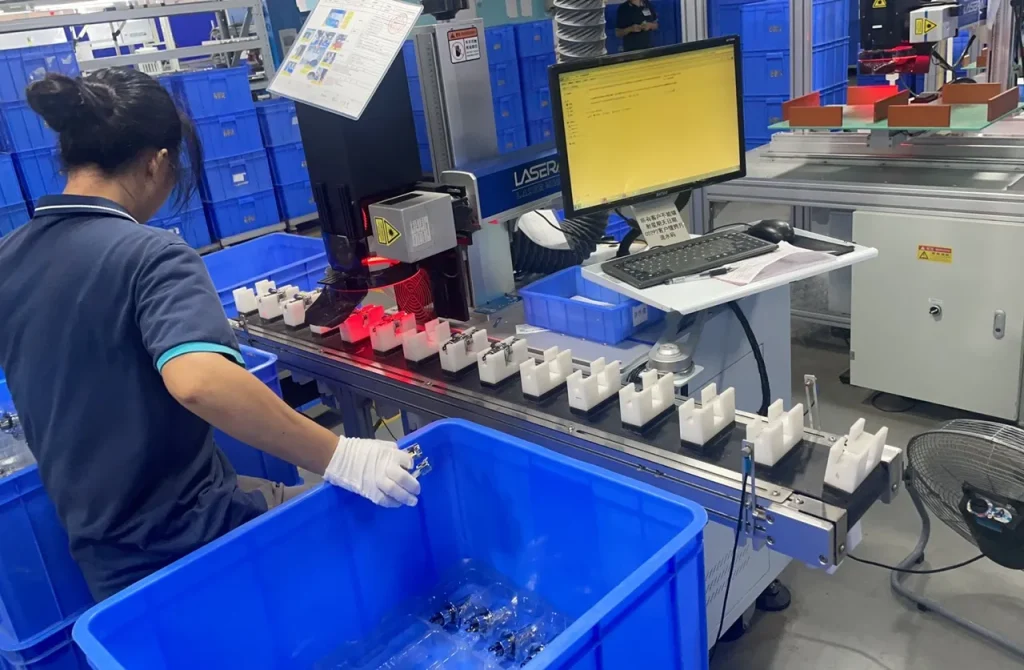
Documents Checklist: what evidence should you request?
Use the checklist as a file index, not as a pile of attachments.
| Evidence | What to match | Reject or escalate when |
|---|---|---|
| UN R37 approval communication | Approval number, H11 LEDr category, type, holder, status | The file is cropped, illegible, or names another type |
| Approved drawings and marking detail | Cap, geometry, driver arrangement, required marks | The offered design differs without a documented extension |
| Extension history | Current configuration and change trail | The supplier provides only an early page or an expired claim |
| Sample and product photographs | Marking, housing, cable, driver, package | The mark cannot be tied to the approval record |
| Packaging and user information | Category, warnings, traceability, destination language needs | Artwork makes wider legal claims than the evidence supports |
| R10 or EMC evidence | Exact model and EMC scope | It is presented as a substitute for UN R37 approval |
| Conformity-of-production controls | Controlled characteristics, records, response to nonconformity | The supplier cannot explain how production stays aligned |
| Purchase-order compliance schedule | Model, evidence version, change control, inspection rights | Compliance stays only in emails or sales material |
The downloadable version is delivered through the supplier evidence checklist. Until that asset is live and the link is tested, this page stays in Manual Review.
Dangerous Supplier Claims: which statements should stop the review?
“It has an E-mark, so it can be sold anywhere in Europe.” Ask which regulation, approval number, type, category, and conditions the mark represents. Europe is not one unconditional use case, and the E-code is not proof of origin or universal legality.
“It has R10 certification, so it is road approved.” R10 and UN R37 answer different questions. EMC evidence cannot replace the H11 LEDr approval chain.
“We manufacture for a major brand.” That statement proves nothing about the model quoted to you. Do not request confidential customer files. Request evidence for your own product and order instead.
“You can use our certificate for your private label.” Private labelling requires a documented relationship between the approved type, holder, trade name, marking, manufacturer, and applicable approval procedure. A distributor cannot make a product compliant by reusing an unrelated certificate.
“It fits every H11 vehicle.” Mechanical installation and road-use approval are different claims. The supplier must define the approved scope and any restrictions. Compatibility also depends on the lamp, available space, electrical monitoring, thermal conditions, and the exact product configuration.
Common Mistakes: where do otherwise careful buyers fail?
Buyers often verify the supplier but not the quoted model. An audited factory can still offer a configuration outside the approval supplied. Tie every document and sample to the quotation line.
Another mistake is checking paperwork only after tooling, packaging, or a deposit has been approved. Evidence review belongs before commercial commitment, because artwork and private-label decisions can affect markings and claims.
Buyers also treat a valid certificate as permanent permission to change components. A different driver, cap keying, LED position, thermal path, or manufacturing arrangement may affect conformity with the approved type. Change control belongs in the order.
A final error is turning a national positive-list route for H4 or H7 into a UN R37 category claim. The status layers must stay separate, as the table below shows.
| Category | Status | Effective date | Source |
|---|---|---|---|
| H11 LEDr | Established UN R37 LEDr category. Each offered type and application still must be verified against its own approval | Established; confirm the current category sheet and approval communication before order. Exact category-sheet date pending clause verification | UN R37 Rev.7 Amend.11 |
| H4, H7 | No UN R37 LEDr category. A national positive-list mechanism may apply in specific countries, which is not equivalent to UN R37 category approval | Not applicable. National and application-specific | Target-market authority source required for any public claim |
Other LEDr categories are in development under UN R37; their status is tracked in the complete guide to ECE R37 LEDr. National positive-list approvals for H4 and H7 rely on vehicle-level beam and installation testing and apply only to listed models, which is a different mechanism from source-level UN R37 approval. Status reviewed on 15 July 2026. The table does not convert a category name into a blanket road-use conclusion.
Sample Testing: What to Measure
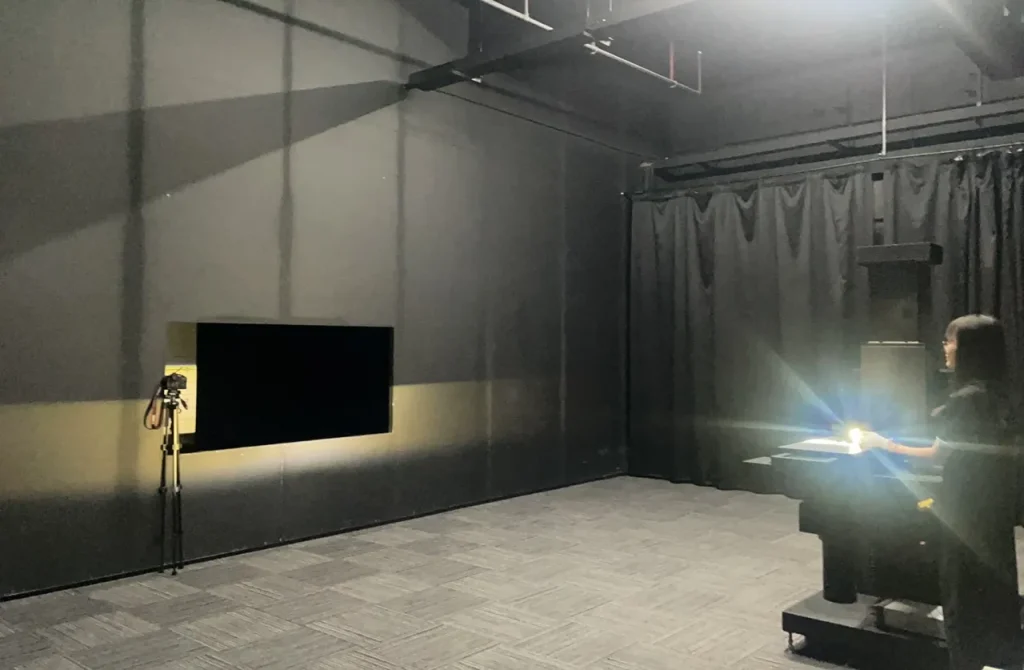
Begin with identity and geometry. Photograph all markings and measure the cap and light-emitting position against the controlled drawing. Confirm that the sample cannot be confused with a similar H8, H9, or H16 configuration merely because the products share a related form factor.
Assess the beam in the intended lamp with a documented setup. Record the cutoff, glare-sensitive zones, beam distribution, and repeatability rather than judging one wall image. The test method and limits must come from the applicable approval or the agreed buyer specification.
Measure initial and stabilized luminous output under recorded voltage and ambient conditions. If lumen maintenance is part of the buying specification, define the operating duration, measurement intervals, thermal environment, and allowable change before testing. Do not accept an unlabeled chart detached from the sample.
Check electrical start-up, steady operation, fault behavior, and compatibility with the relevant vehicle monitoring system. A CANBUS-error-free claim must be tested on the intended application or an agreed simulator. It does not prove photometric compliance or road legality.
Use the results to make a purchasing decision: pass, conditional pass with corrective action, or reject. Keep the tested sample so pre-shipment units can be compared with it.
Put every supplier, including us, through this checklist
Send the supplier the controlled supplier evidence checklist and request one indexed evidence package for the exact quoted H11 LEDr. Then compare a marked production-representative sample with that package before approving artwork or placing a bulk order.
For category, approval, and sourcing context, continue to the complete guide to ECE R37 LEDr. To separate a regulated LEDr from ordinary retrofit and substitute products, read LEDr vs retrofit vs substitute. Review our ECE R37 certified H11 LEDr product page only after its approval evidence and model scope have been matched to your requirement, and you are welcome to send any supplier’s certificate to our engineering team for a free cross-check first.
Frequently asked questions
Is H11 LEDr road-legal in Europe?
An H11 LEDr can follow the UN R37 approval route, but the category name alone is not enough. Verify the exact approved type, marking, intended lamp, approval conditions, and destination-market rules before making a road-use claim. See the complete guide to ECE R37 LEDr for the wider framework.
How can buyers verify H11 LEDr evidence?
Match the approval communication, type, holder, drawings, extension status, product marking, packaging, and a production-representative sample. Record every match and mismatch. A certificate image without a traceable link to the offered model is not enough. The method is set out in our guide on how to verify an ECE R37 H11 LEDr certificate.
Can it be private labelled?
Only when the approval and the applicable procedure support the exact type, the holder or authorized manufacturer relationship, the trade name, and the marking arrangement. A buyer or distributor cannot make a private-labelled product compliant by reusing an unrelated certificate.
What should be checked before a bulk order?
Complete the document review and sample tests, freeze the accepted configuration, approve artwork, define change control, and add conformity and inspection terms to the purchase order. Resolve every mismatch before paying for bulk production.
By Jack Liu — Co-founder & Product Director, LEDOAUTO
Regulatory review: LEDOAUTO Engineering Team — verified against official UNECE documents
Last reviewed: 15 July 2026