
This measured review records the packaging, construction, optical performance, temperature and operating noise of one E4E H11 LEDr sample. It forms part of our engineering review archive.
Test conditions
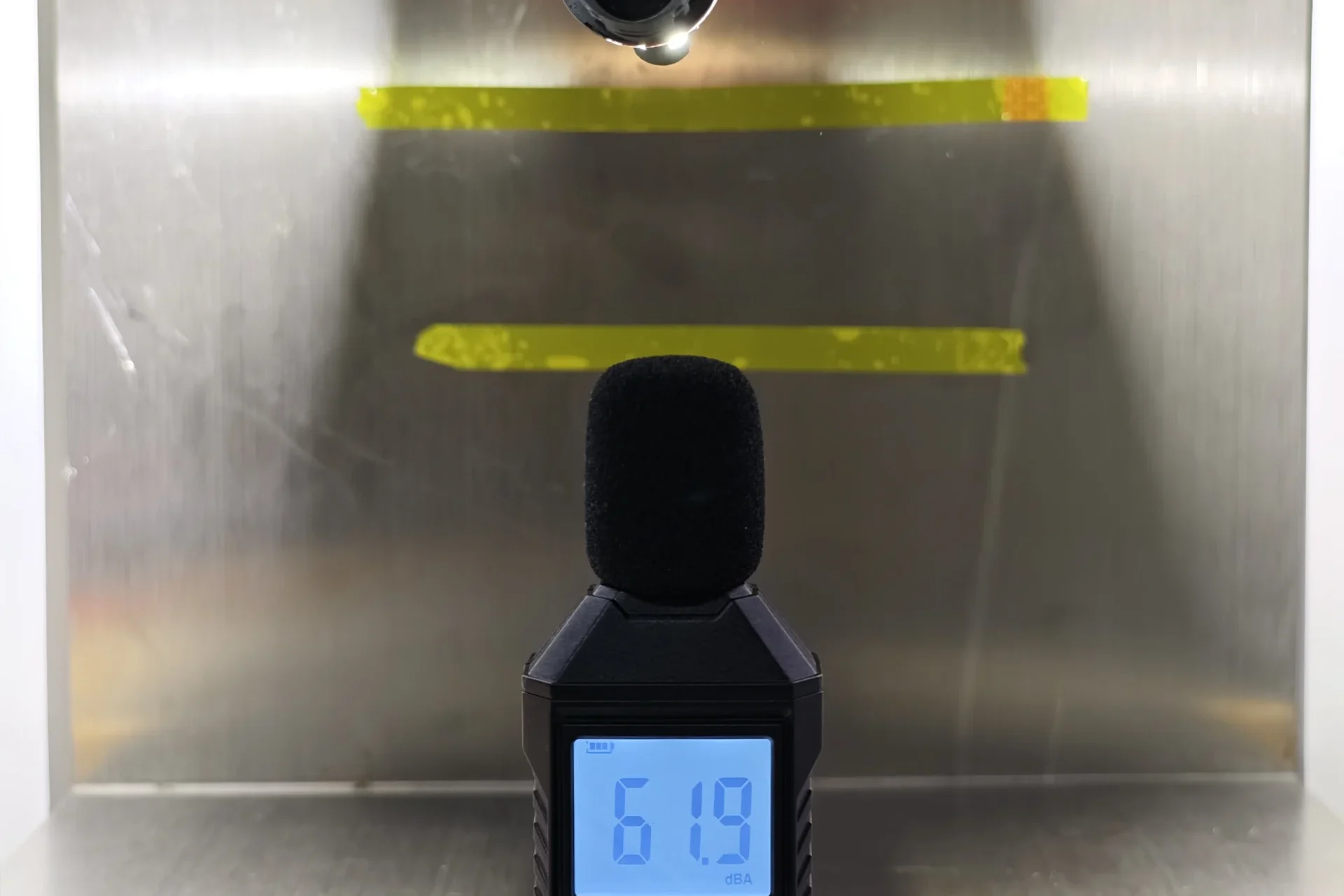
Illuminance was recorded at the defined E-Mark measurement-panel points at a distance of 3.5 m. The lamp operated at 13.2 V in a 26 degrees C room and was warmed for 30 minutes before the illuminance readings were taken. Emitting-area surface temperature was recorded after 30 minutes. Operating noise was measured 3.5 cm from the fan.
What this review found
The E4E sample uses a compact one-piece layout. Its two-pin H11 connector is integrated into the rear fan housing, with no separate driver box or external driver cable between the lamp and vehicle connector. This shortens the external wiring path and reduces the number of loose components that must fit behind the headlamp.
No metal tension springs were found on the base. This visible construction creates a partial conflict with the ECE R37 H11 LEDr construction criteria used in this review. The finding is limited to the recorded sample and does not by itself invalidate the approval marking visible on the product and package.
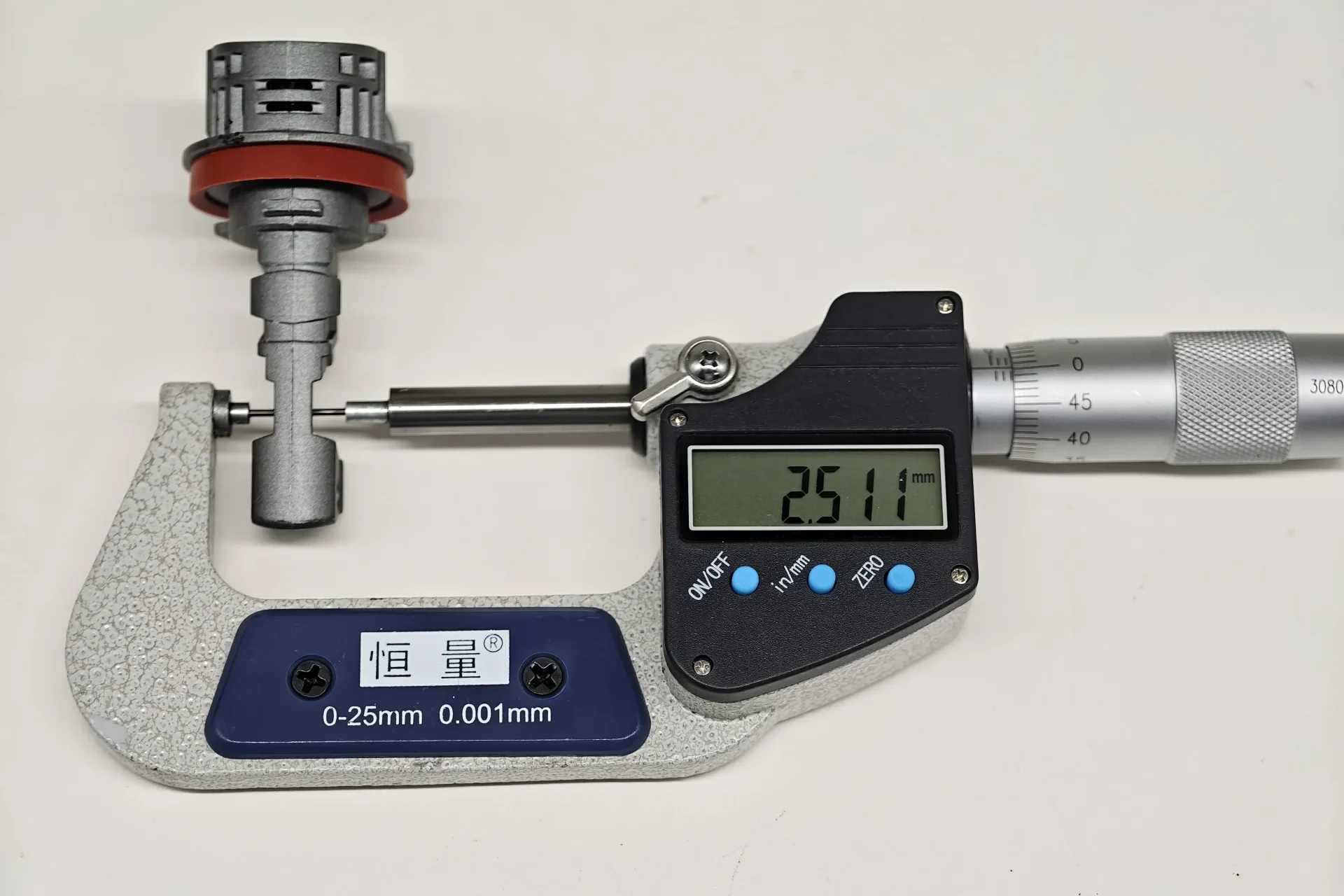
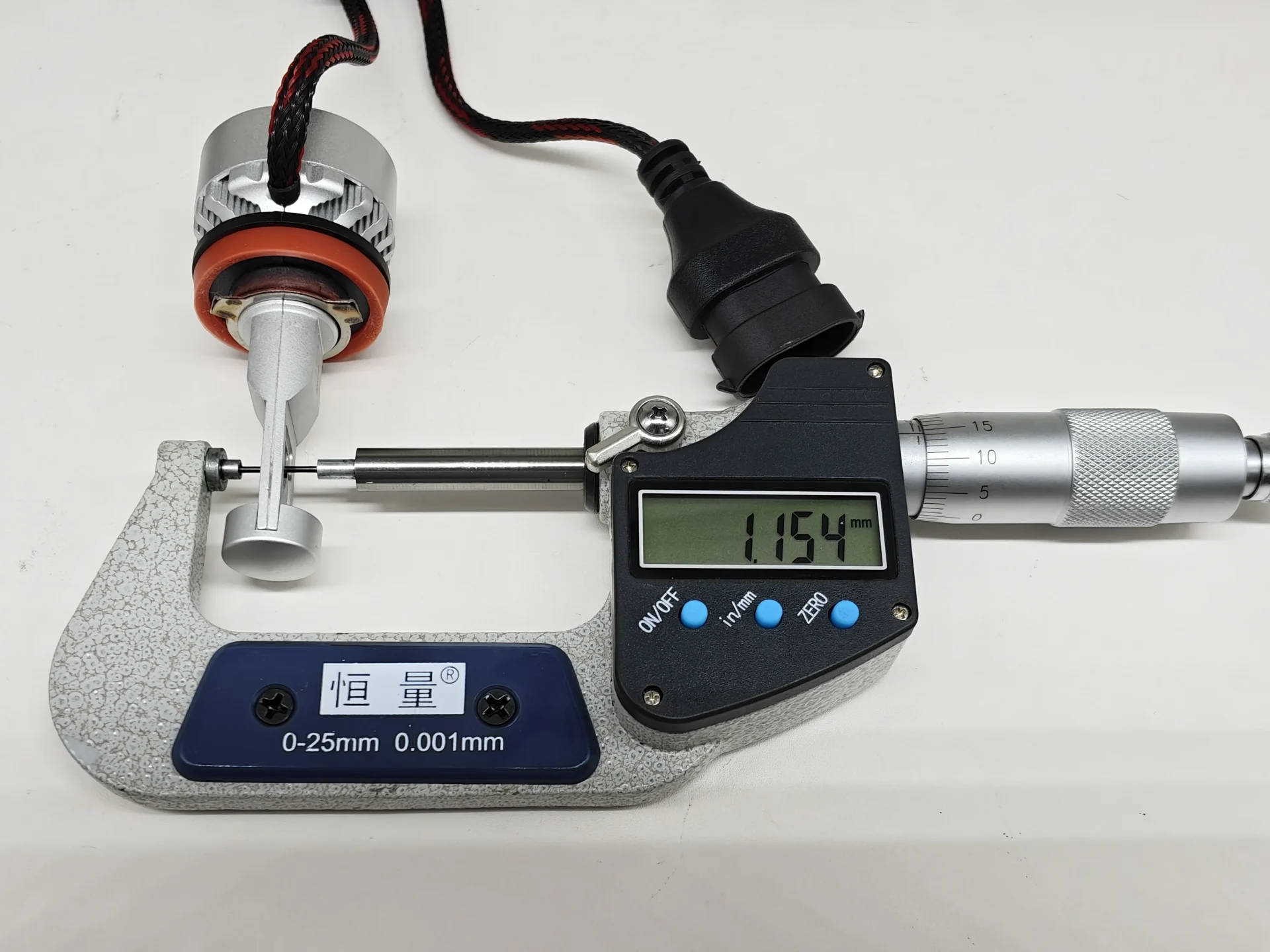
The distance between the two opposing LED emitting surfaces was 2.511 mm. The optical record placed the strongest output near the central-right transition: EMAX was 1,593 lux, 50R was 1,334 lux, 25V was 1,019 lux and 50V was 932.9 lux. The lower 725 lux reading at 75R shows that the strongest region remained closer to the centre and 50R area rather than extending as a narrow far-right peak.
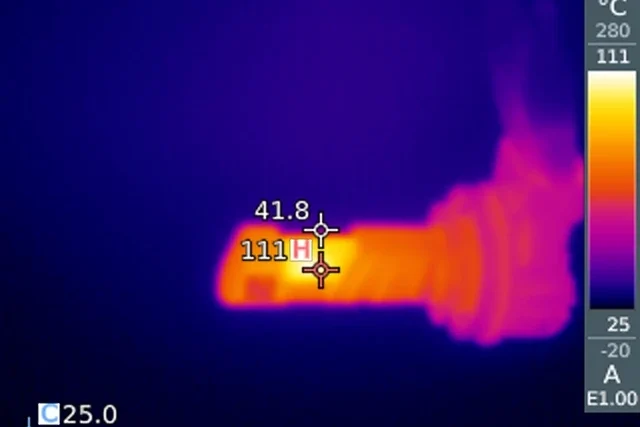
After 30 minutes, the maximum emitting-area surface temperature was 111 degrees C. Operating noise was 61.9 dBA at 3.5 cm from the fan. The integrated construction therefore simplifies installation, but the recorded thermal and acoustic behaviour remain important parts of this sample’s engineering assessment.
Packaging and included parts
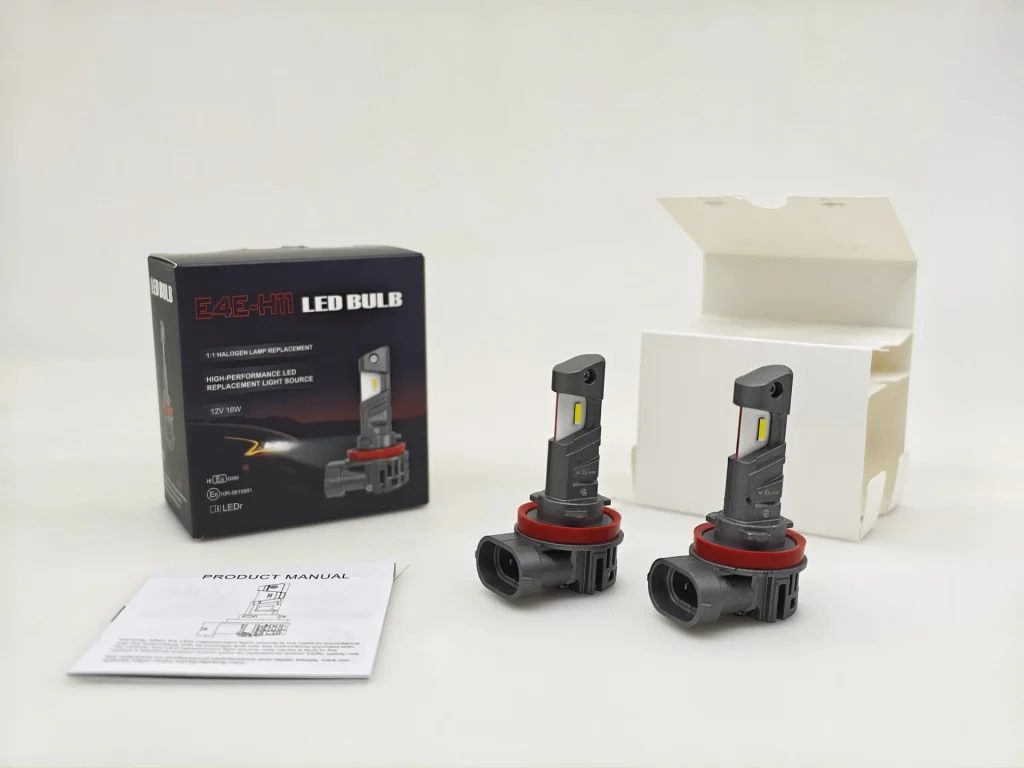
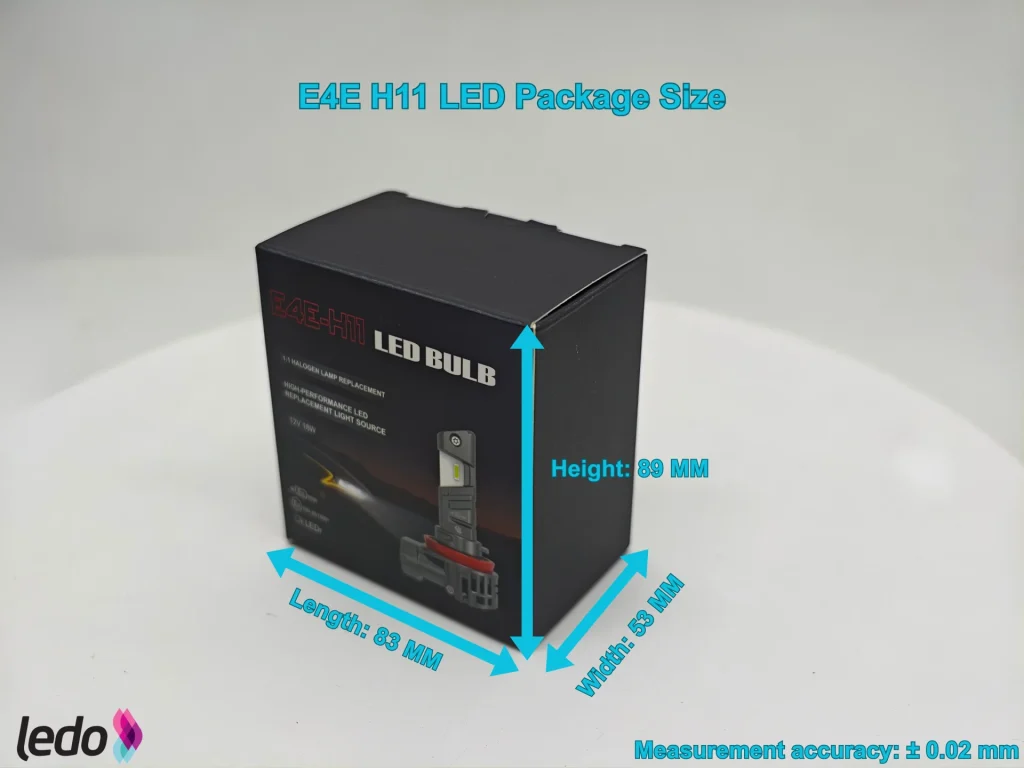
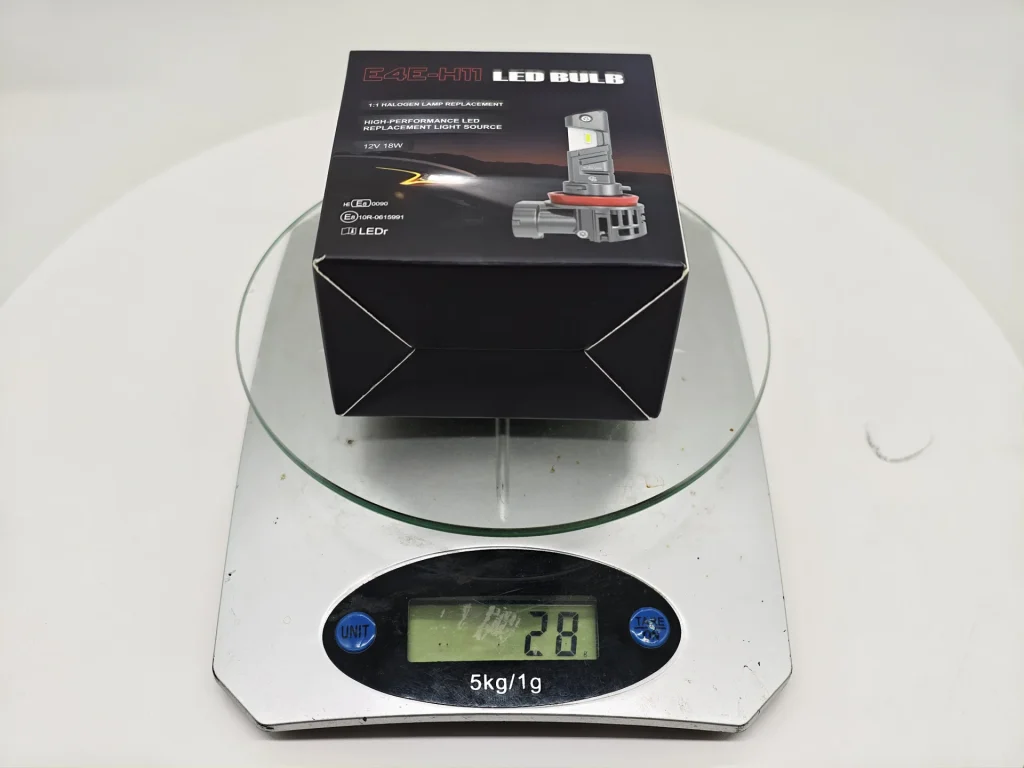
The reviewed package contained two E4E H11 LEDr lamps, a white inner box and printed product information. The outer box identifies the product as an E4E-H11 LED bulb and displays visible E8, 10R and LEDr-related markings. The box measured 83 x 53 x 89 mm and the empty package weighed 28 g. For the construction criteria referenced below, see our ECE R37 background.
H11-specific PGJ19-2 interface and lamp construction
The sample combines a grey lamp body, red sealing ring, rectangular emitter blade and rear cooling fan. The two-pin H11 connector is integrated into the rear housing, so the external form is more compact than a lamp-and-driver arrangement with separate cables and electronics.
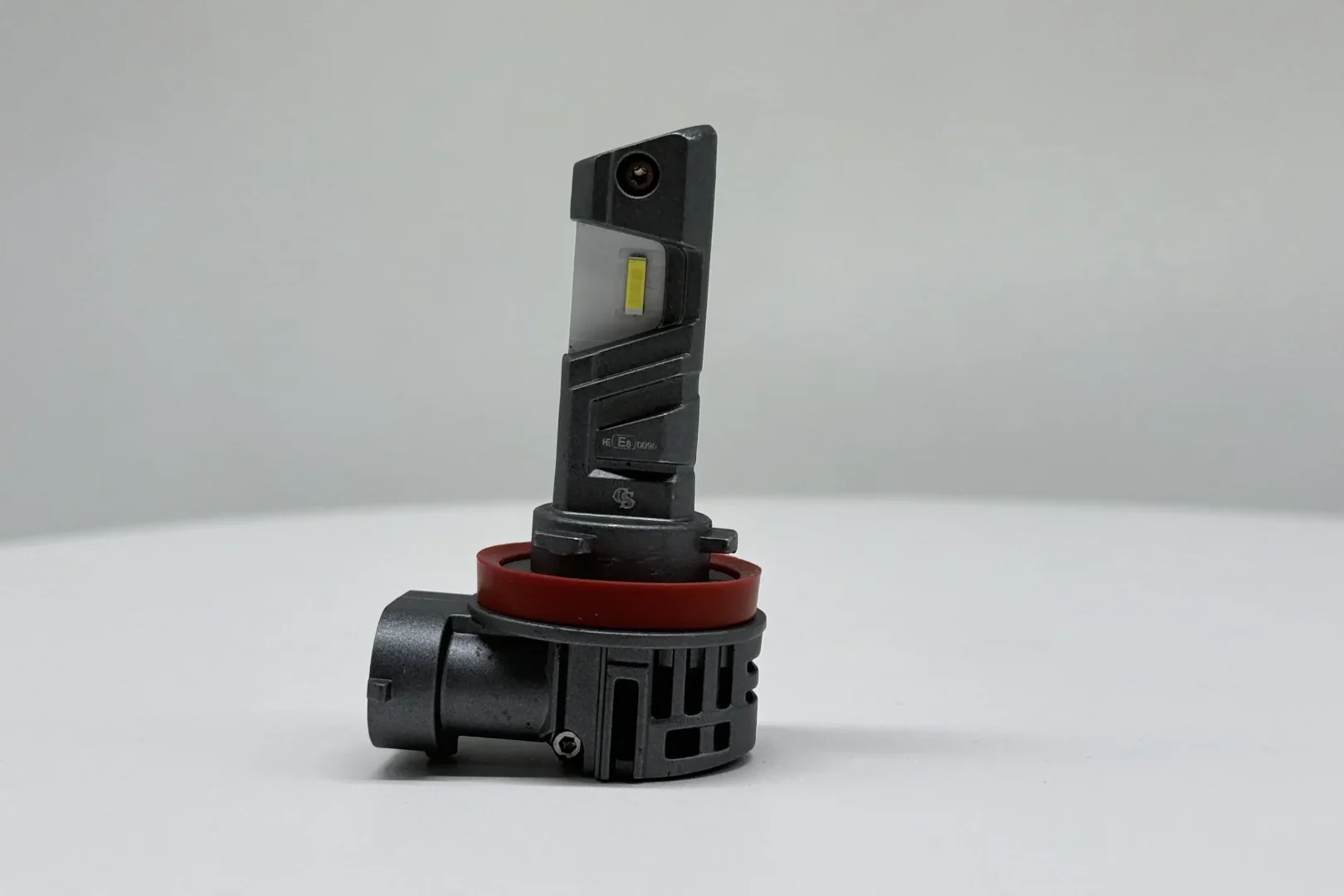
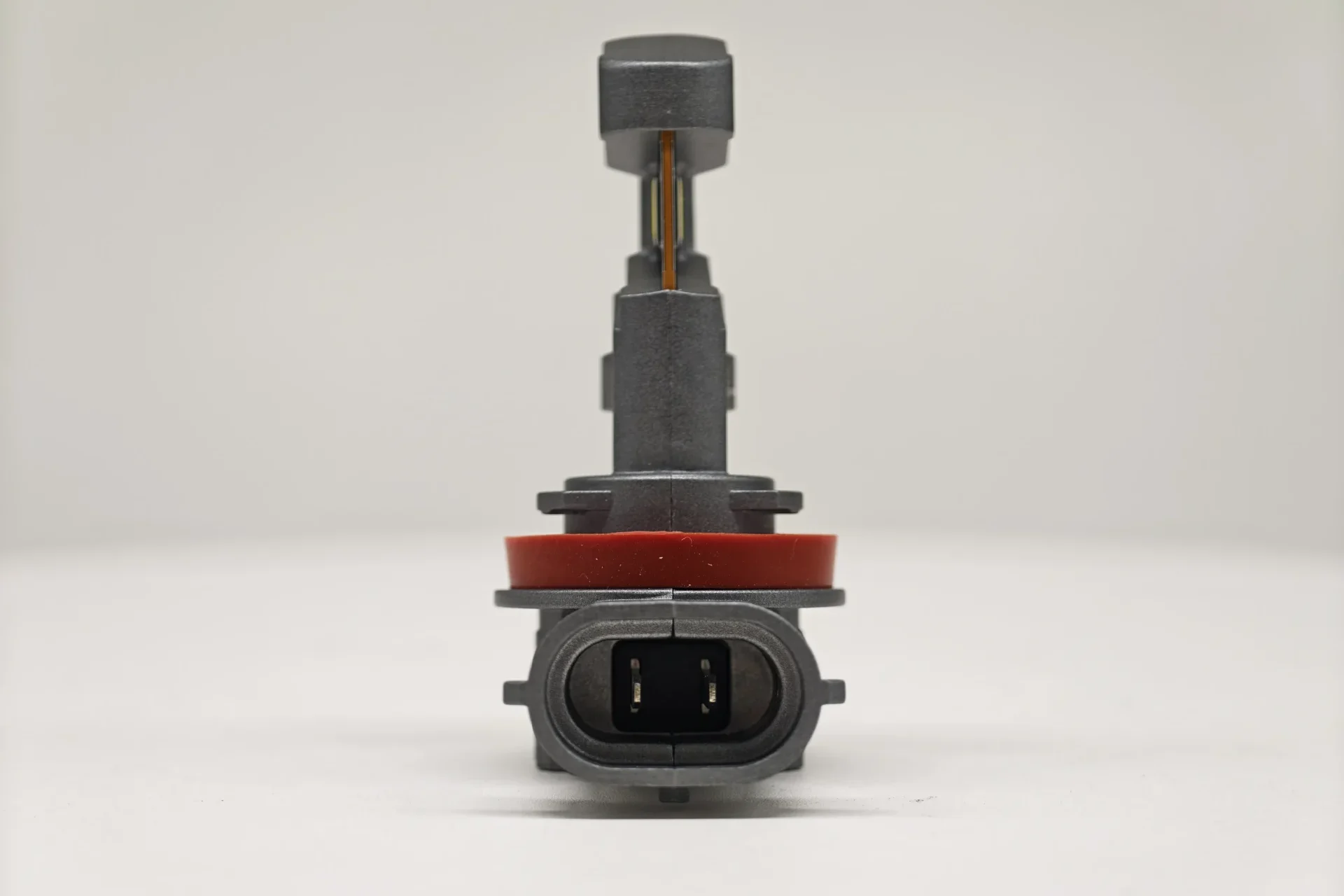
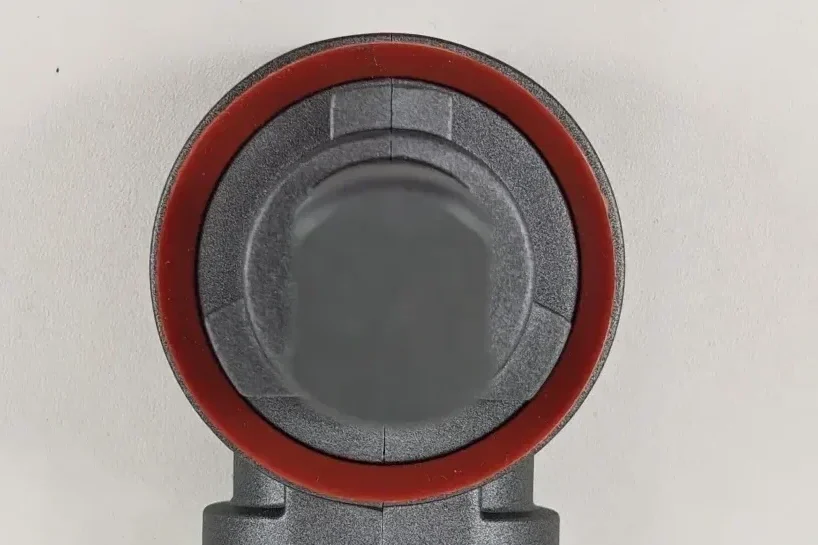
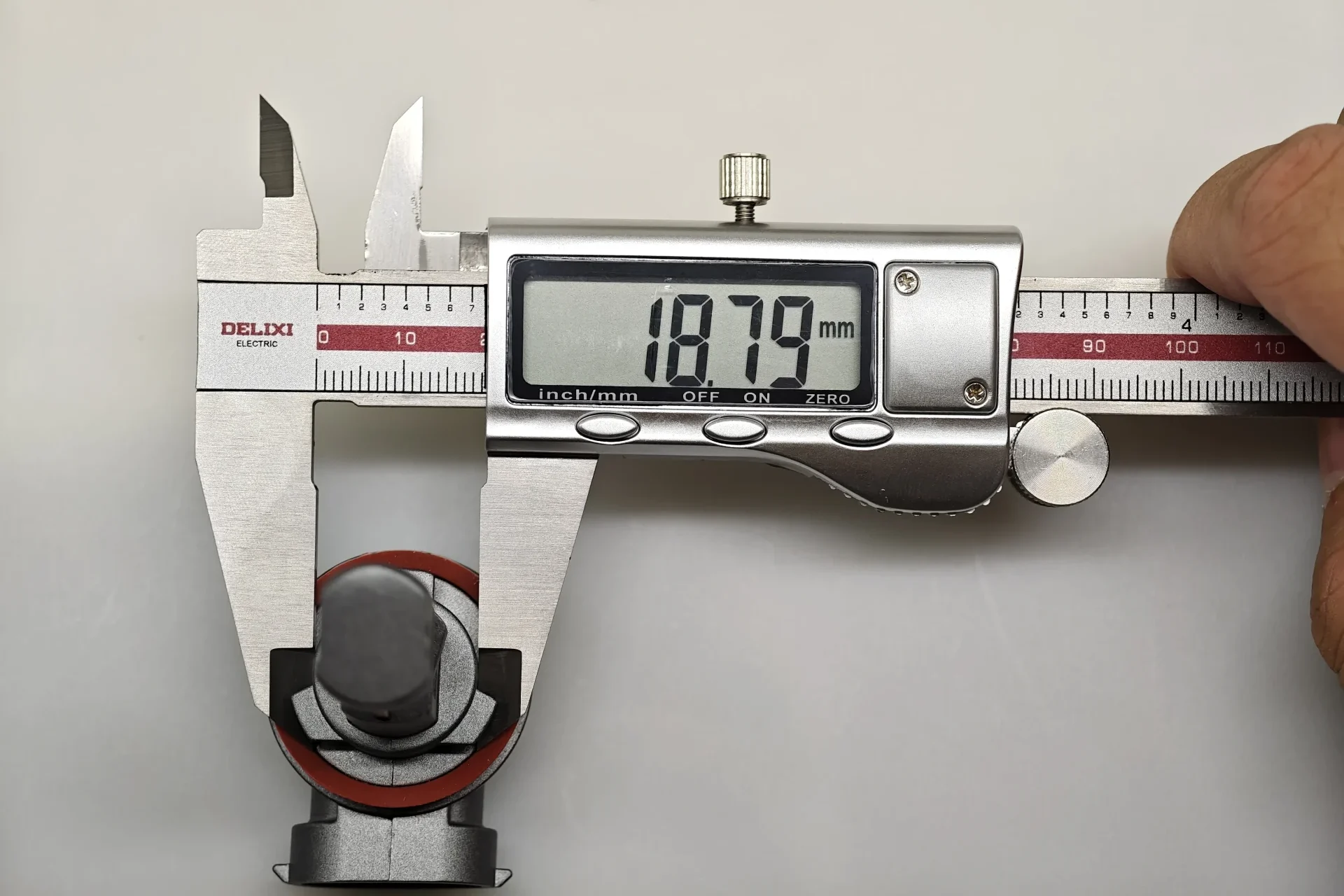
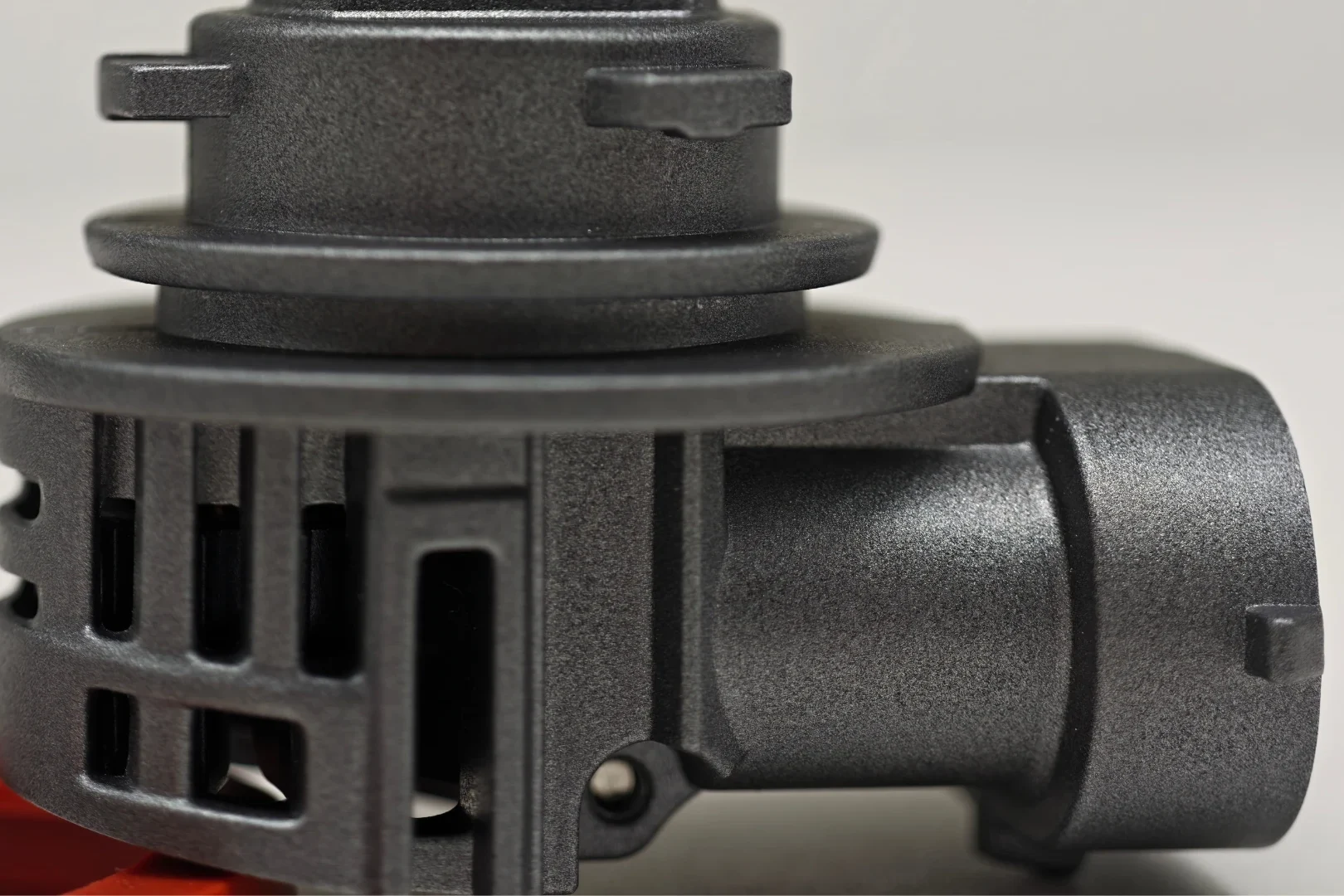
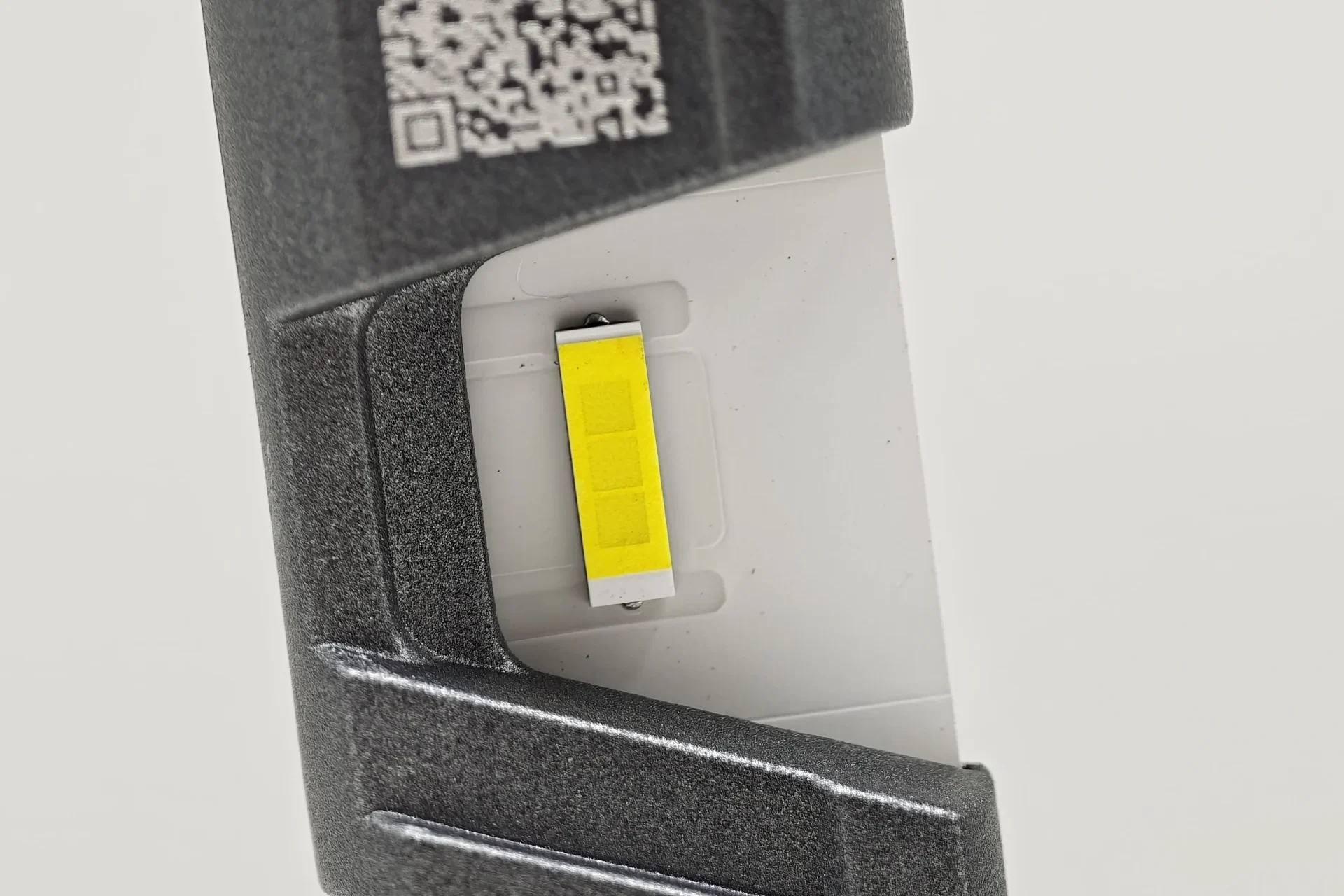
The two base photographs document the same physical point from complementary views: neither shows the metal tension springs used to press the lamp into the locating support. This is the construction feature behind the partial-conflict assessment; the conclusion is not inferred from the optical images.
Opposing LED emitting surfaces: 2.511 mm separation
The 2.511 mm measurement is not a thickness measurement. One lamp has two opposing LED emitting sides, and the recorded value is the distance between the two LED emitting surfaces.
The 2.511 mm value is below the 2.9 mm limit stated for the two-sided H11 LEDr configuration in the UNECE H11 LEDr category-sheet amendment.
Box system emitting-area inspection
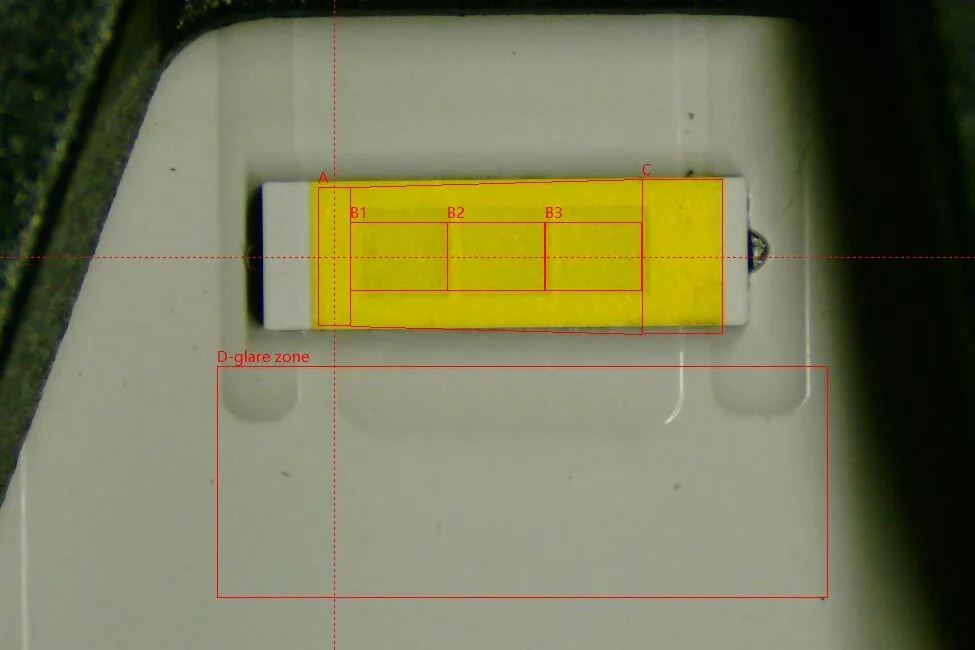
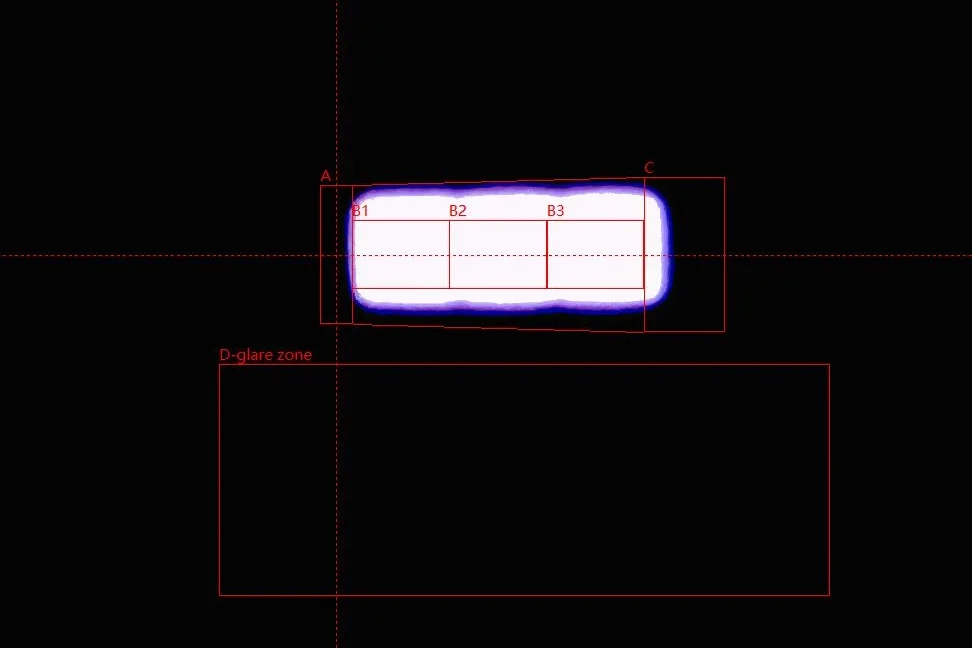
The Box system records the position of the LED emitting area relative to the reference axis and reference plane. In the illuminated E4E image, the long rectangular emitting area extends across the B1, B2 and B3 regions while the lower D glare-control zone remains visually dark.
These photographs document apparent source position and distribution. They do not replace the quantitative luminous-flux ratios required for a stand-alone compliance decision.
White-wall beam pattern
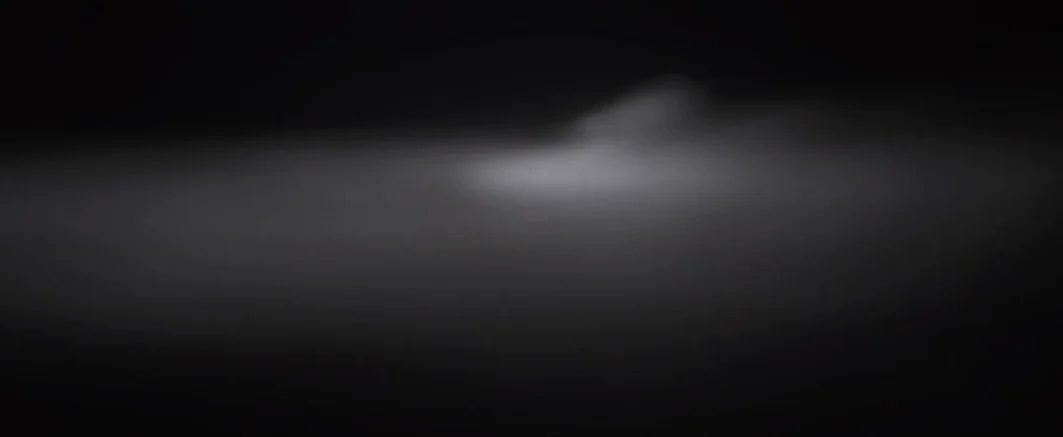
The white-wall image shows a horizontal low-beam cutoff with a pronounced rise near the centre-right transition. The strongest visible region spreads around that rise, while illuminance falls toward the outer field.
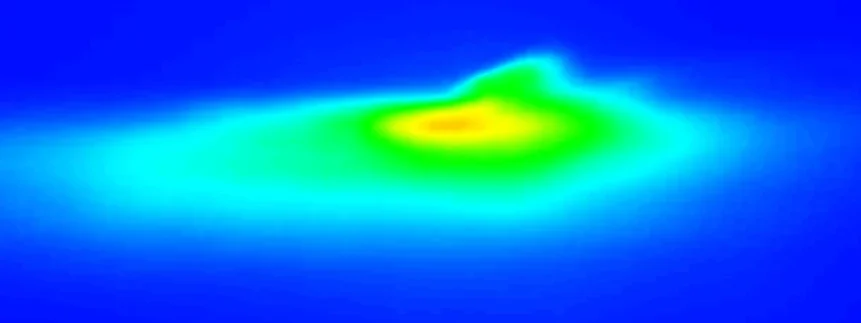
Rainbow map and hotspot distribution
The orange and yellow hotspot is concentrated around the central-right transition and sits within a wider green and cyan field. This agrees with the 50R, 25V and 50V readings and with the lower value recorded farther right at 75R.
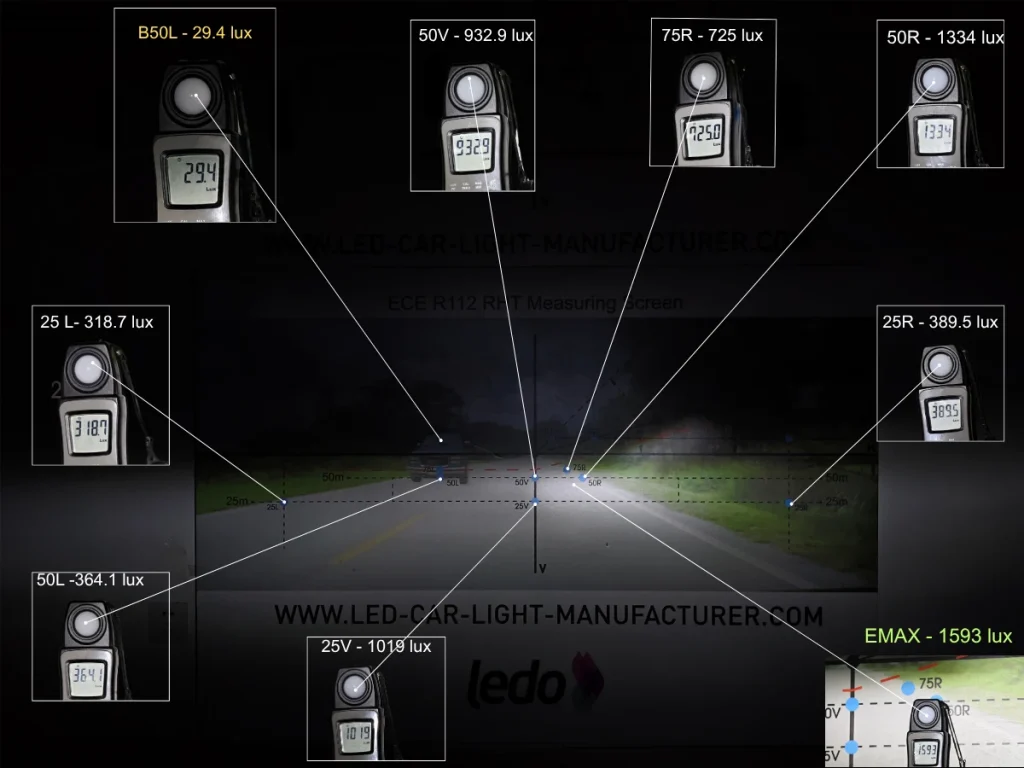
Complete nine-point illuminance results
|
Point |
Measured illuminance |
Reading area |
|---|---|---|
|
25L |
318.7 lux |
Left-side point |
|
50L |
364.1 lux |
Left-side point |
|
B50L |
29.4 lux |
Glare-control point |
|
50V |
932.9 lux |
Centre point |
|
25V |
1,019 lux |
Centre point |
|
75R |
725 lux |
Right-side point |
|
50R |
1,334 lux |
Right-side point |
|
25R |
389.5 lux |
Right-side point |
|
EMAX |
1,593 lux |
Peak reference |
The 1,334 lux result at 50R was substantially higher than the 725 lux result at 75R. Together with 1,019 lux at 25V and 932.9 lux at 50V, the record supports the broad centre/right concentration visible in the optical images.
B50L is related to glare control. Lower is better. The recorded B50L value was 29.4 lux.
EMAX was 1,593 lux and is the peak reference. It does not replace the complete nine-point table or the beam images.
Temperature and operating noise
After 30 minutes, the thermal image recorded a maximum emitting-area surface temperature of 111 degrees C. The secondary point was 41.8 degrees C and the reference shown was 25.0 degrees C. The 111 degrees C reading is an emitting-area surface temperature; LED junction temperature and service life were not measured.
Operating noise was 61.9 dBA at a distance of 3.5 cm from the fan. This is a close-range bench reading. Installed perception depends on enclosure, distance and vehicle background noise.
Author: Jack Liu, Co-founder & Product Director, LEDOAUTO
Regulatory review: LEDOAUTO Engineering Team, verified against official UNECE documents
Last reviewed: 19 Aug 2026
E4E H11 LEDr FAQ
References
luxfighter H11 LEDr Review: Construction, Beam Pattern, Illuminance, Temperature and Noise
OSRAM H11 LEDr Review:Construction, Beam Pattern, Illuminance, Temperature and Noise
Philips H11 LEDr Review:Construction, Beam Pattern, Illuminance, Temperature and Noise
EB H11 LEDr Review: Construction, Beam Pattern, Illuminance, Temperature and Noise
