
This article is part of our engineering review archive and documents the packaging, construction, optical performance, temperature and operating noise of one OSRAM NIGHT BREAKER LED SMART ECE H11 LEDr sample.
Test conditions
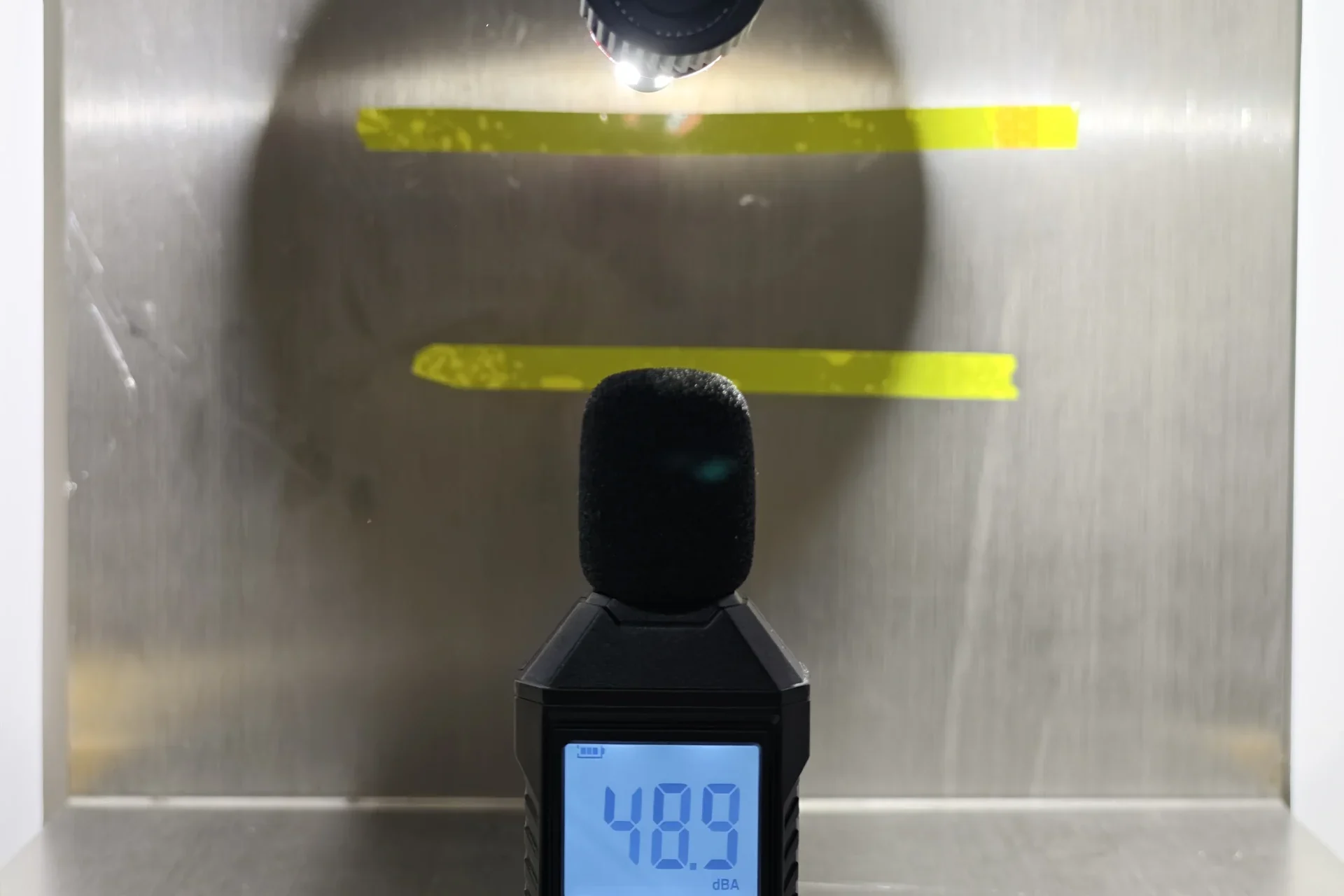
The lamp operated at 13.2 V in a 26°C test environment. Illuminance measurements were recorded after a 30-minute warm-up using the same E-Mark screen positions documented in the EB H11 LEDr benchmark review. Emitting-area temperature was recorded after 30 minutes, and operating noise was measured at 3.5 cm from the cooling fan.
What this review found
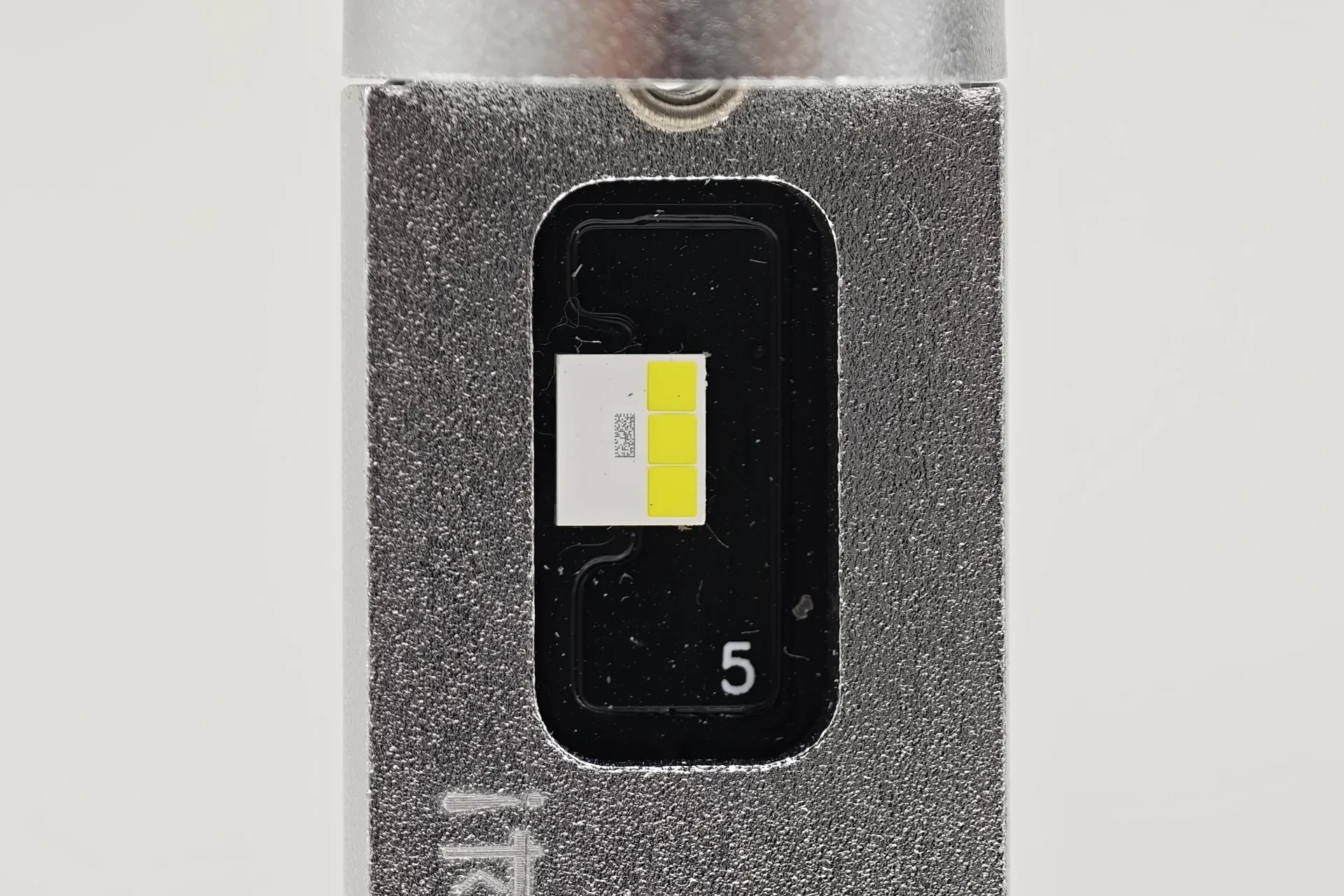
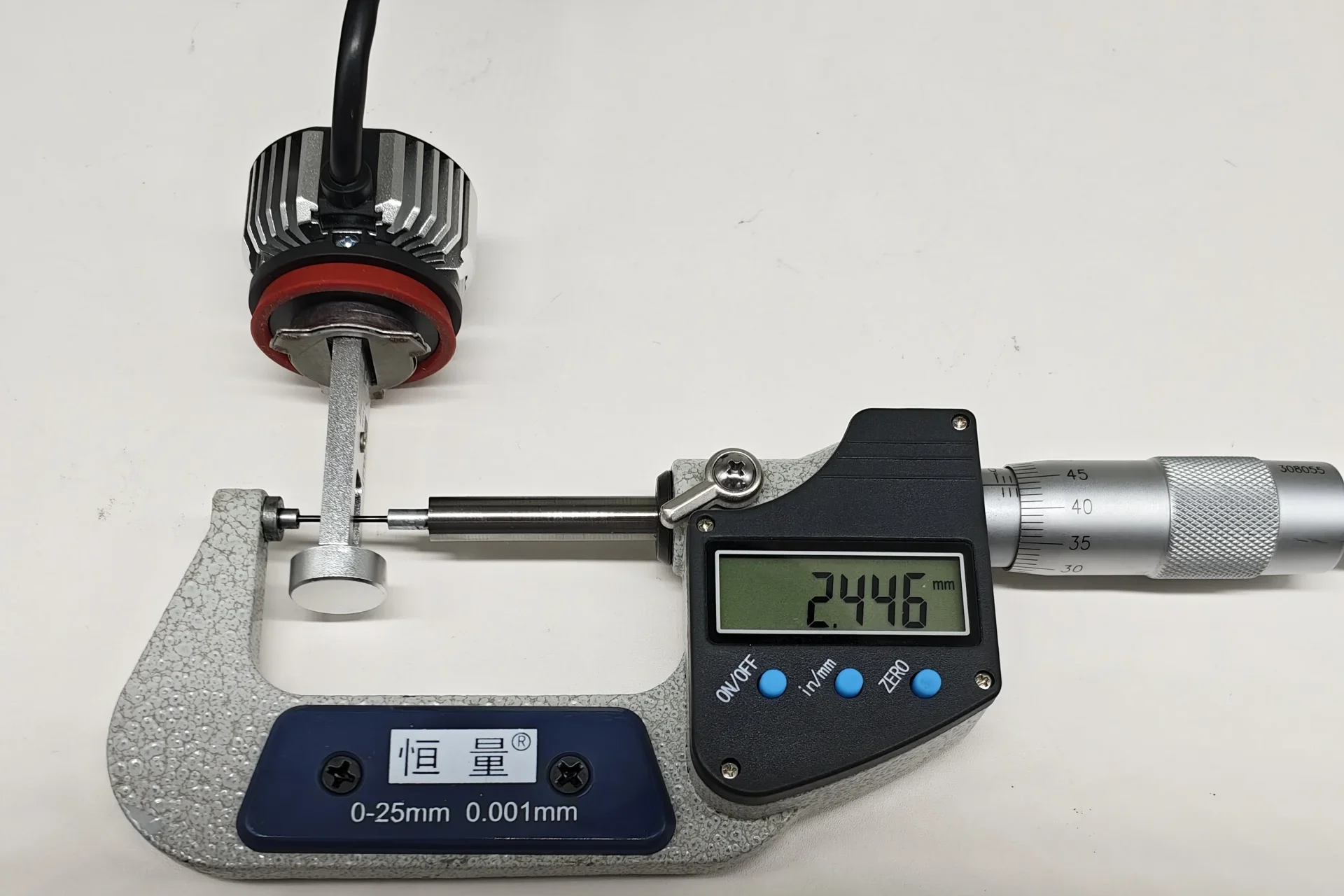
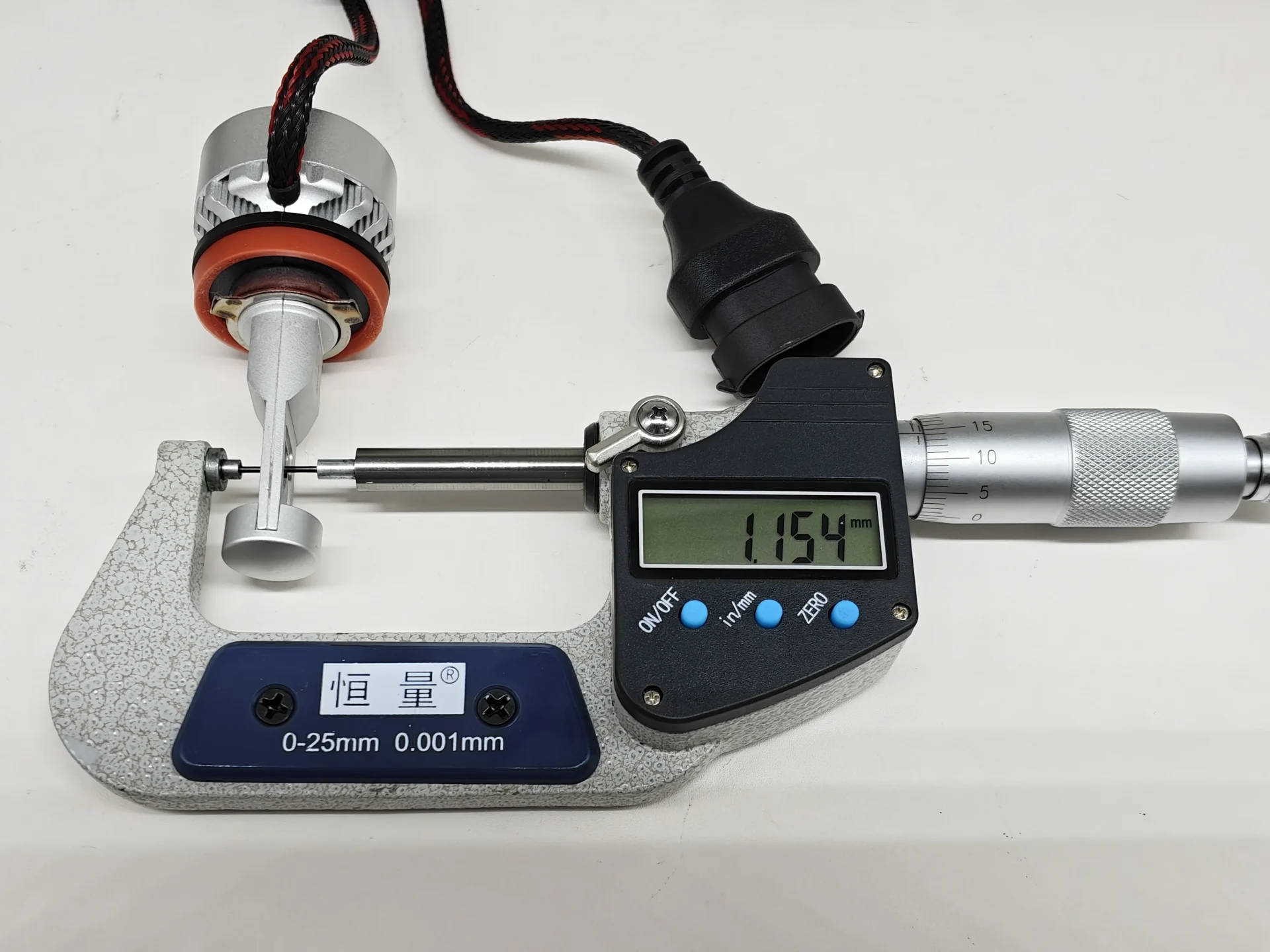
The OSRAM sample’s defining optical feature is the combination of three visible phosphor segments on each side of its rectangular emitter blade and a measured 2.446 mm distance between the opposing LED emitting surfaces. That distance remains within the 2.9 mm ECE R37 Configuration-2 limit, but the recorded beam shows why geometry must be judged together with output: the defined cutoff and right-side rise are accompanied by a concentrated central-right bright region rather than a uniformly spread field.
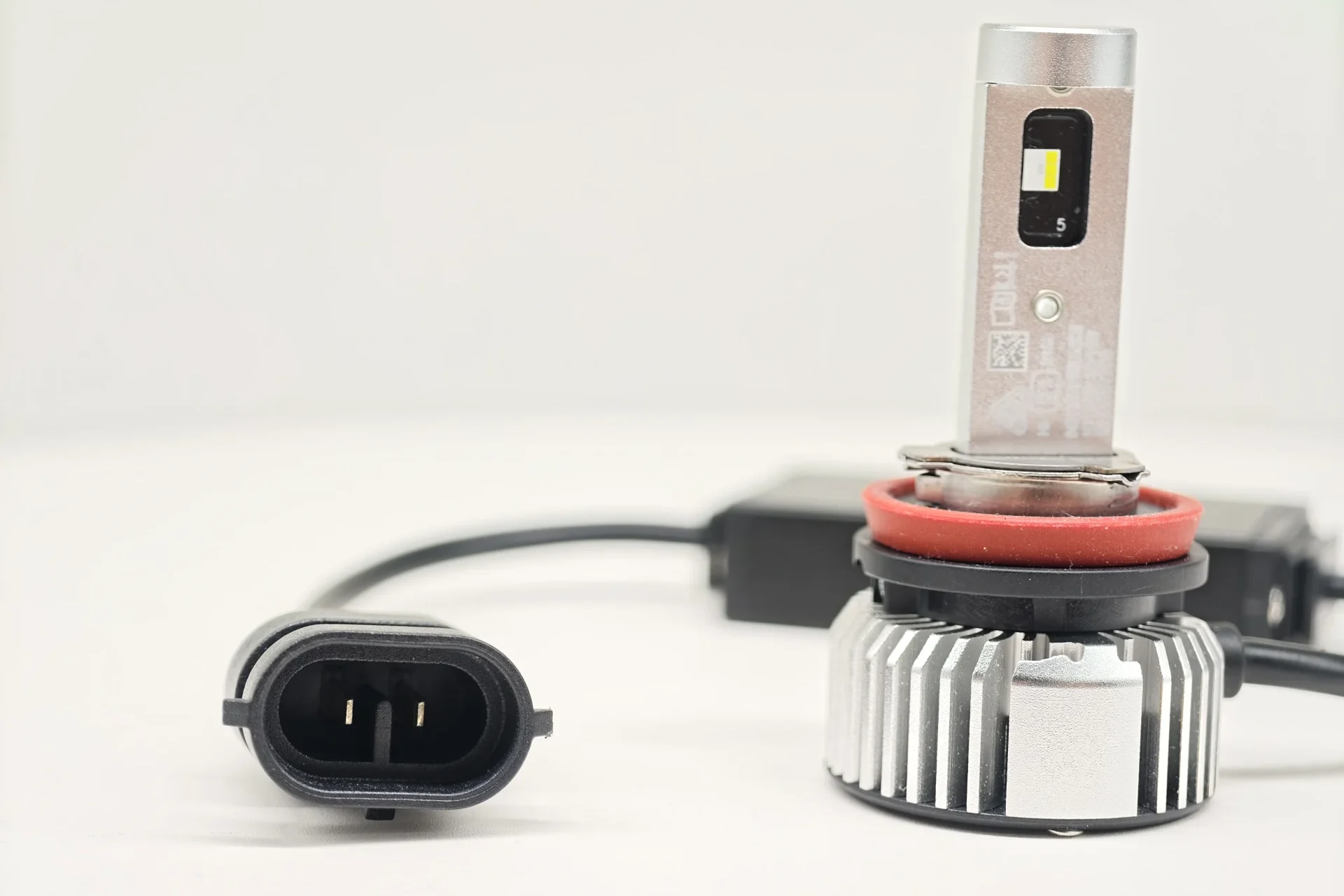
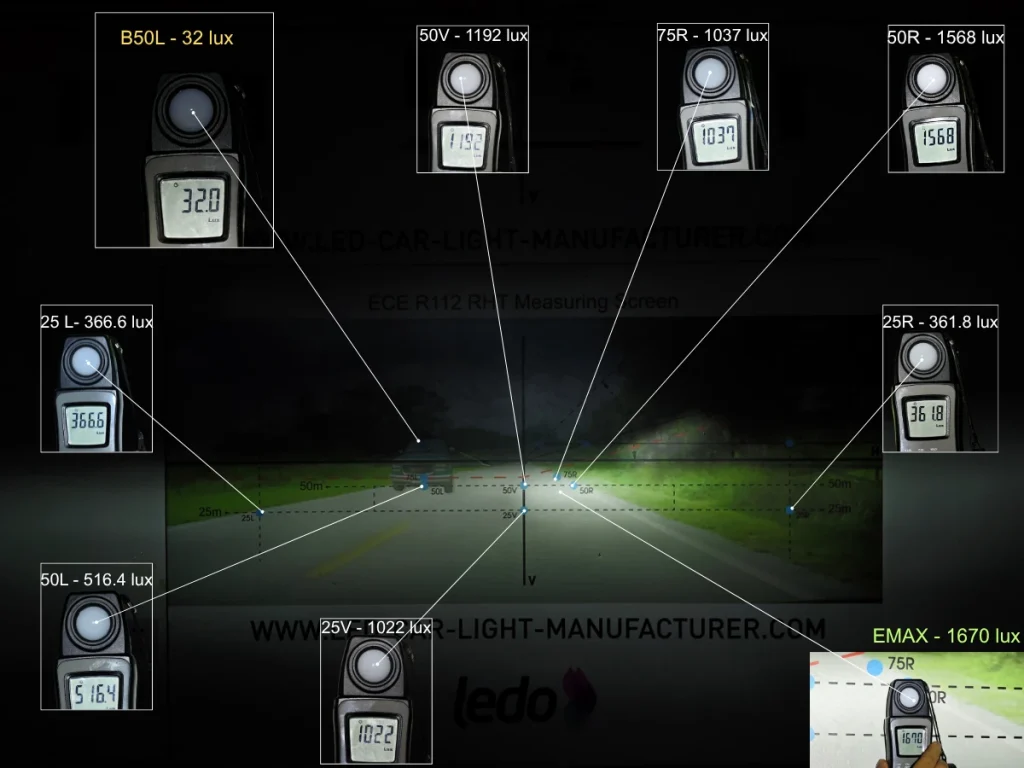
The nine-point test recorded 1,568 lux at 50R, 1,037 lux at 75R and 1,670 lux at EMAX. OSRAM pairs this optical layout with a radial aluminium heat sink, an integrated fan and an external driver. This separates part of the electronics from the lamp body and provides active cooling, while requiring space for the driver and cable behind the headlamp. After 30 minutes, the emitting-area temperature was 74.3°C; operating noise was 48.9 dBA at 3.5 cm. Together, these results document this sample’s specific balance of concentrated low-beam output, active thermal control and installation space.
Packaging and included parts
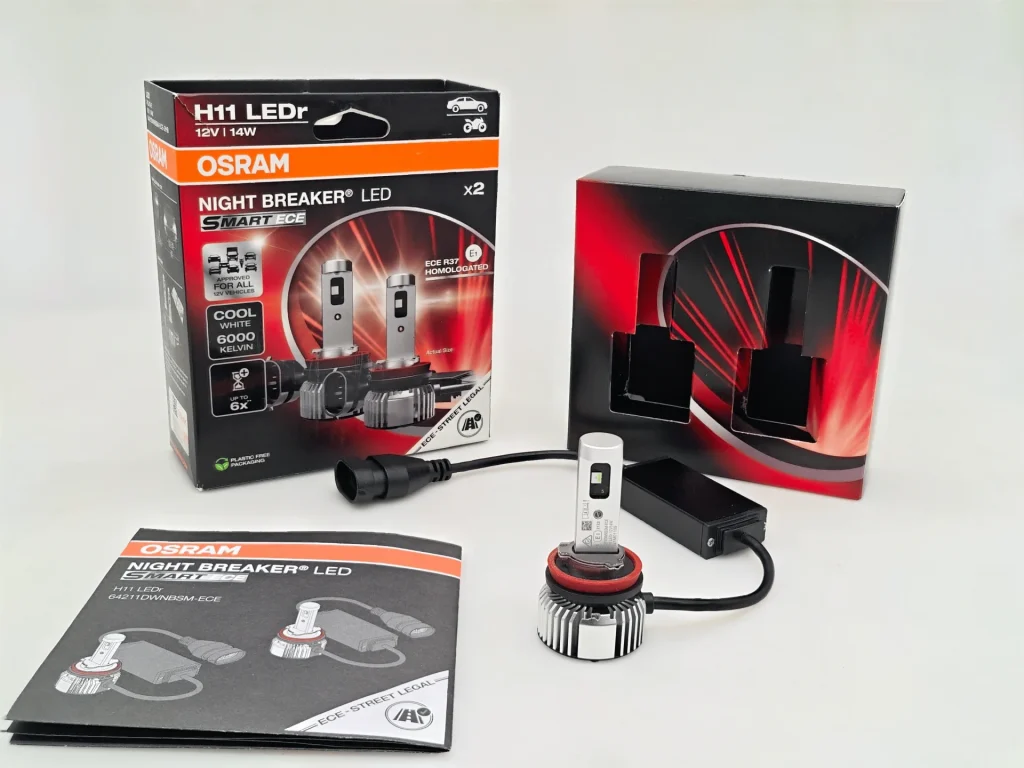
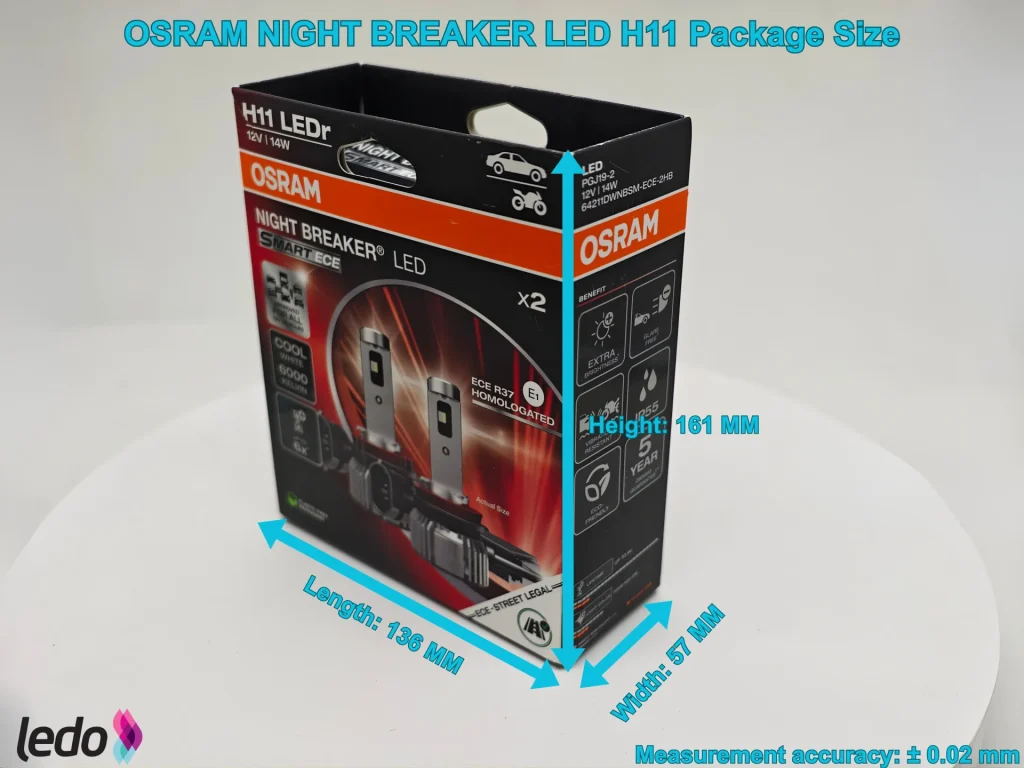
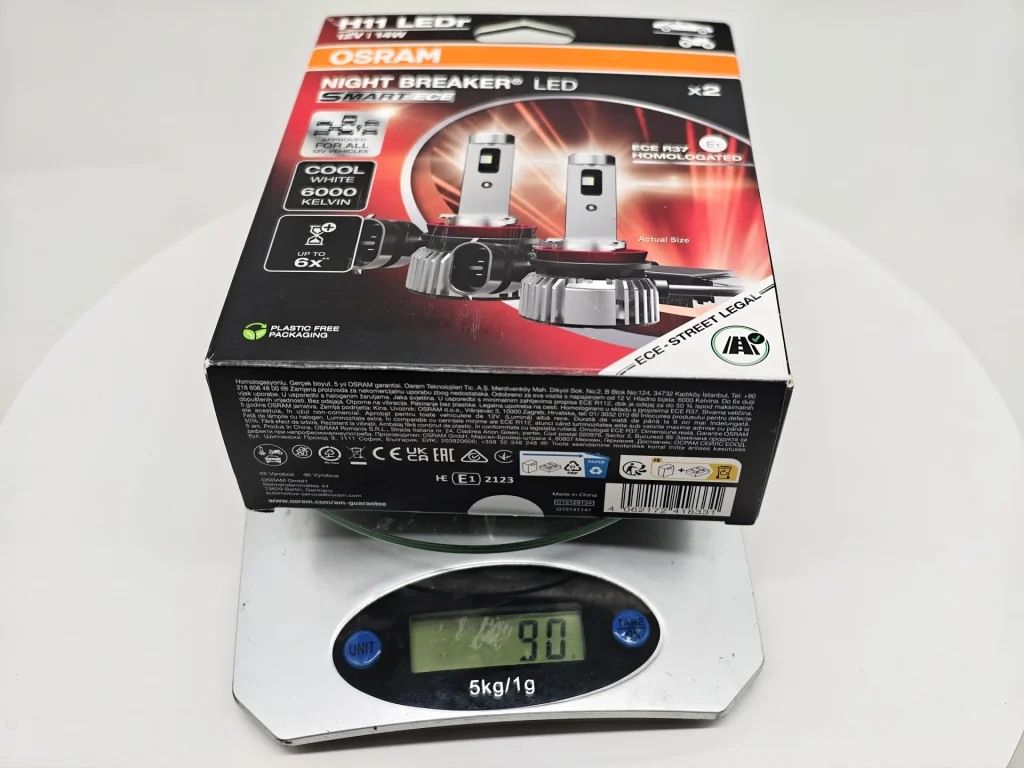
The reviewed package contained the OSRAM H11 LEDr lamps, external driver modules, H11 connection leads, internal card support and printed instructions. The box identifies the product as NIGHT BREAKER LED SMART ECE and shows ECE R37 homologation. Our ECE R37 background explains the regulatory context used for this review.
H11-specific PGJ19-2 interface and lamp construction
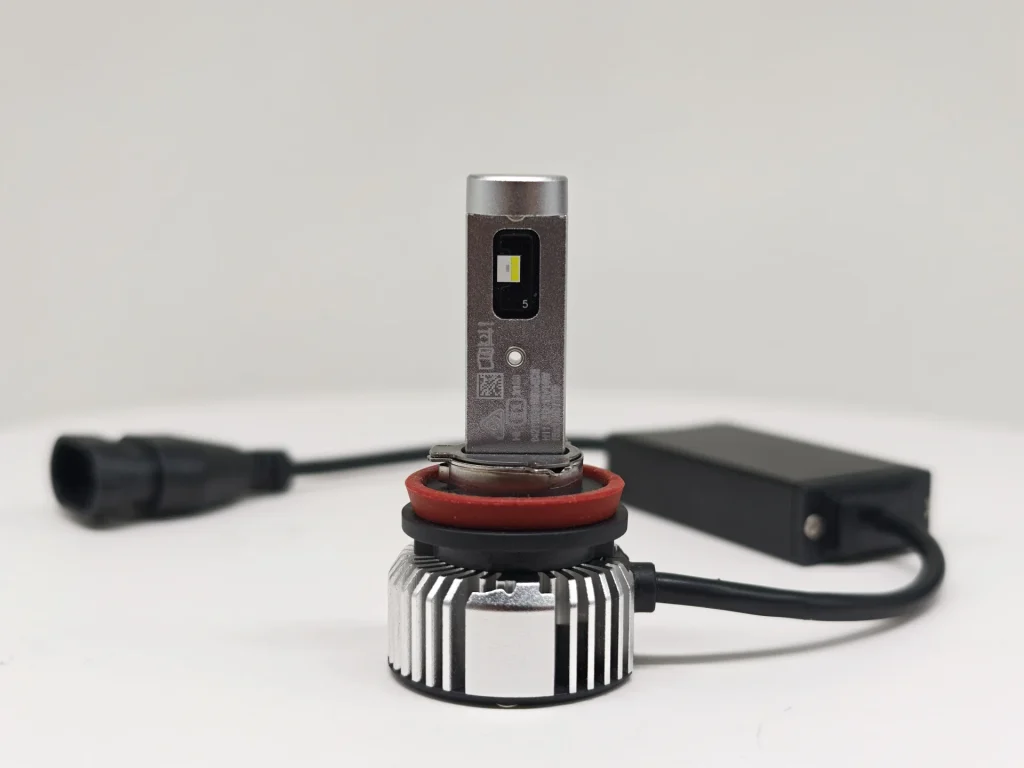
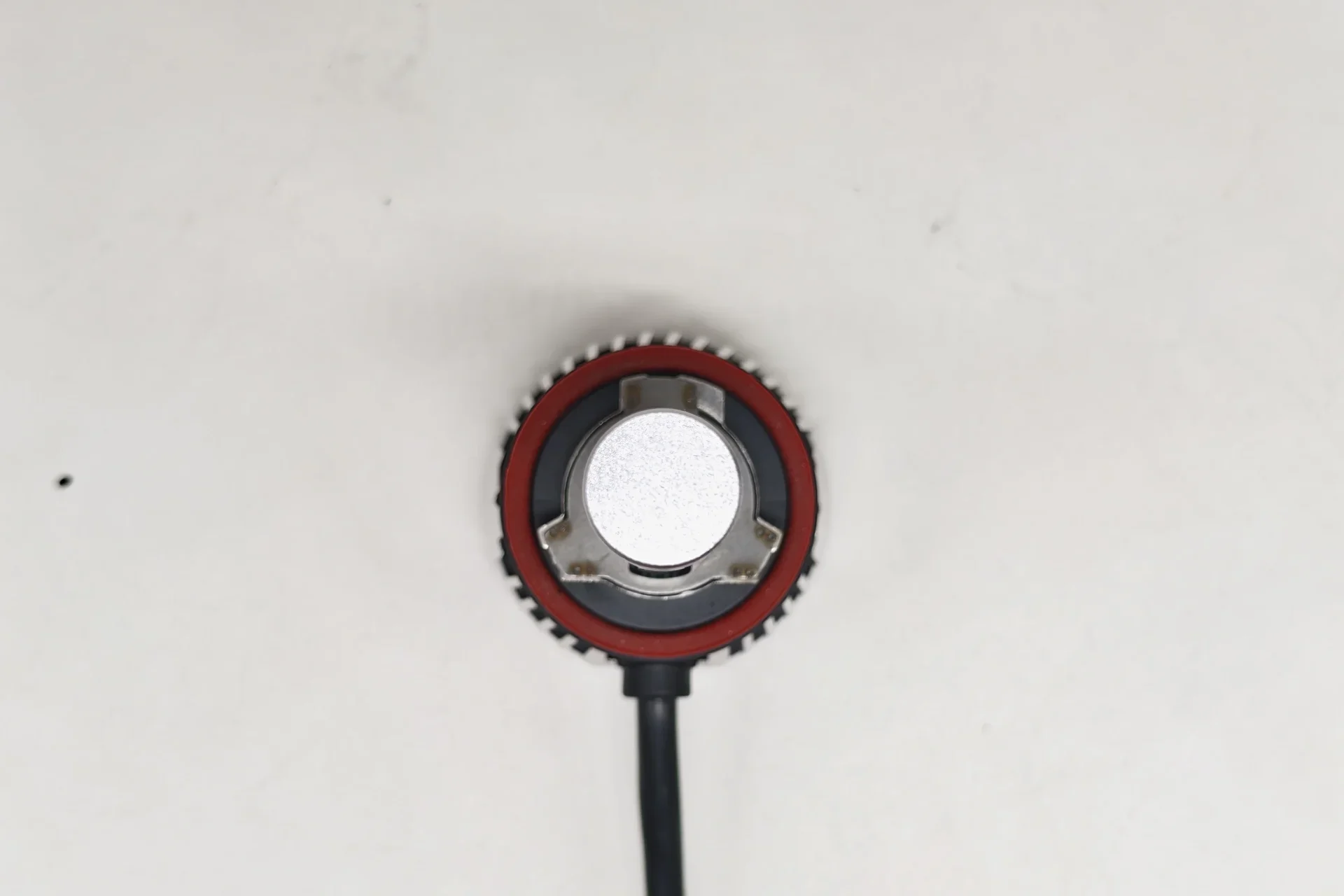
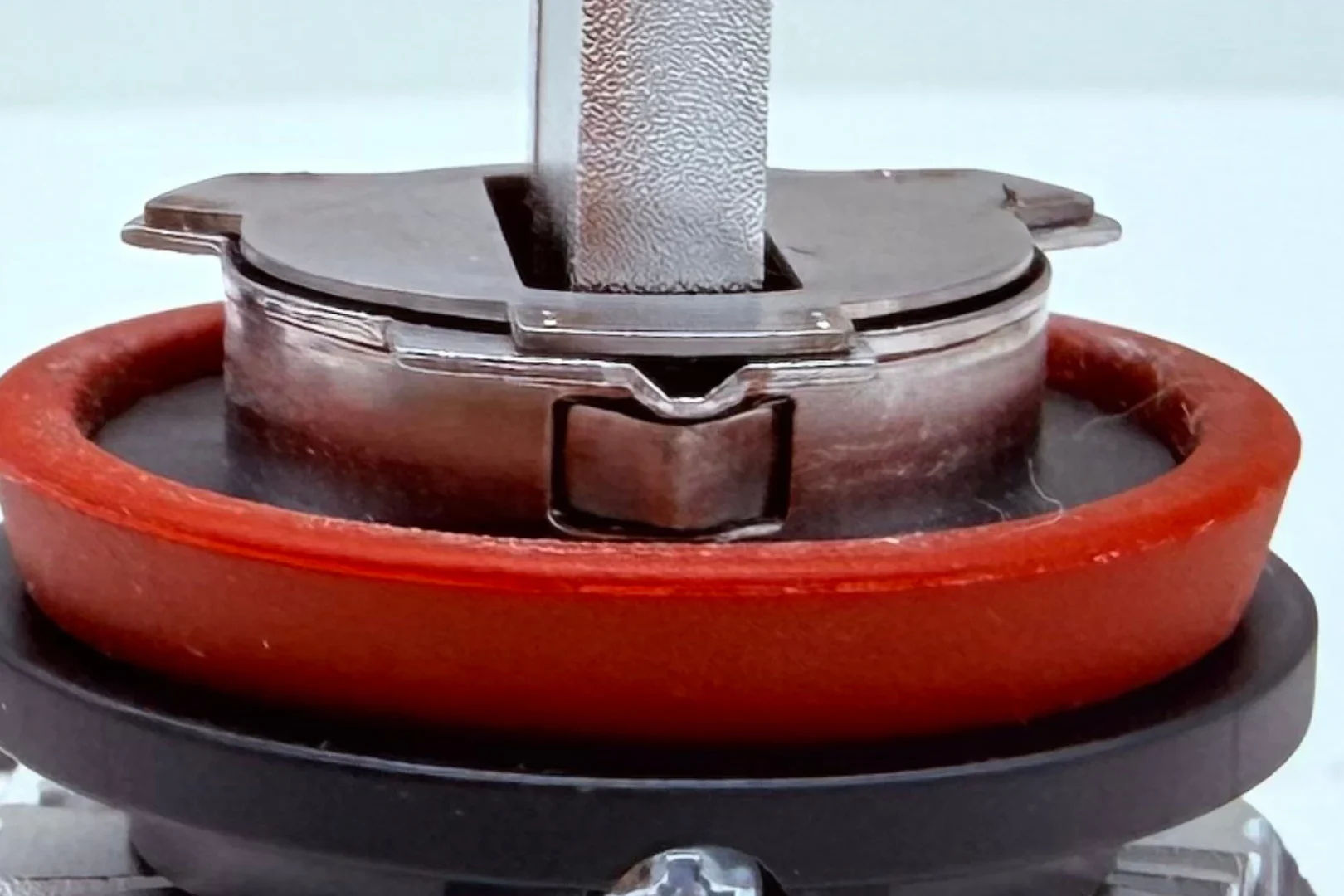
The sample uses a keyed PGJ19-2 mounting interface, a red sealing ring, a rectangular aluminium emitter blade, a radial finned heat sink and an external driver connected by a short cable. The separate driver moves part of the electronic circuitry outside the lamp body, but the module and cable require installation space behind the headlamp.
LED Emitter Structure and Box System
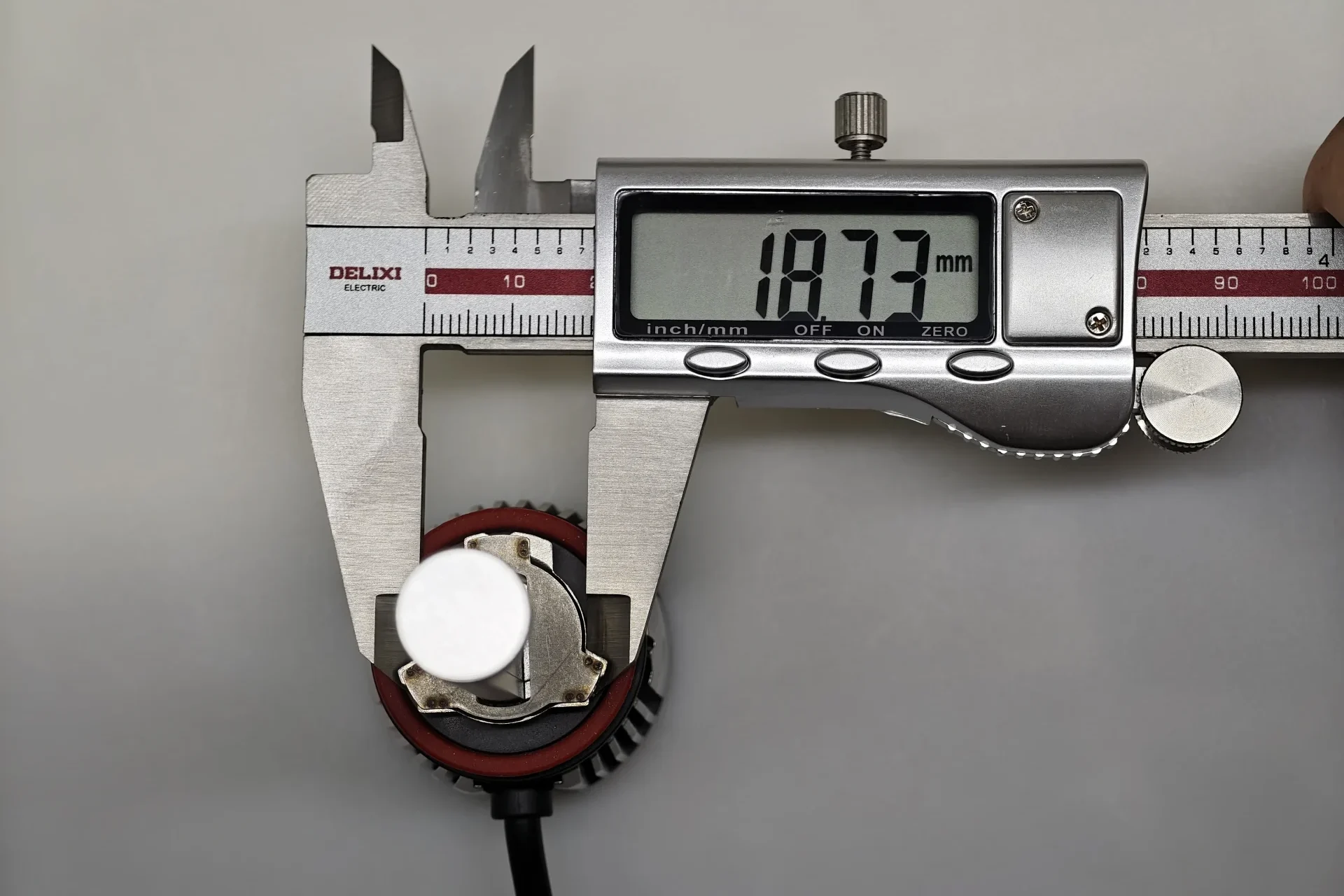
Each side of the rectangular blade carries a compact emitting area formed by three visible phosphor segments. The UNECE R.E.5 light-source category resolution is the neutral official source for the applicable category specifications; the H11 LEDr Configuration-2 opposing-surface limit applied here is 2.9 mm. The micrometer image records the reviewed OSRAM sample at 2.446 mm between the two opposing LED emitting surfaces.
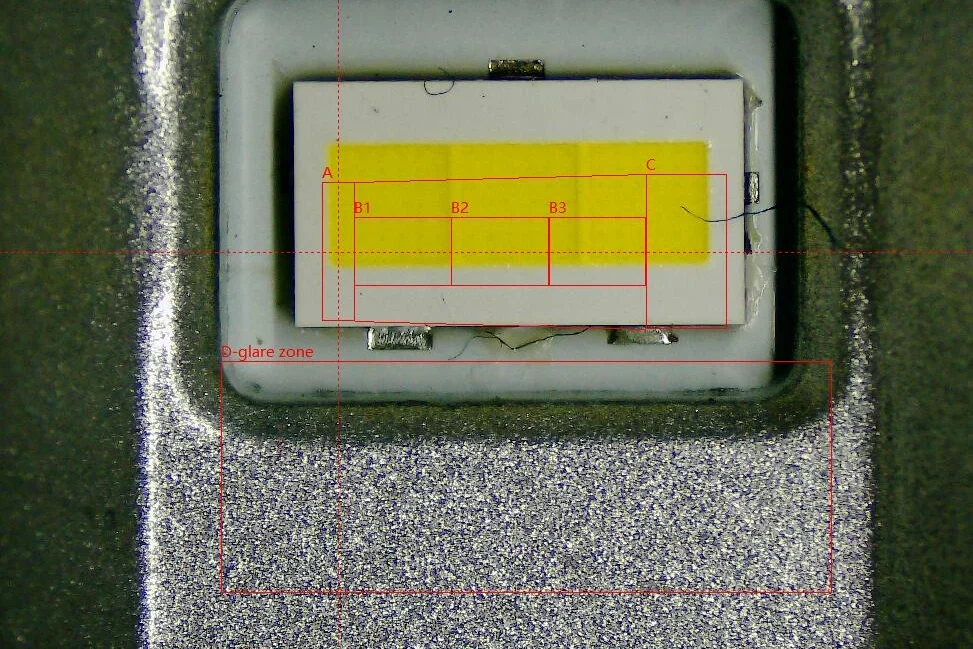
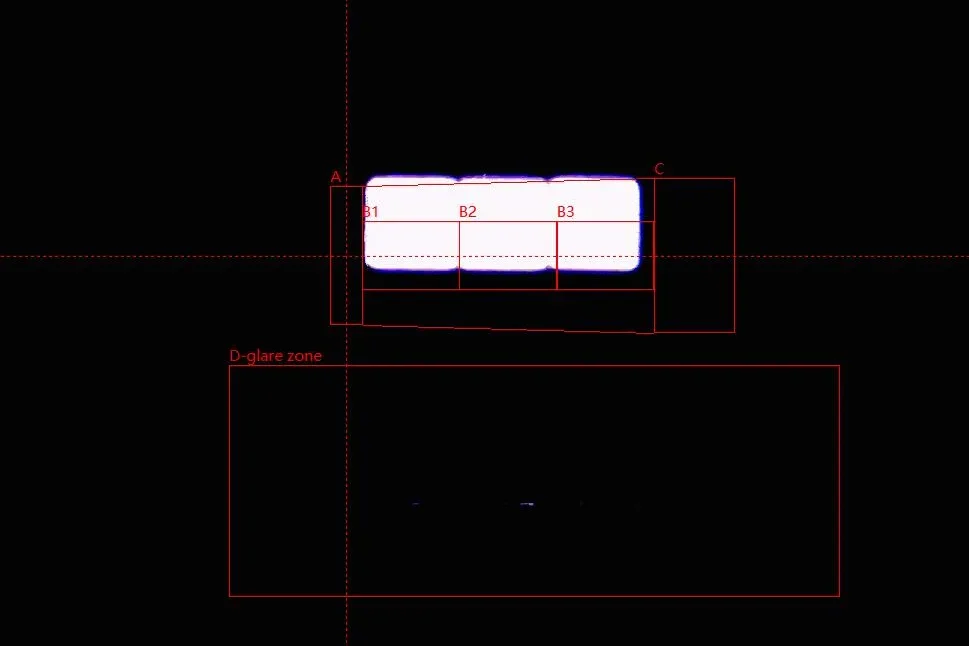
Box system emitting-area inspection
The Box system images record the lamp in the reference frame before and during illumination. They document emitting-area position and orientation without replacing the downstream beam-pattern and illuminance measurements.
White-wall beam pattern
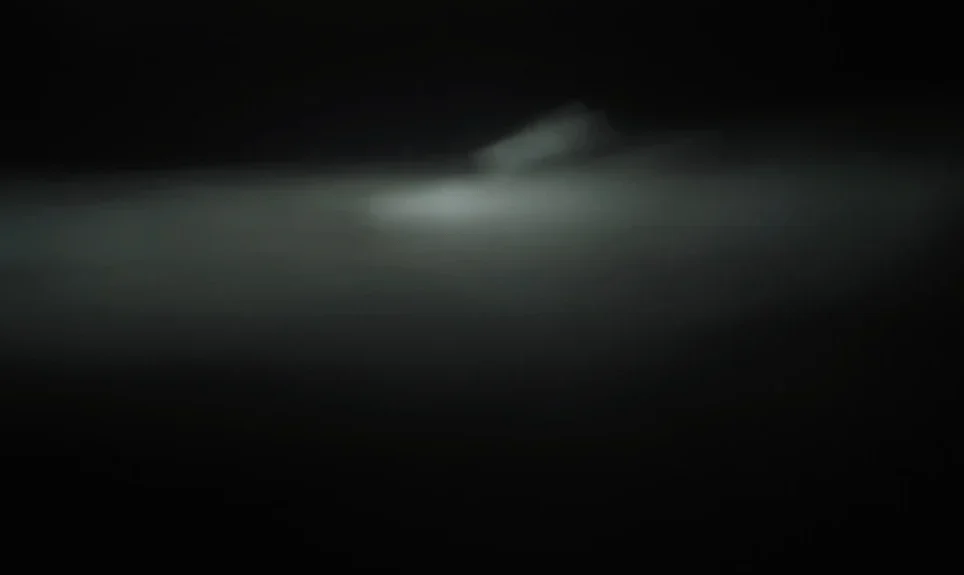
The white-wall image shows a defined horizontal cutoff in the recorded low-beam pattern, with the right-side rise expected from the test setup. A concentrated bright region sits near the central-right area rather than spreading uniformly across the screen.
Rainbow map and hotspot distribution
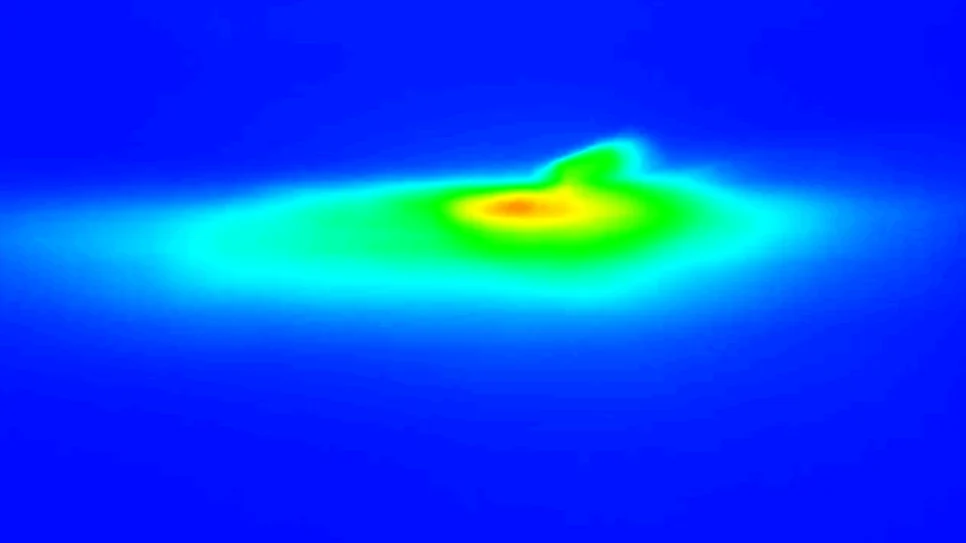
The false-colour map places the highest-intensity region near the central-right portion of the beam, with intensity reducing outward through the green and blue zones. This agrees with the hotspot position visible in the white-wall record.
Complete nine-point illuminance results
The recorded values are reported individually so that the right-side road points, centre-line points, left-side points and maximum reading can be compared without reducing the result to one headline number.
|
Measurement point |
Illuminance |
|---|---|
|
B50L |
32 lux |
|
50V |
1,192 lux |
|
75R |
1,037 lux |
|
50R |
1,568 lux |
|
25L |
366.6 lux |
|
25R |
361.8 lux |
|
50L |
516.4 lux |
|
25V |
1,022 lux |
|
EMAX |
1,670 lux |
Temperature and operating noise
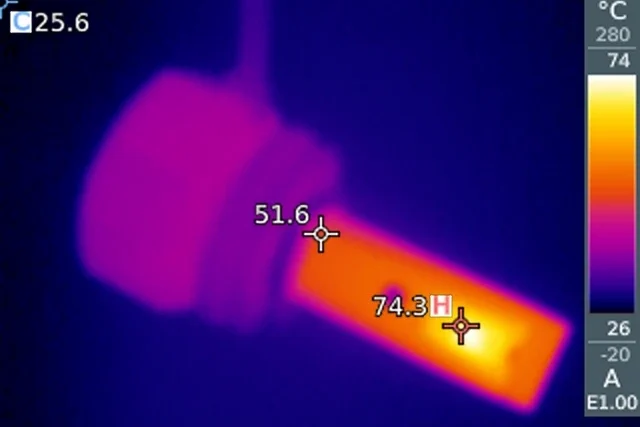
The thermal image records 74.3°C at the emitting-area hotspot after 30 minutes, while the rear assembly was recorded at 51.6°C in the same frame. The integrated fan produced 48.9 dBA at the 3.5 cm measurement distance. These values document the active-cooling result and its measurable acoustic trade-off under the stated bench conditions.
OSRAM H11 LEDr FAQ
Author: Jack Liu, Co-founder & Product Director, LEDOAUTO
Regulatory review: LEDOAUTO Engineering Team, verified against official UNECE documents
Last reviewed: 19 Aug 2026
References
E4E H11 LEDr Review: Construction, Beam Pattern, Illuminance, Temperature and Noise
luxfighter H11 LEDr Review: Construction, Beam Pattern, Illuminance, Temperature and Noise
Philips H11 LEDr Review:Construction, Beam Pattern, Illuminance, Temperature and Noise
EB H11 LEDr Review: Construction, Beam Pattern, Illuminance, Temperature and Noise
