
This article is part of our engineering review archive and records the packaging, construction, optical performance, temperature and operating noise of one EB H11 LEDr sample under the stated bench conditions.
Test conditions
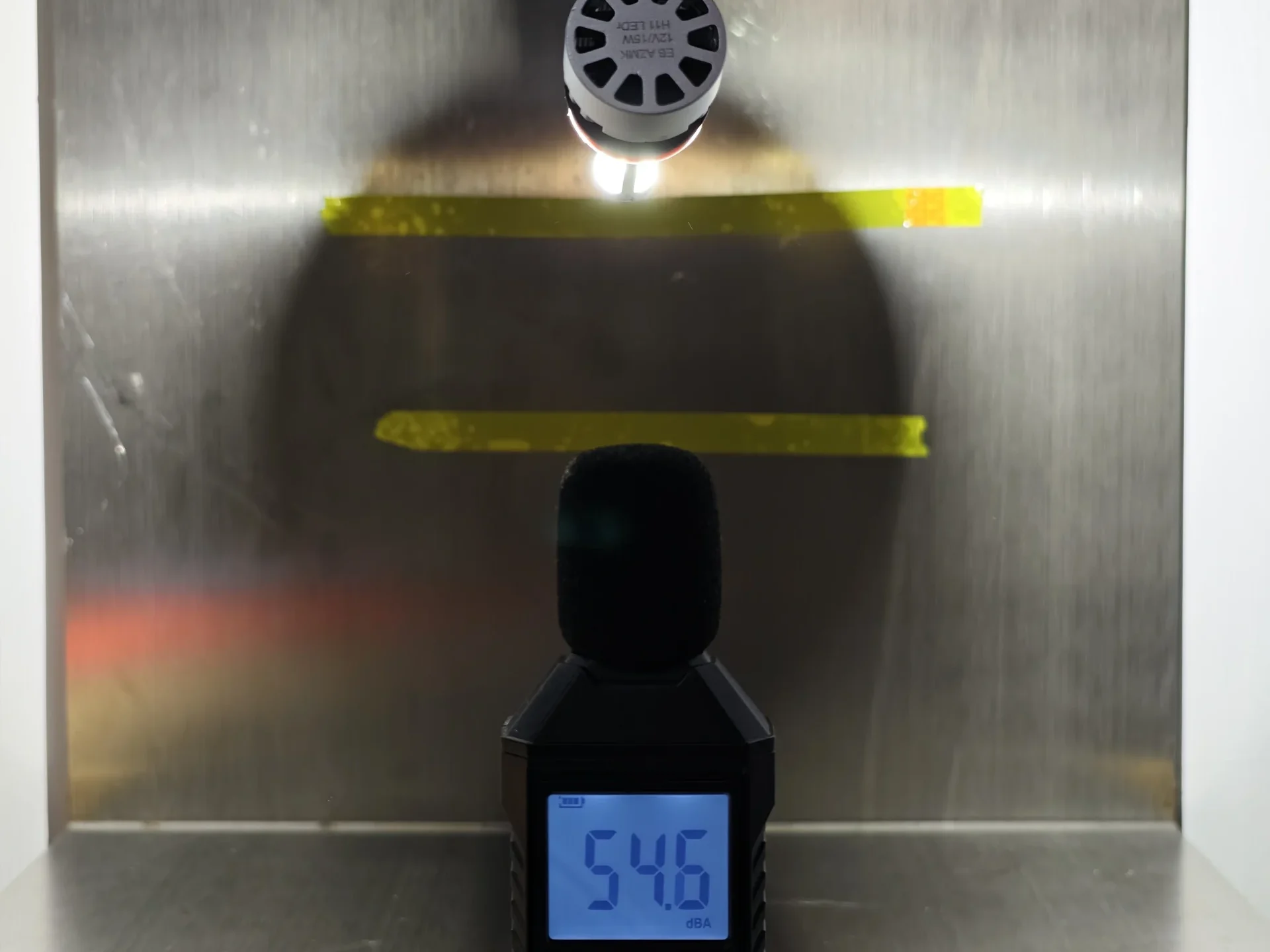
Illuminance was recorded at the defined E-Mark measurement-panel points at a distance of 3.5 m. The lamp operated at 13.2 V in a 26 degrees C room and was warmed for 30 minutes before the illuminance readings were taken. Emitting-area surface temperature was recorded after 30 minutes. Operating noise was measured 3.5 cm from the fan.
What this review found
The review follows the product from the outside in: packaging and included parts, the H11 interface and lamp structure, the opposing LED emitting surfaces, the Box system, beam pattern, illuminance distribution, temperature and operating noise.
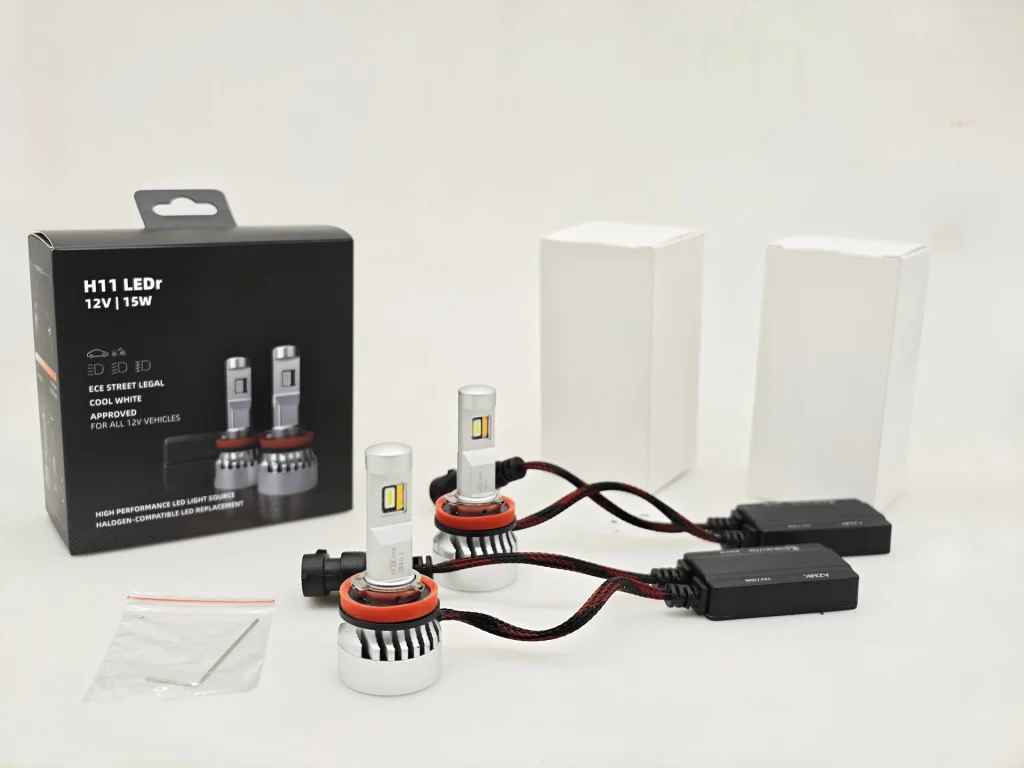
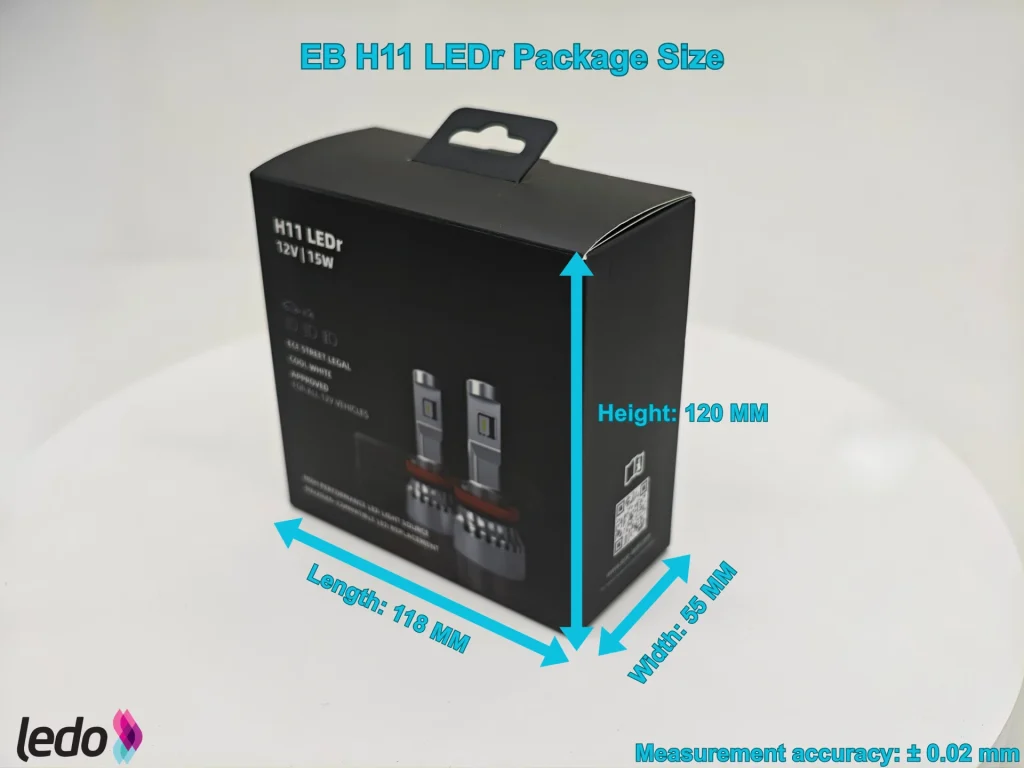
The package uses environmentally responsible materials made to the latest EU PPWR requirements and retains an integrated hanging tab for retail display.
The lamp uses an H11-specific PGJ19-2 keyed base. A metal clamping spring presses the lamp into the V support, stabilising its axial and rotational position so the opposing LED emitting surfaces sit in the correct optical position.
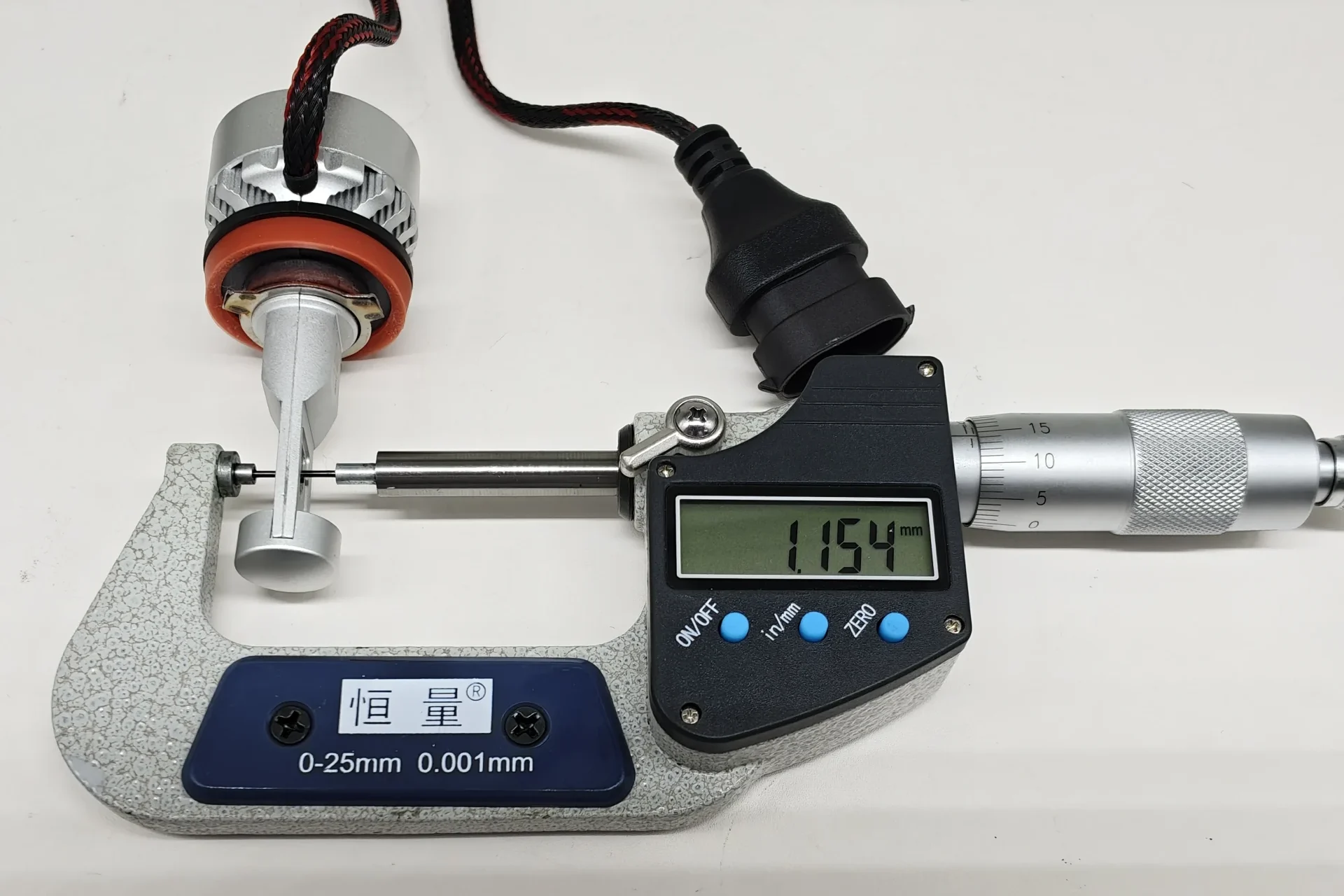
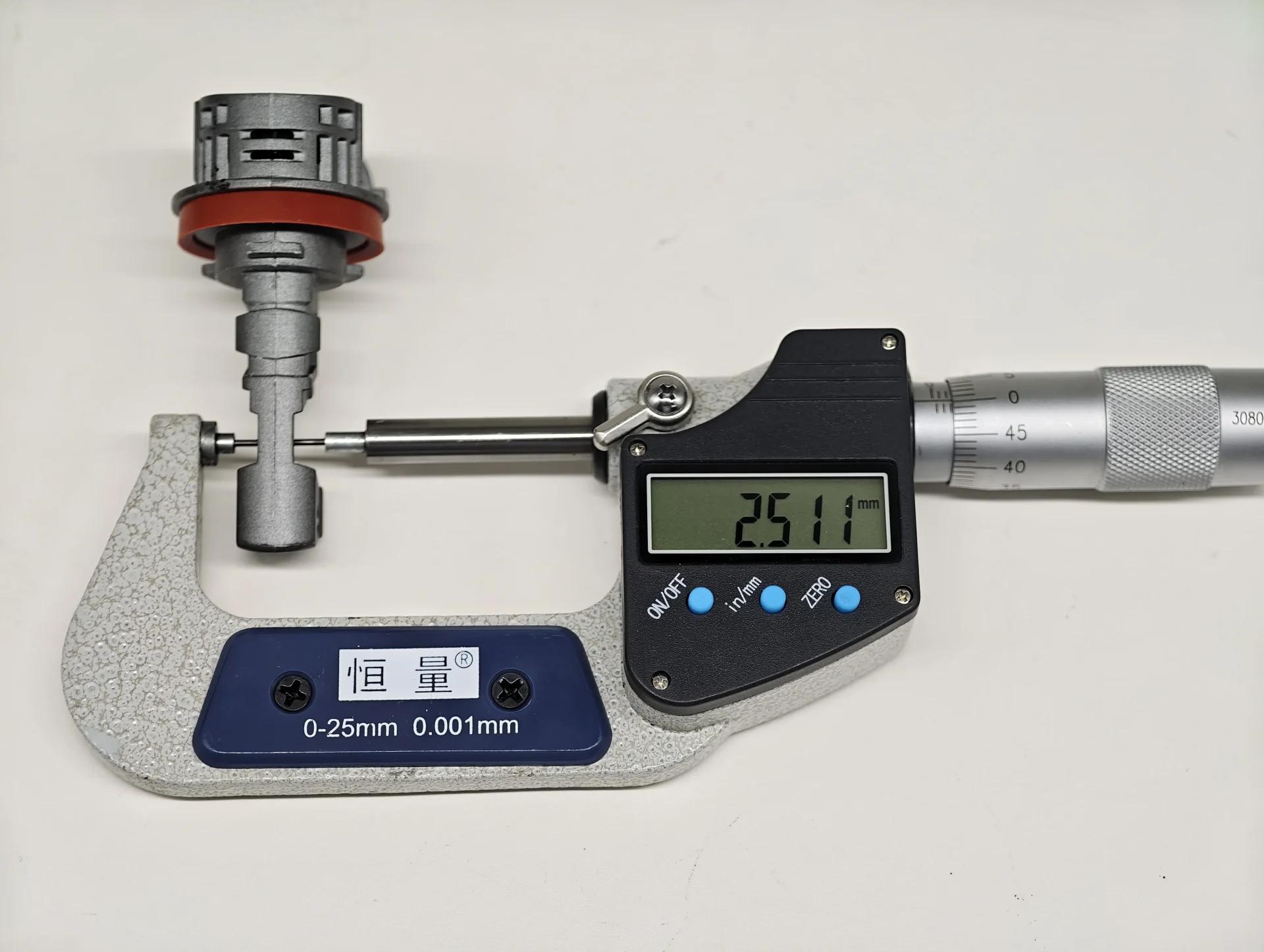
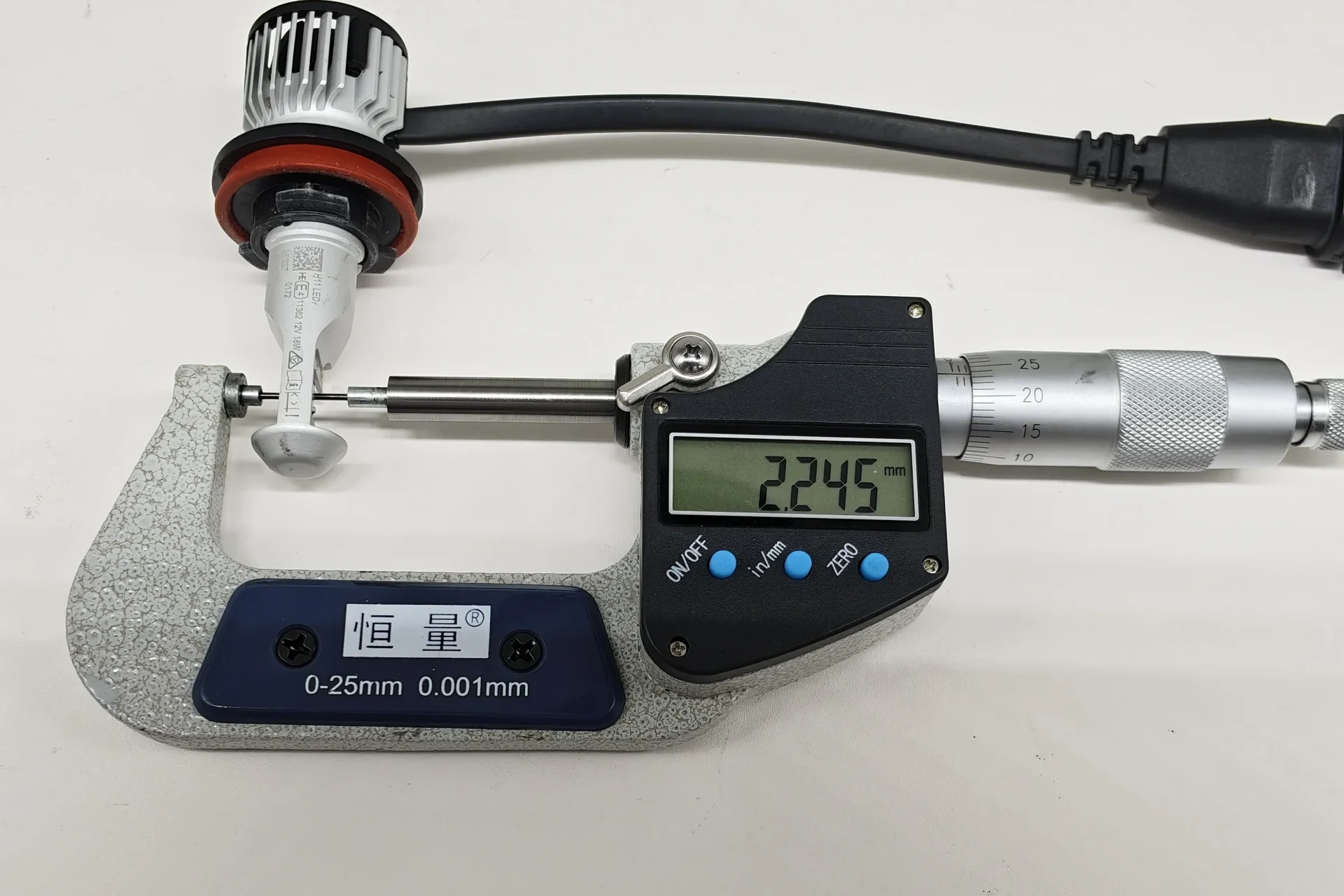
The two opposing LED emitting surfaces are 1.154 mm apart. This is not chip thickness. With the same emitting area and brightness, a smaller separation concentrates the light more tightly and produces higher illuminance.
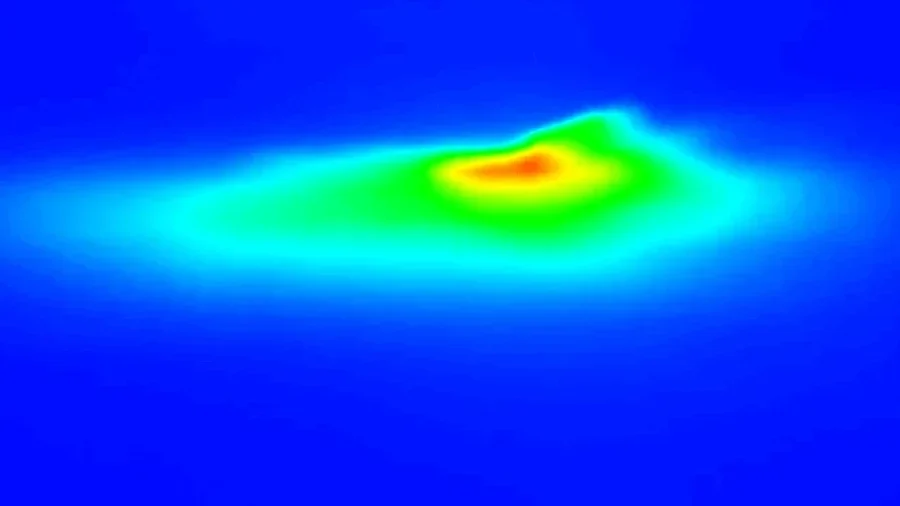
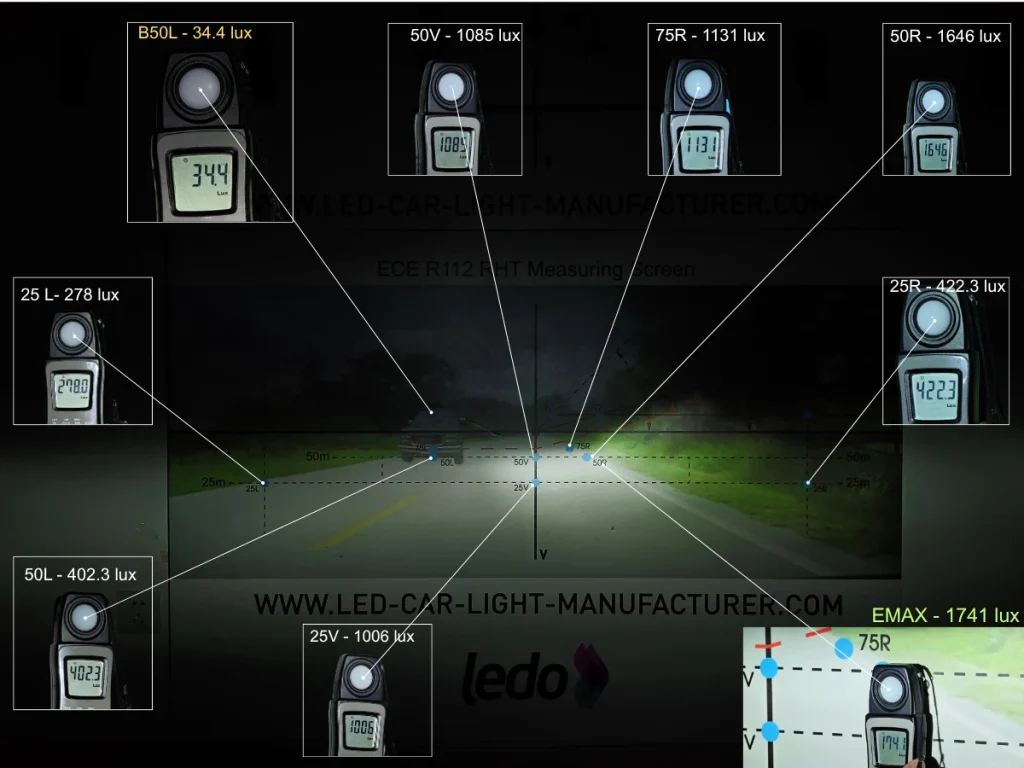
Recorded illuminance was 1,646 lux at 50R and 1,131 lux at 75R. The rainbow-map hotspot was concentrated in the central-right area. EMAX was 1,741 lux and B50L was 34.4 lux.
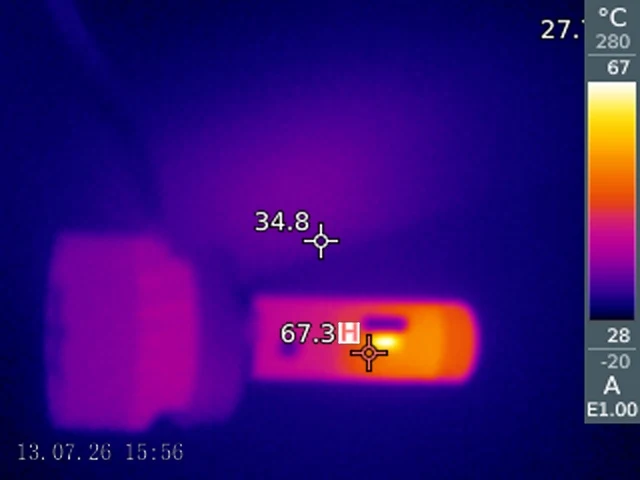
After 20 minutes, the emitting-area surface temperature was 67.3 degrees C. Operating noise was 54.6 dBA at 3.5 cm from the fan.
Packaging and included parts
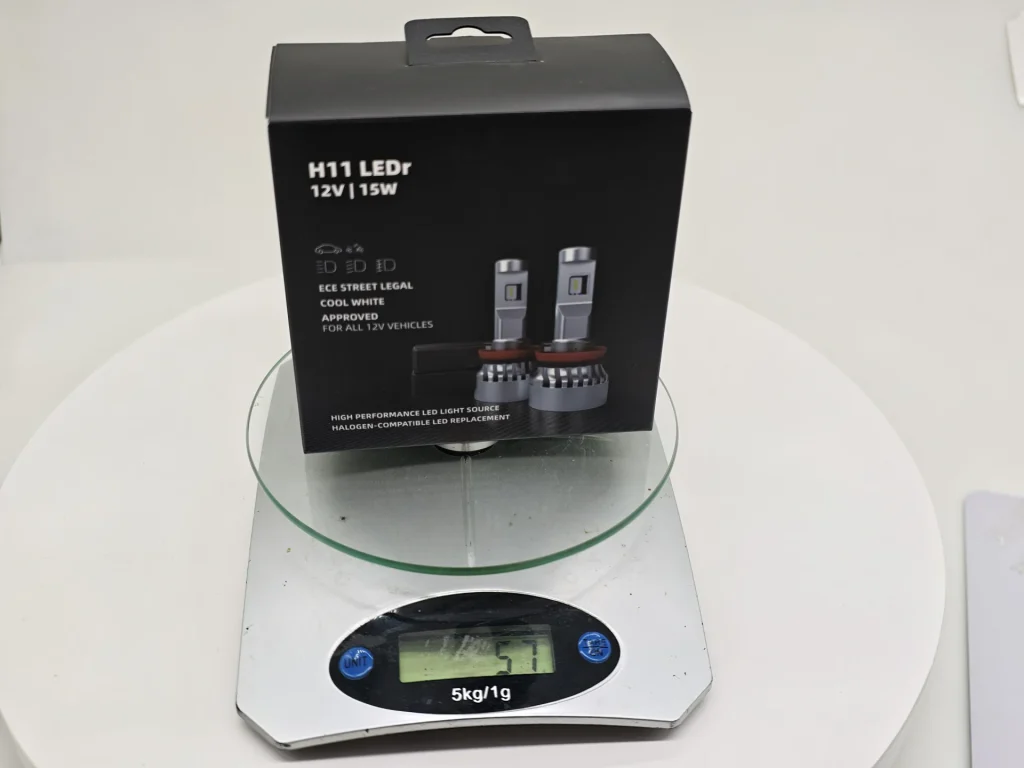
The package is marked H11 LEDr, 12 V and 15 W. One set contains two lamps, two external drivers and an accessory bag. The box measures 118 x 55 x 120 mm and the empty package weighs 51 g.
The packaging uses recyclable, low-impact materials and retains an integrated hanging tab for supermarket and automotive retail hanging racks.
H11-specific PGJ19-2 interface and lamp construction
The lamp uses an H11 interface and a dedicated PGJ19-2 keyed base, with an orange waterproof sealing ring, metal clamping spring, aluminium heat sink and rear cooling fan. IEC lamp-base specifications,define PGJ19-2 for H11, including defined locating keys and keyed interface geometry.
Some H11 LED products use a generic base. A generic base may physically fit, but it does not comply with the specified H11 keyed interface structure.The related ECE R37 background explains why the specified interface and reference geometry matter.
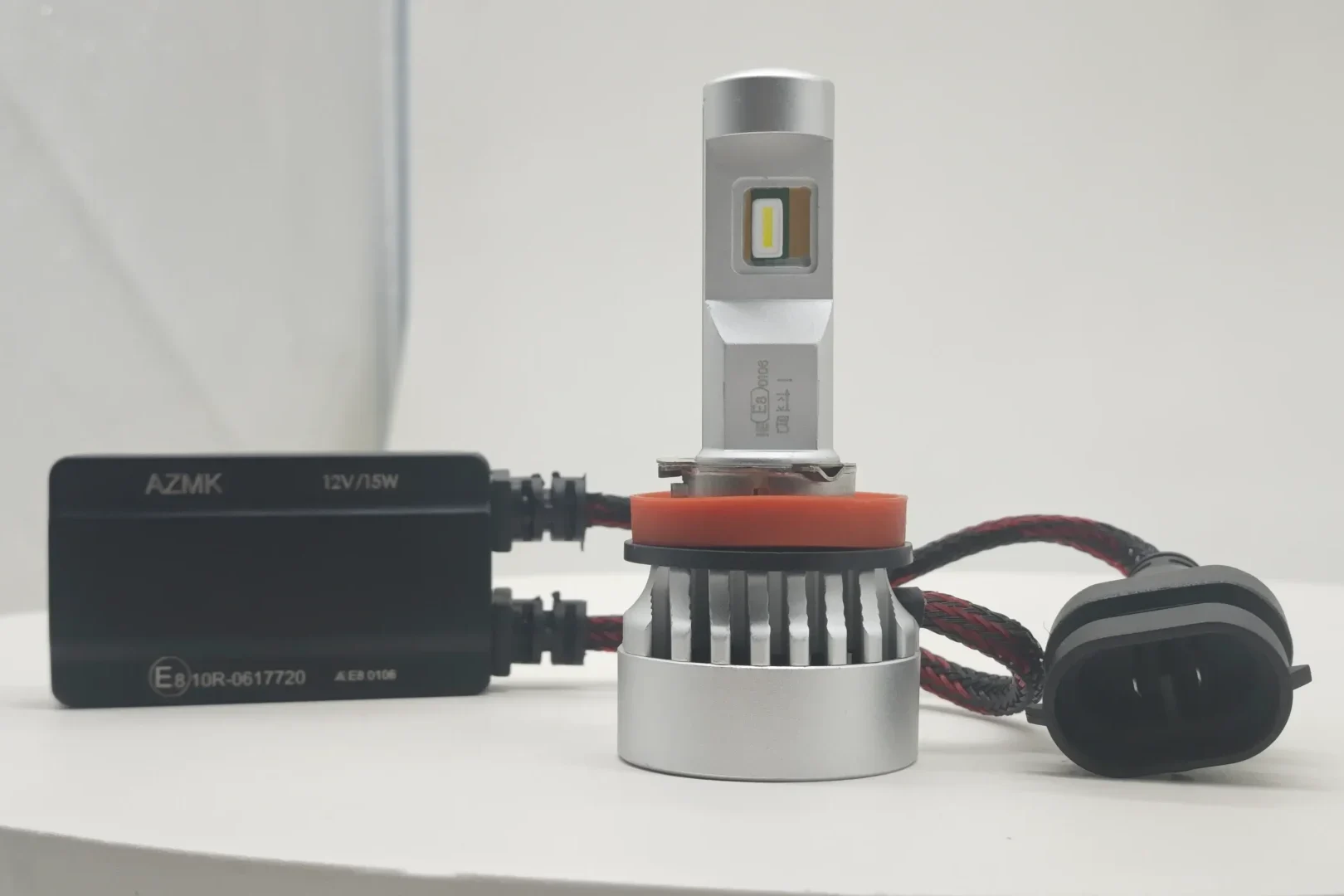
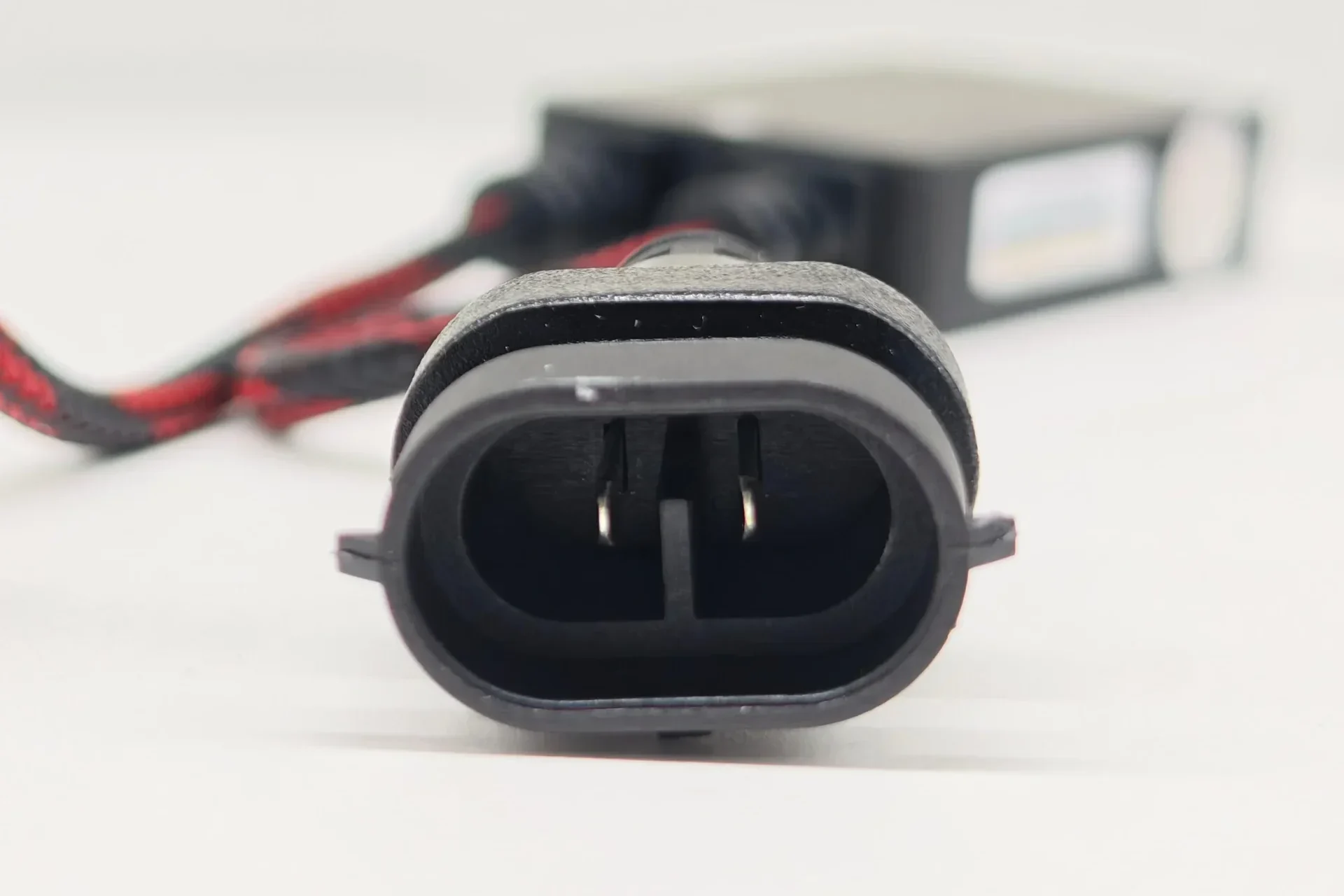
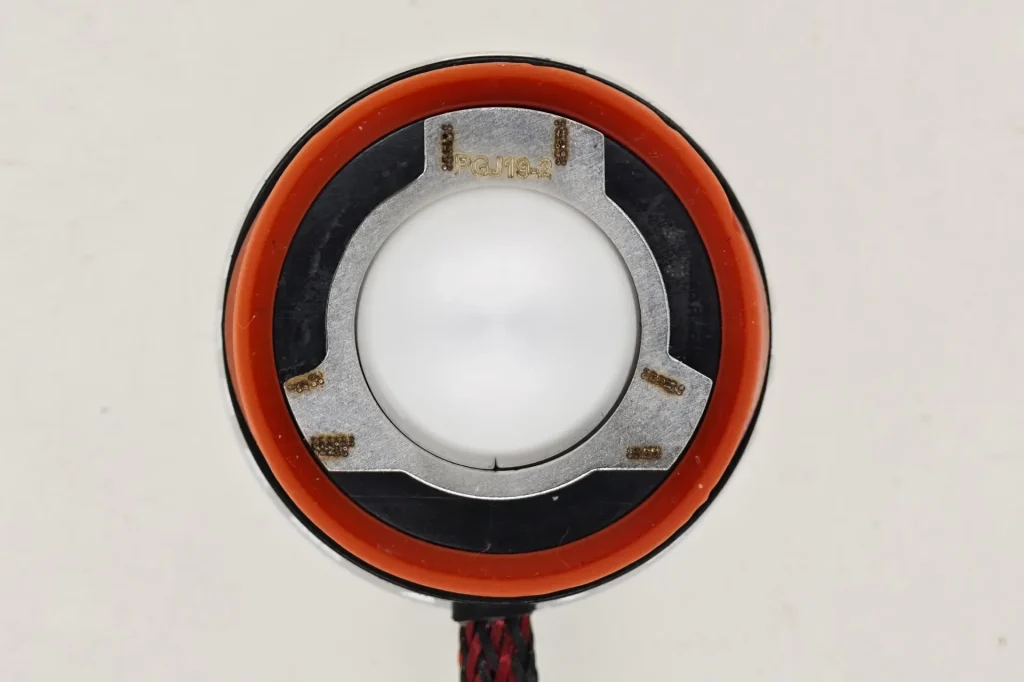
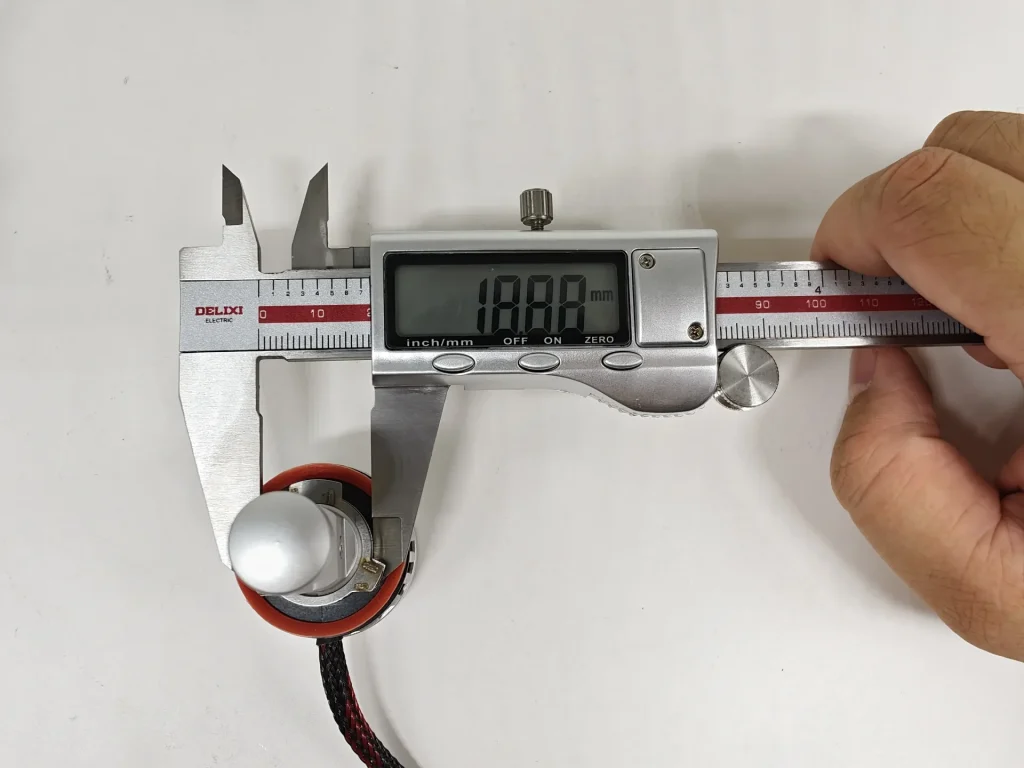
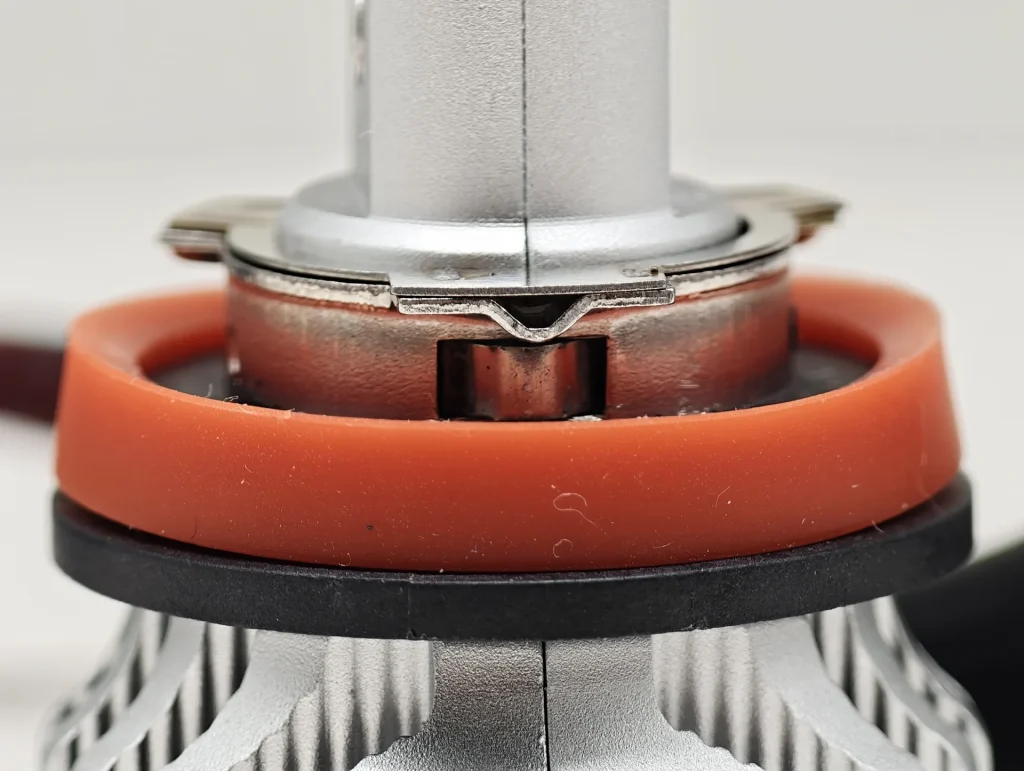
The H11 mounting opening includes assembly clearance, so the lamp is not positioned by the wall of the opening alone. The metal spring presses the lamp into the V support. Once clamped, it stabilises the axial and rotational position of the lamp and places the opposing LED emitting surfaces in the correct optical position.
Opposing LED emitting surfaces: 1.154 mm separation
The 1.154 mm measurement is not chip thickness. One lamp has two opposing LED emitting sides, and the measurement is the distance between the two LED emitting surfaces.
With the same emitting area and brightness, a smaller separation concentrates the light more tightly and produces higher illuminance. A larger separation allows the light to spread.
R.E.5 H11 LEDr Configuration-2 specifies that distance z between the opposing emitting surfaces must not exceed 2.9 mm. The measured separation on this lamp was 1.154 mm.
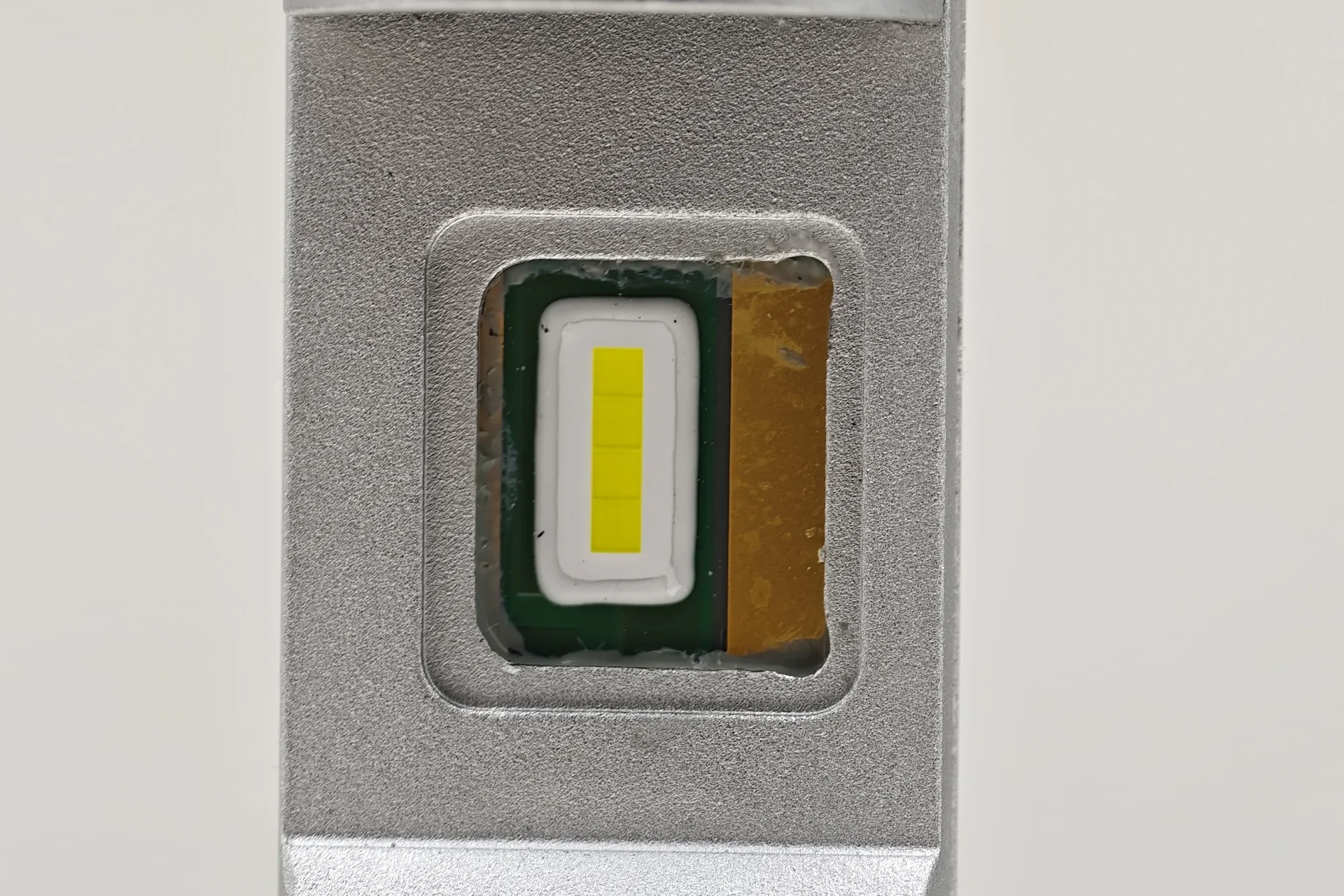
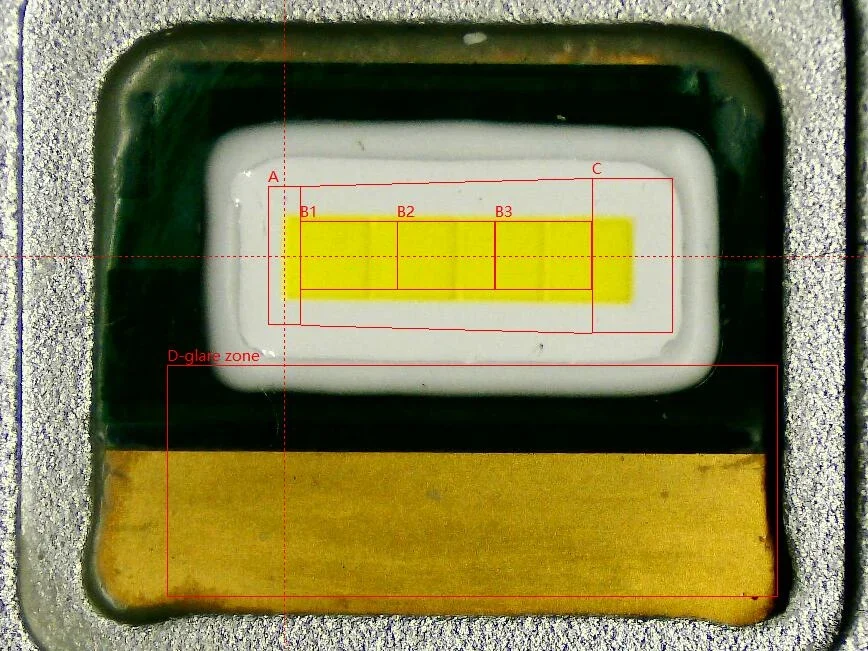
Core inspection: Box system emitting area
The Box system is a core H11 LEDr construction check. It confirms the position of the LED emitting area relative to the reference axis and reference plane.
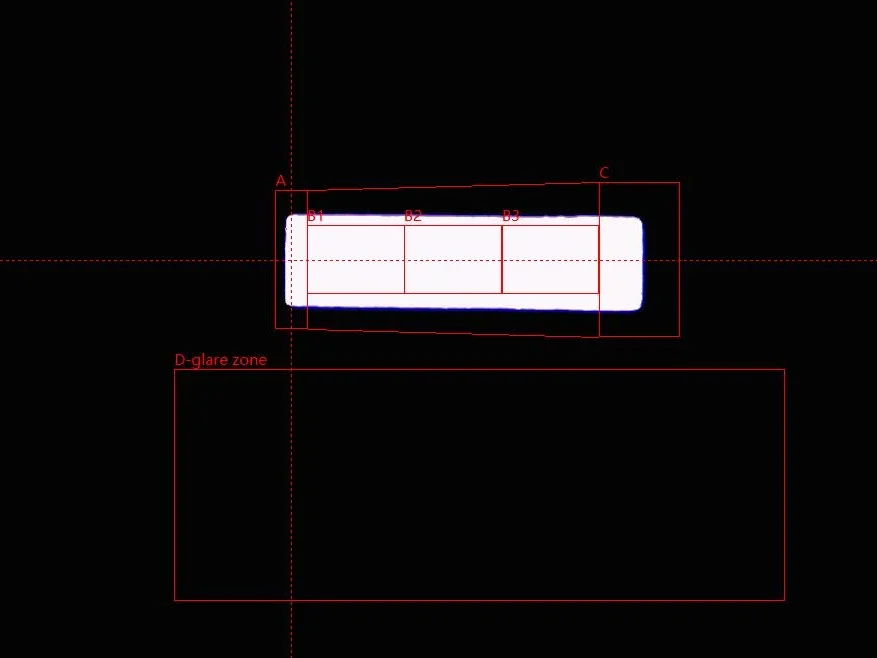
Valid emission must remain within the combined A, B1, B2, B3 and C boundaries. Emission outside the specified boundaries is non-compliant.
The lower D area is the glare-control zone. Light entering the D zone, or a reflective object present in the D zone, can create glare directed toward oncoming drivers.
In the illuminated EB image, the emitting area remains within the A, B and C framework while the D zone remains dark.
R.E.5 requires at least 90% of the luminous flux in the total box area, at least 72% in area B, no more than 10% in area A, and no more than 22% in area C.
White-wall beam pattern
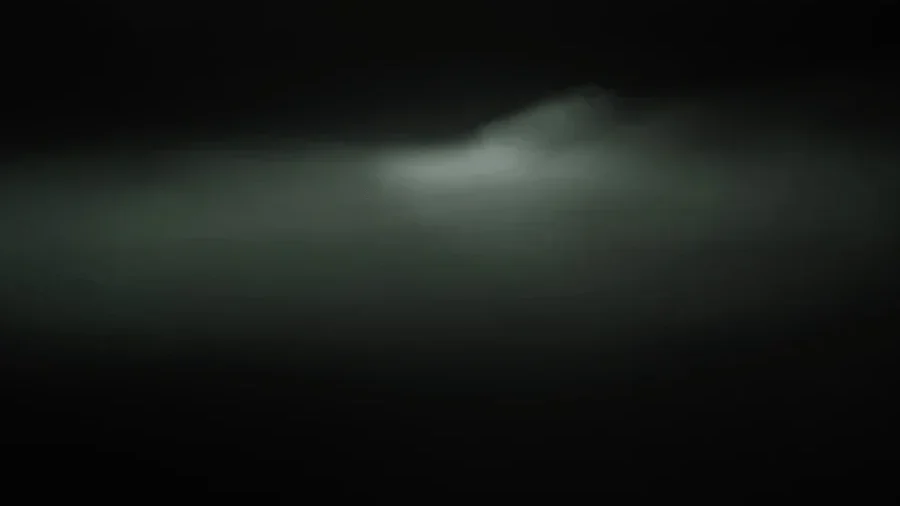
The white-wall image shows a brighter central-right area and lower illuminance on the left. The overall direction matches a low-beam pattern that places more light on the right side for right-hand traffic.
Rainbow map and hotspot distribution
The red area in the rainbow map is the strongest illuminance hotspot. The hotspot is concentrated in the central-right area. This distribution matches a right-hand-traffic beam pattern and is consistent with the 50R and 75R readings.
The rainbow colours show where the light is concentrated. Under the applicable beam pattern, the light should be concentrated around 75R or 50R.
Complete nine-point illuminance results
|
Point |
Measured illuminance |
Reading area |
|---|---|---|
|
25L |
278 lux |
Left-side point |
|
50L |
402.3 lux |
Left-side point |
|
B50L |
34.4 lux |
Glare-control point |
|
50V |
1,085 lux |
Centre point |
|
25V |
1,006 lux |
Centre point |
|
75R |
1,131 lux |
Right-side point |
|
50R |
1,646 lux |
Right-side point |
|
25R |
422.3 lux |
Right-side point |
|
EMAX |
1,741 lux |
Peak reference |
The nine-point results recorded 1,646 lux at 50R and 1,131 lux at 75R. The rainbow-map hotspot was also concentrated in the central-right area. 50R and 75R are standard measurement-panel point names.
B50L is related to glare control. Lower is better. The recorded B50L value was 34.4 lux.
EMAX was 1,741 lux and is the peak reference. It does not replace the complete nine-point table or the beam images.
Temperature and operating noise
After 30 minutes, the thermal image recorded a maximum emitting-area surface temperature of 67.3 degrees C. The reference point shown in the image was 34.8 degrees C. The 67.3 degrees C reading is the emitting-area surface temperature; chip junction temperature was not measured.
Operating noise was 54.6 dBA at a distance of 3.5 cm from the fan. This is a close-range bench reading. Installed perception depends on enclosure, distance and vehicle background noise.
Author: Jack Liu, Co-founder & Product Director, LEDOAUTO
Regulatory review: LEDOAUTO Engineering Team, verified against official UNECE documents
Last reviewed: 19 Aug 2026
EB H11 LEDr FAQ
References
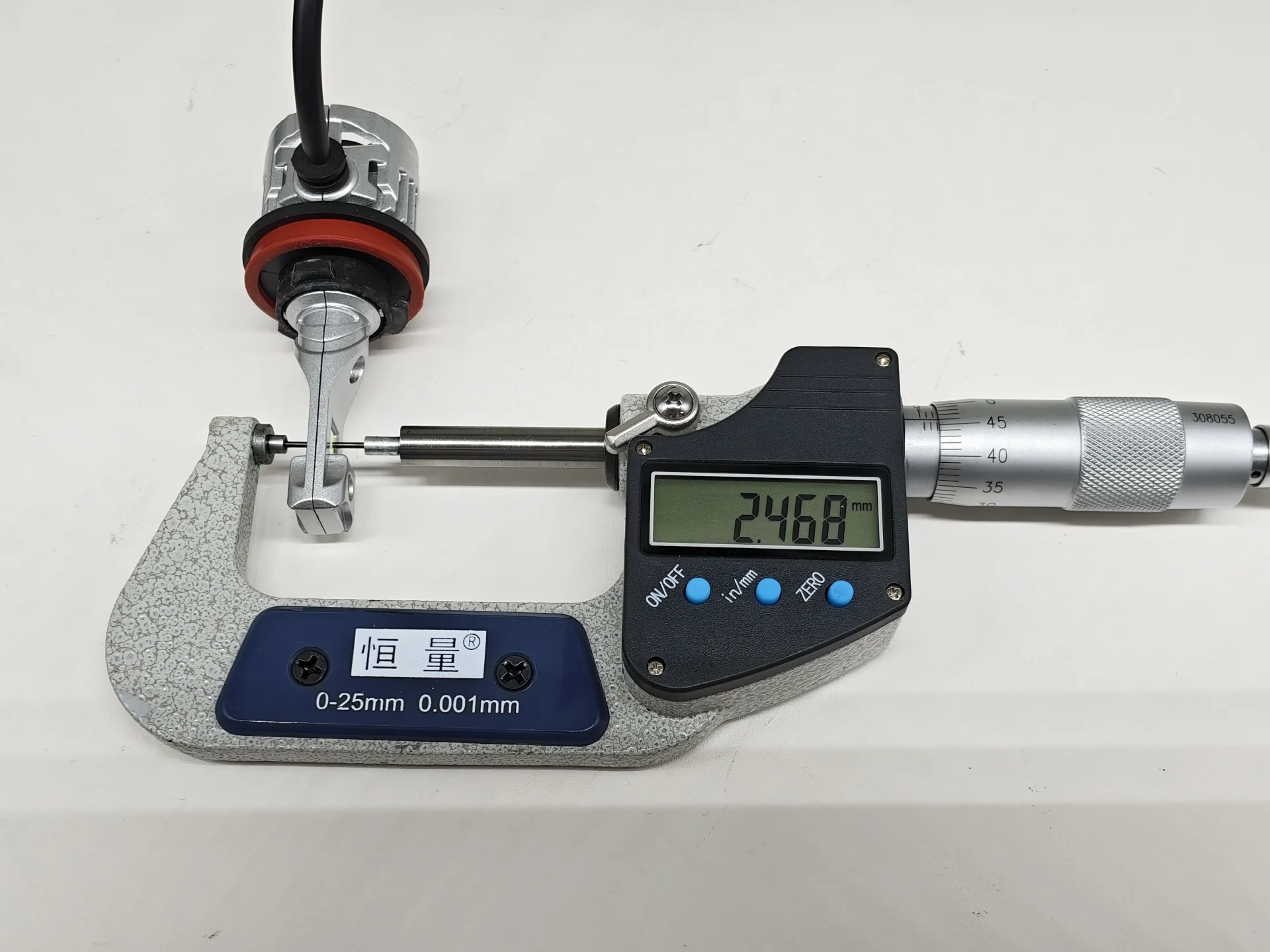
E4E H11 LEDr Review: Construction, Beam Pattern, Illuminance, Temperature and Noise
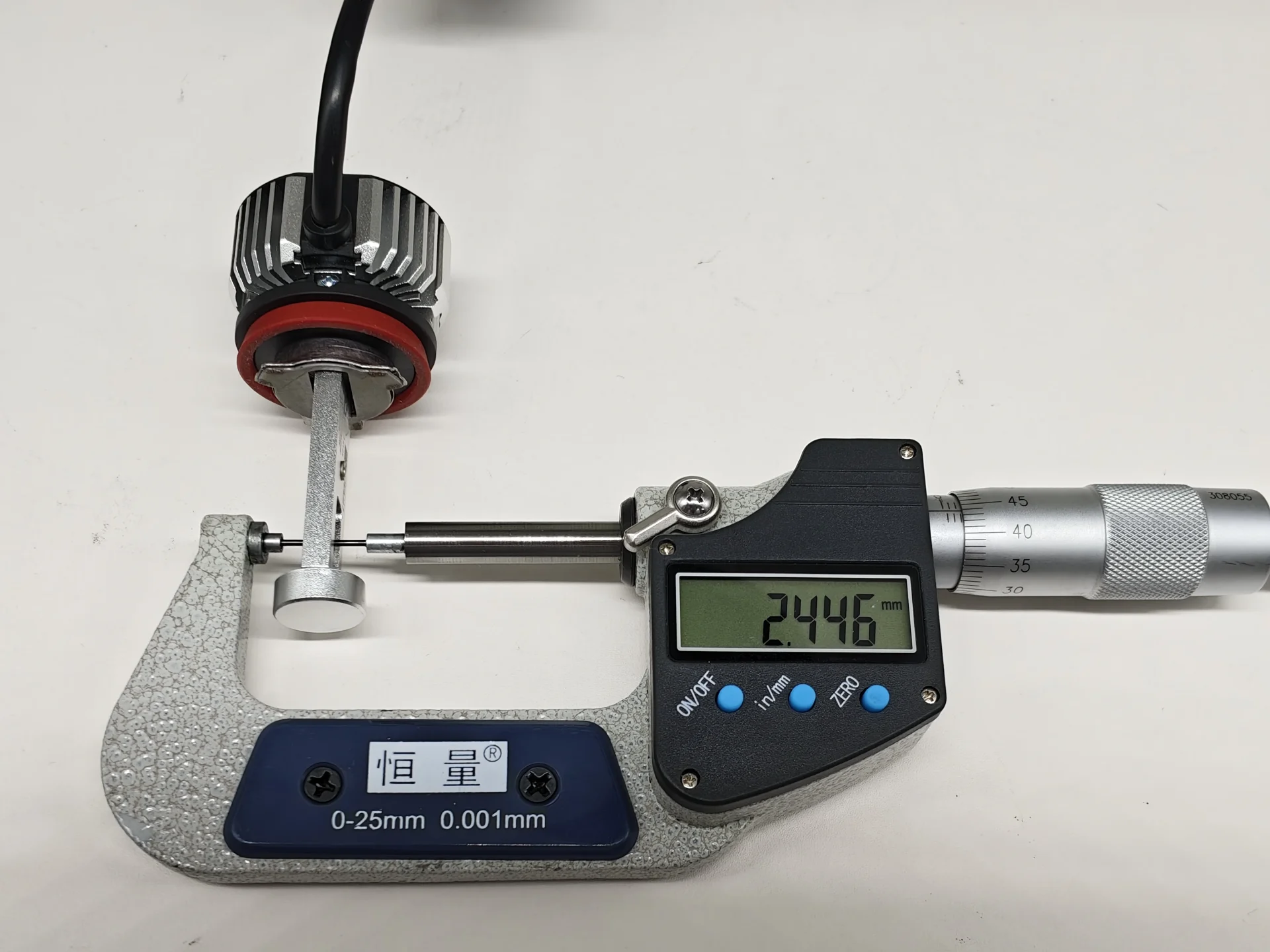
luxfighter H11 LEDr Review: Construction, Beam Pattern, Illuminance, Temperature and Noise
OSRAM H11 LEDr Review:Construction, Beam Pattern, Illuminance, Temperature and Noise
Philips H11 LEDr Review:Construction, Beam Pattern, Illuminance, Temperature and Noise
