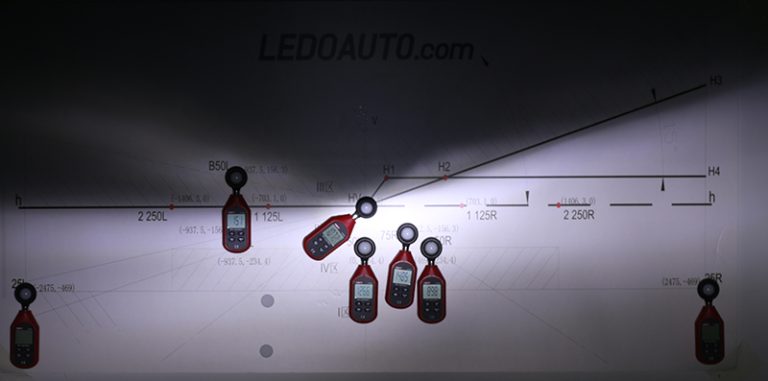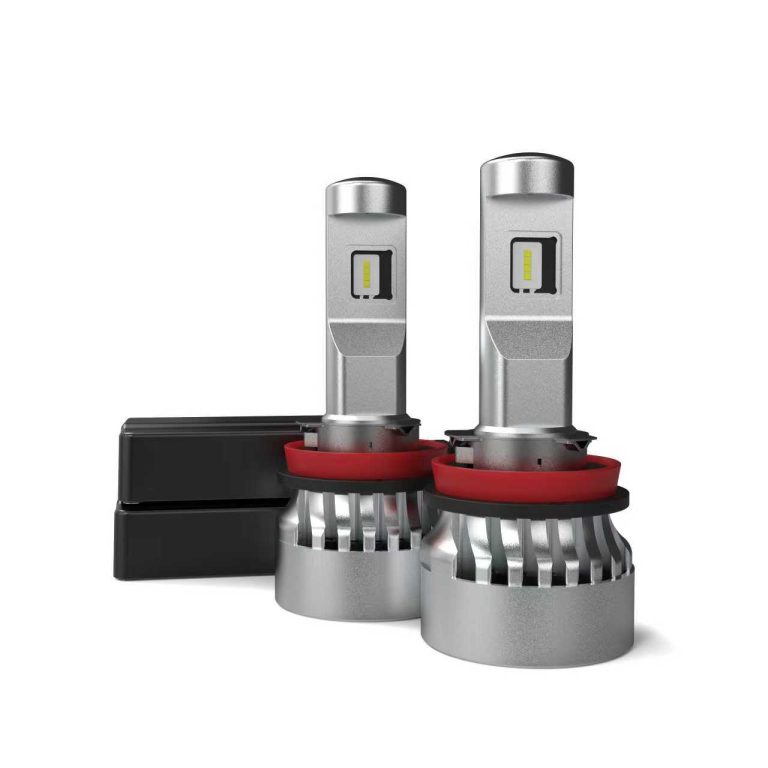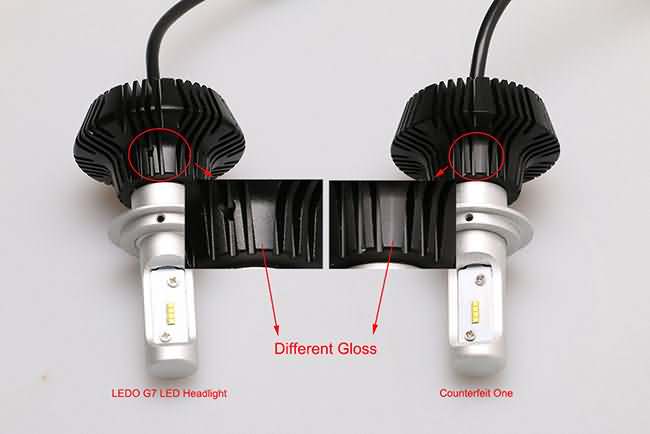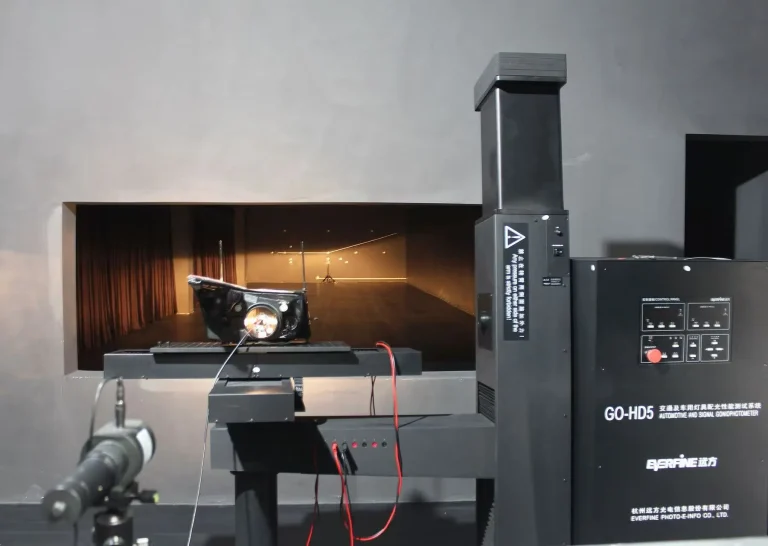
For automotive lighting importers and distributors, the difference between a generic LED retrofit and a properly approved LEDr replacement light source decides whether a product line carries regulatory risk or regulatory backing. ECE R37 LEDr refers to an LED replacement light source that has obtained type approval under UN Regulation No. 37 for a specific, officially established category. This guide explains what that approval covers, which categories are approved today, how to verify a supplier’s claim, and what a compliant B2B sourcing process looks like.
The Short Answer
An ECE R37 LEDr is not “an LED bulb with a certificate.It is a standardized replacement light source, approved under UN R37 for a named category (currently C5W, H8, H11, H16 and HB4), engineered to reproduce the geometry and light output of the halogen bulb it replaces, and tied to an approval number that can be checked against the certificate. Road use depends on the approval scope, correct installation and the rules of the target market. Everything a buyer needs to verify follows from that definition.
What Is an LEDr? Definition and Regulatory Basis
UN Regulation No. 37 is the UNECE regulation covering filament light sources for use in approved lamp units of vehicles. It operates under the 1958 Agreement, so its type approvals are recognized by the Agreement’s contracting parties — a group that extends well beyond the EU and includes markets such as the United Kingdom, Norway, Switzerland, Turkey, Japan and Australia. It is not an EU-only regulation. The current consolidated text is UN Regulation No. 37, Revision 7 – Amendment 11.
The LED replacement light source, or LEDr, was introduced into this framework through formal amendment proposals (ECE/TRANS/WP.29/GRE/2020/15/Rev.1). The defining idea, set out in the category specifications of the Consolidated Resolution R.E.5, is that an LEDr is an LED light source designed to replace a light source of the same category name that uses a different lighting technology. In practice this means:
- The LEDr carries the same category name as the halogen bulb it replaces (an H11 LEDr replaces an H11 halogen), but it is a different type under the regulation, because the lighting technology differs.
- Its emitting area position, dimensions, luminous flux, light distribution and electrical interface are specified against the halogen reference, so an approved headlamp designed for the halogen category can receive it without redesign.
- Each LEDr category exists only once it has been formally added to the category sheets — an LED bulb that physically fits an H7 socket is not an “H7 LEDr,” because no such approved category exists.
This is the line that separates an LEDr from the generic retrofit market. A retrofit is marketed on fit; an LEDr is defined by an approved category sheet and an approval number.
How Does LEDr Approval Work? Tests and Requirements
ECE homologation of an LEDr type is a test program against the category sheet, not a paper exercise. The main elements, drawn from the regulation’s technical requirements and test annex, include:
- Ageing before measurement. Light sources are aged (at least 48 hours) before photometric values are recorded, so approval data reflects stabilized output rather than fresh-out-of-box peaks.
- Emitting area position and size. The position and dimensions of the light-emitting area are measured against tight tolerances relative to the reference plane — the parameter that determines whether the headlamp’s optics receive light from where the halogen filament used to be. This is verified using the box system defined in the regulation.
- Luminous flux and light distribution. Objective luminous flux (for the H11 LEDr: 1350 lm ±10% at the 13.2 V test voltage for 12 V systems), normalized luminous intensity distribution, and cumulative flux distribution are all measured.
- Thermal behavior over time. Flux is measured after 1 minute and after 30 minutes of operation. The 30-minute value must meet the limit values, and the relationship between the two readings is controlled, so a bulb cannot pass by being bright only when cold. Selected categories, including H11, are additionally verified at an elevated ambient temperature of 60 °C, where hot luminous flux must remain at no less than 75% of the objective value.
- Color, spectrum and UV. Chromaticity must stay within the white boundaries, with requirements on the red content of the spectrum and low UV emission.
- Electrical and electronic behavior. Current and power limits, defined behavior under PWM supply, a requirement that pulses of 2 ms or less must not produce light, maximum cap temperature, and compliance with the electromagnetic-compatibility requirements of UN Regulation No. 10 applicable to electronic sub-assemblies.
Test voltages and limit values are set per category in the category sheets; the figures above are for the H11 LEDr. The practical takeaway for buyers: every one of these items is measurable, which is why supplier claims can and should be checked against documents rather than taken on trust.
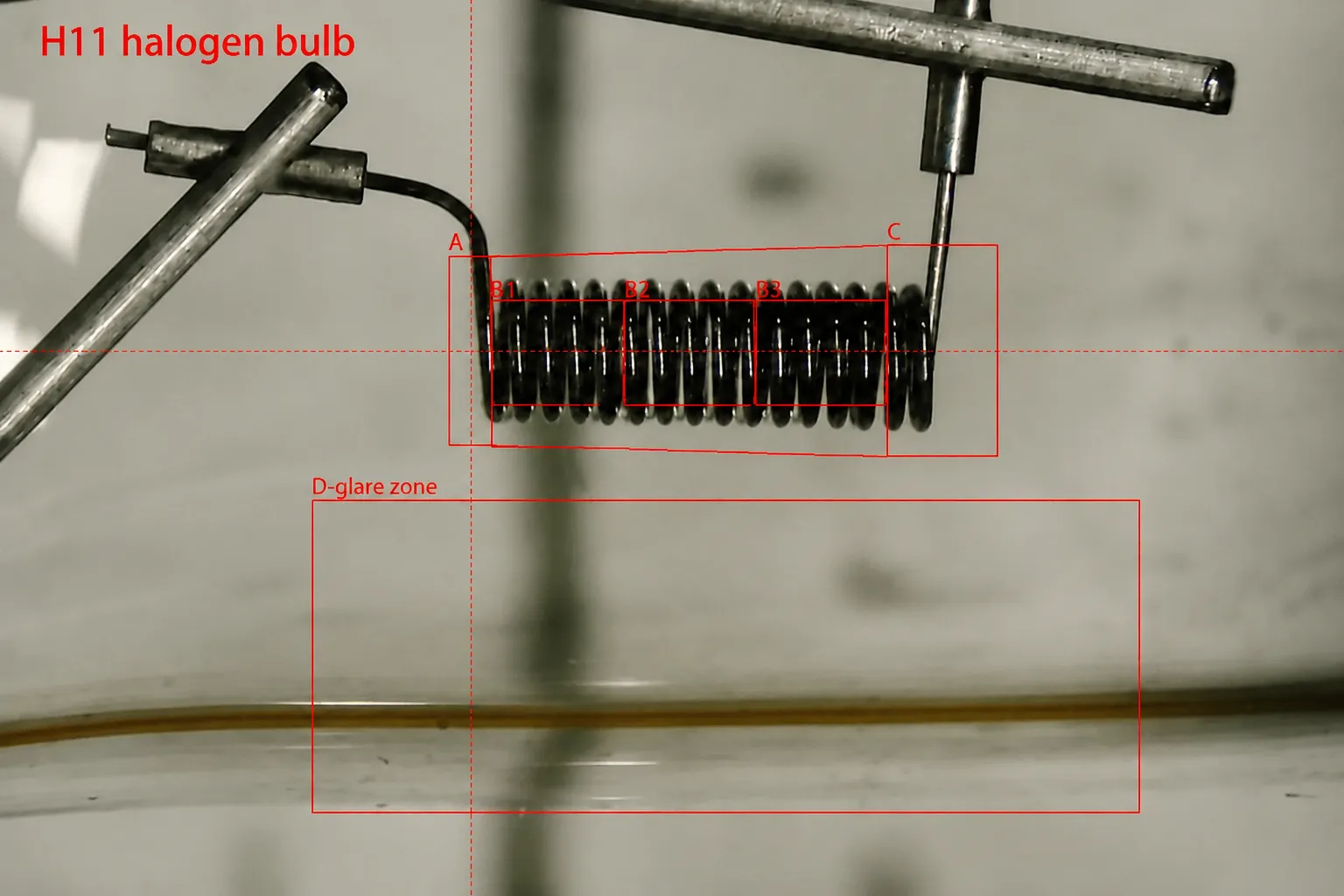
H11 halogen filament structure and reference areas.
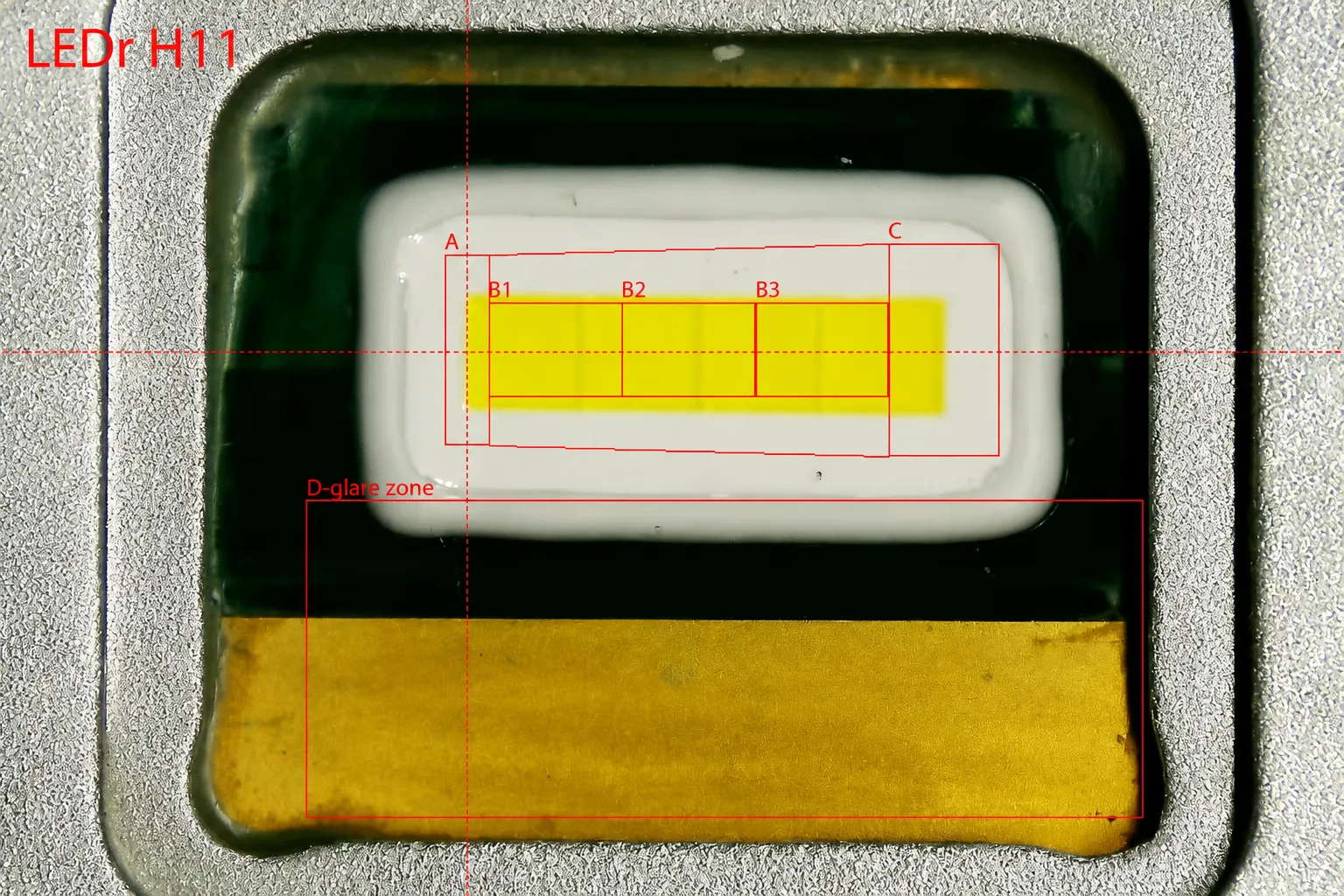
H11 LEDr structure and reference areas.
If the LED emitting area deviates from the halogen filament’s reference position, the headlamp’s reflector or projector redistributes that error across the road: glare for oncoming traffic, or dark zones where the beam should be. This is why emitting-position tolerance sits at the center of the approval — and why it cannot be judged by eye.
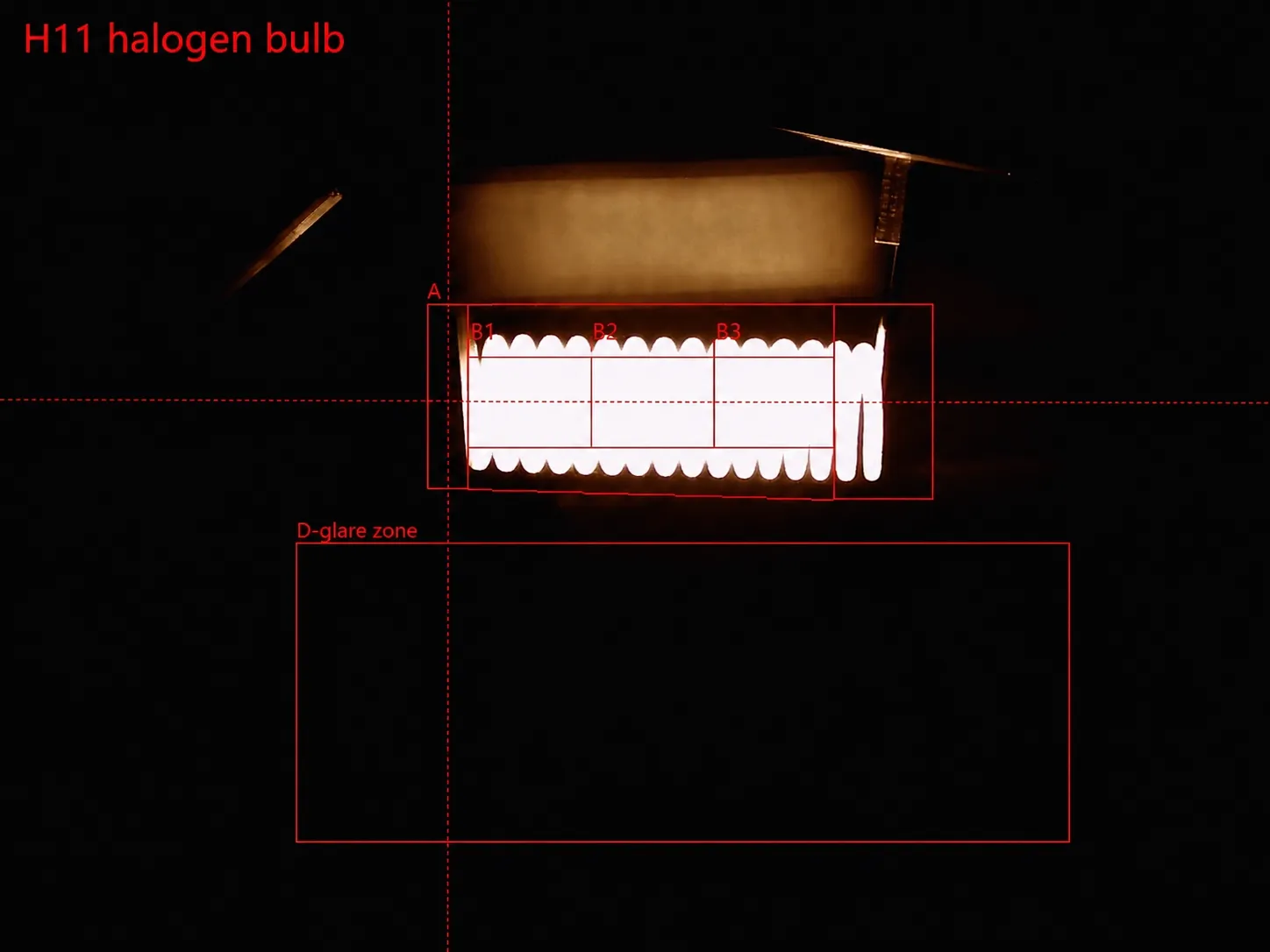
Illuminated H11 halogen filament pattern.
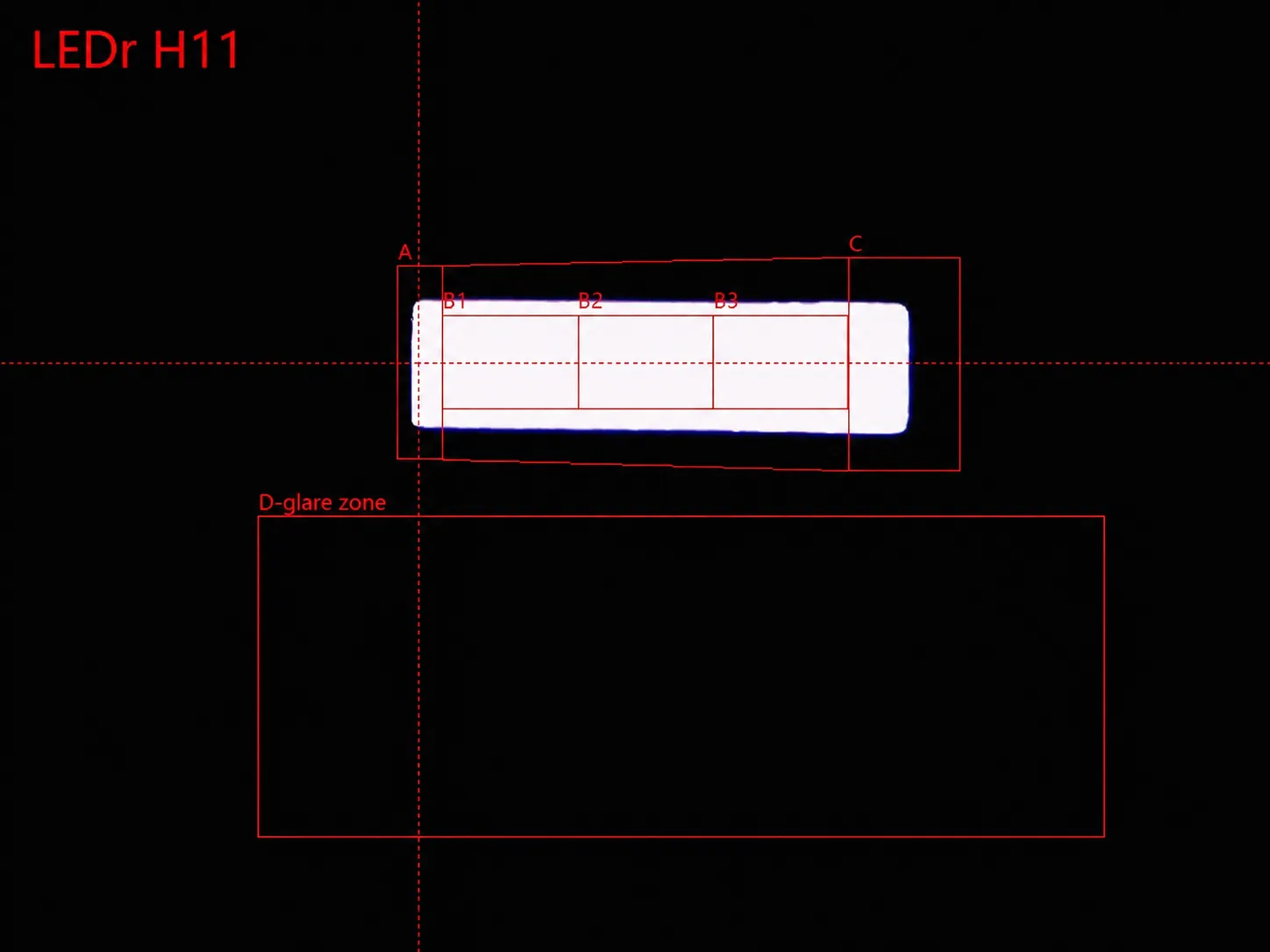
Illuminated H11 LEDr emitting-area pattern.
LEDr vs Ordinary LED Retrofit
|
ECE R37 LEDr |
Generic LED retrofit |
|
|---|---|---|
|
Regulatory basis |
Approved category under UN R37, with category sheet in R.E.5 |
None for road use in most markets |
|
Emitting position |
Controlled by box-system tolerances against the halogen reference |
Uncontrolled; varies by design and batch |
|
Photometry |
Objective flux, distribution and thermal stability tested for approval |
Marketing lumen figures, often cold values |
|
Traceability |
Approval number on the bulb, matched to a certificate and holder |
No approval number for road use |
|
Road use |
Within the approval scope in markets recognizing UN R37 |
Generally off-road / show use only |
|
Sourcing recommendation |
Verify certificate, markings and CoP records before ordering |
Treat as off-road product; do not accept road-legal claims |
UN Regulation No. 128 serves a different role. It covers LED light sources for new lamp designs within its scope, while R37 LEDr addresses replacement light sources for corresponding filament categories. The UN Regulation No. 128 text therefore cannot be used as a substitute for an R37 LEDr certificate.
During purchasing, ask what approval applies to the exact model, not whether the supplier has any ECE, R10, CE, or RoHS document. The LEDr comparison guide should carry the detailed comparison once its route is live. For an immediate product discussion, request the evidence pack through the H11 LEDr product page and match every document to the sample offered.
Which LEDr Categories Are Approved Today?
Date of preparation: mid-July 2026.
|
Category |
Status |
Effective date |
Source |
|---|---|---|---|
|
C5W |
Effective |
Listed in R.E.5 Group 5 |
R.E.5 Group 5 in ECE/TRANS/WP.29/2026/41 |
|
H11 |
Effective |
13 November 2024 for Configuration 2 |
|
|
H8 |
Effective |
11 March 2026 |
|
|
H16 |
Effective |
11 March 2026 |
|
|
HB4 |
Effective |
11 March 2026 |
|
|
H10 |
Technical specifications finalized (GRE level); not yet formally adopted |
Not in force — WP.29 submission expected October 2026; entry into force not expected before 2027 |
UNECE WP.29/GRE working-level status, mid-July 2026 |
|
H9 |
Technical specifications finalized (GRE level); not yet formally adopted |
Not in force — WP.29 submission expected October 2026; entry into force not expected before 2027 |
UNECE WP.29/GRE working-level status, mid-July 2026 |
|
HB3 |
Technical specifications finalized (GRE level); not yet formally adopted |
Not in force — WP.29 submission expected October 2026; entry into force not expected before 2027 |
UNECE WP.29/GRE working-level status, mid-July 2026 |
|
HIR2 |
Technical specifications finalized (GRE level); not yet formally adopted |
Not in force — WP.29 submission expected October 2026; entry into force not expected before 2027 |
UNECE WP.29/GRE working-level status, mid-July 2026 |
Categories awaiting formal adoption. As of mid-2026, the technical specifications for the H10, H9, HB3 and HIR2 LEDr categories have been finalized at GRE (UNECE working-group) level, with formal submission to WP.29 for adoption expected in October 2026. Formal entry into force is not expected before 2027. Until WP.29 formally adopts these category sheets, none of these categories carries UN R37 type-approval status, and none can currently be sold or marketed as an approved LEDr.
H4 and H7. Neither is listed in R.E.5 Group 5, and there is no official entry-into-force timeline. An informal long-term roadmap within the UNECE GRE working structure (2026) places the development focus for these technically demanding low-beam categories in the 2028–2029 window. A development roadmap is a statement of direction, not an approval: some countries operate national approval schemes based on vehicle-compatibility lists for these categories, but a national positive-list approval is a different legal instrument and is not a UN R37 LEDr category approval.
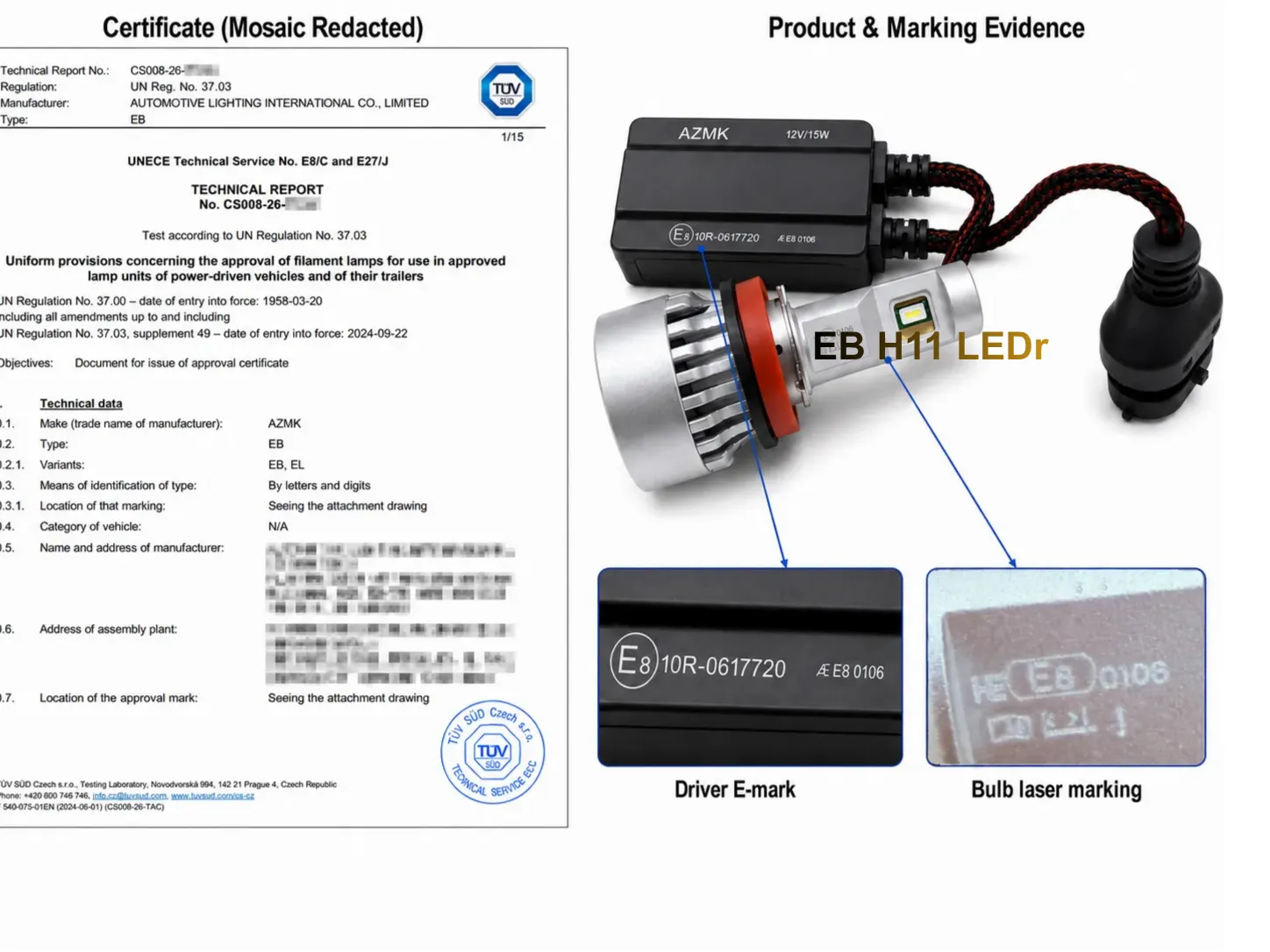
The commercial reading for importers: H11 is the category with an established approval base and available product — our EB H11 LEDr is type-approved in this category — while the 2026 additions of H8, H16 and HB4 open the next planning window.
What Is Allowed / What Is Not Proven
A credible compliance page has to state its own boundaries. Based on the UNECE source documents behind this guide:
Supported by the sources:
- An LEDr with a genuine R37 type approval, used within its approval scope, has a UN type-approval basis recognized by 1958 Agreement contracting parties.
- The approval covers the light source category; the approval marking and number on the bulb can be verified against the certificate.
Not proven by these sources, and therefore not claimed here:
- Blanket road legality. Actual road use depends on the approval scope and conditions, correct installation in a suitable lamp, and national implementation in the target market. Periodic-inspection practice (TÜV, MOT, contrôle technique) is governed by national rules outside the UNECE document set.
- The United States. FMVSS 108 does not recognize LED replacement light sources in halogen lamp units; for the US market, these products are off-road use only.
- Anything based on an E-mark alone. An E-mark shows which country’s authority issued an approval; it does not say which regulation, which category, or whether the product in front of you matches the certificate. See What is ECE R37 Certification for LEDr? for the basics of reading the marking.
- Anything based on R10 alone. R10 covers electromagnetic compatibility. It is one requirement inside the LEDr approval, not a substitute for it. A bulb sold with only an R10 reference has no road-use type approval.
What This Means for Importers and Distributors
Type approval answers whether a design is compliant. What protects a buyer across repeated orders is Conformity of Production (CoP).
Before granting approval, the authority must verify that the manufacturer has effective arrangements to control production conformity.
After approval, the manufacturer must keep every produced unit consistent with the approved type — markings, technical requirements and all — carry out the prescribed CoP testing, and maintain records; an approval can be withdrawn if production stops conforming.
Two boundaries worth knowing, because suppliers sometimes overstate this area:
- The regulation does not prescribe a single universal “per-batch” or “per-month” sampling frequency for all companies. The actual CoP plan is agreed with the approval authority, so ask a supplier to show their plan and records rather than accepting a generic percentage claim.
- Certificate ownership matters. The approval is held by the applicant (the trademark or trade-name owner or their authorized representative). A distributor cannot simply “borrow” a manufacturer’s certificate for a different brand; a same-product, different-trademark arrangement has a defined procedure under the regulation and produces its own documentation. If a supplier’s private-label offer skips this, that is a red flag.
For a first inquiry, use the H11 LEDr sourcing page to request documents, samples, MOQ, and lead time. Treat the product page as the start of verification, not the evidence itself. The planned LEDr comparison resource should be linked in distributor training once published.
Verification Checklist
Use this checklist before approving a sample, purchase order, or product claim.
|
Check |
Evidence to request |
Decision rule |
|---|---|---|
|
Category status |
Current R.E.5 category status and effective date |
The category must be effective for an R37 LEDr claim |
|
Approval communication |
Complete document for the exact approved type |
Regulation, category, holder, type, and approval code must agree |
|
Product marking |
Clear photographs of the actual sample and production unit |
Category, LEDr identification, brand, voltage, and approval marking must match the file |
|
Approval holder |
Holder identity and any authorized-representative documentation |
The commercial brand arrangement must be covered by the approval procedure |
|
Technical reports |
Photometric, geometric, thermal, electrical, color, and EMC evidence applicable to the type |
Reports must identify the sample, method, result, and relevant limit |
|
R10 evidence |
EMC document for the exact electronics version |
Accept as EMC evidence only, never as a replacement for R37 approval |
|
CoP control |
Current control plan and production records for supplied lots |
Records must link the shipment to the approved type and show controlled results |
|
Packaging and instructions |
Final artwork, use conditions, warnings, and product identity |
Packaging must not broaden the approval or omit required information |
The certificate first page is not the whole review. Check schedules, extensions, conditions, and the relationship between the document and the physical sample. The planned LEDr verification comparison should explain common document mismatches after publication.
How Does a Compliant B2B Sourcing Process Run?
A sourcing process built on the approval system looks like this:
- Inquiry with category scope. Specify the category (today, realistically H11 for volume) and target markets, so the supplier can state the applicable approval upfront.
- Document pack before samples. Request the approval certificate, marking layout, test reports and CoP plan. A supplier who ships samples but stalls on documents has the order backwards.
- Sample verification. Check markings against the certificate, and if you have lab access, verify flux and beam behavior in a representative headlamp. Our own verification work uses LucidShape optical simulation and a box-system measurement setup for emitting-area position — ask us to walk you through the method on your samples.
- Order with CoP anchoring. Reference the approved type in the contract and agree on batch-record access, so consistency is contractual, not assumed.
The EB H11 LEDr product page lists the documents available on request, wholesale and OEM options, and the sample process. For background on why H11 became the first practical headlamp LEDr category, see H11 LEDr approval explained.
The regulatory status and sourcing guidance in this article were reviewed against the listed UNECE sources in mid-July 2026. Buyers remain responsible for checking the exact product approval, use conditions, and destination-market rules before import, sale, or installation.
Frequently Asked Questions
By Jack Liu, Co-founder & Product Director, LEDOAUTO
Regulatory review: LEDOAUTO Engineering Team, verified against official UNECE documents
Last updated: July 2026
Disclaimer
Disclaimer: This article is for B2B sourcing and product evaluation only. It is not legal advice. Buyers should verify the exact product approval, certificate holder, approval number, category marking, local market rules, and usage conditions before import, sale, or installation.
Evidence note
Evidence note: This article is based on UNECE official documents on UN Regulation No. 37 and the R.E.5 category resolution (linked in the text), together with LEDOAUTO’s internal product development and supplier-document review practice. Regulatory status reviewed against the sources listed above.